
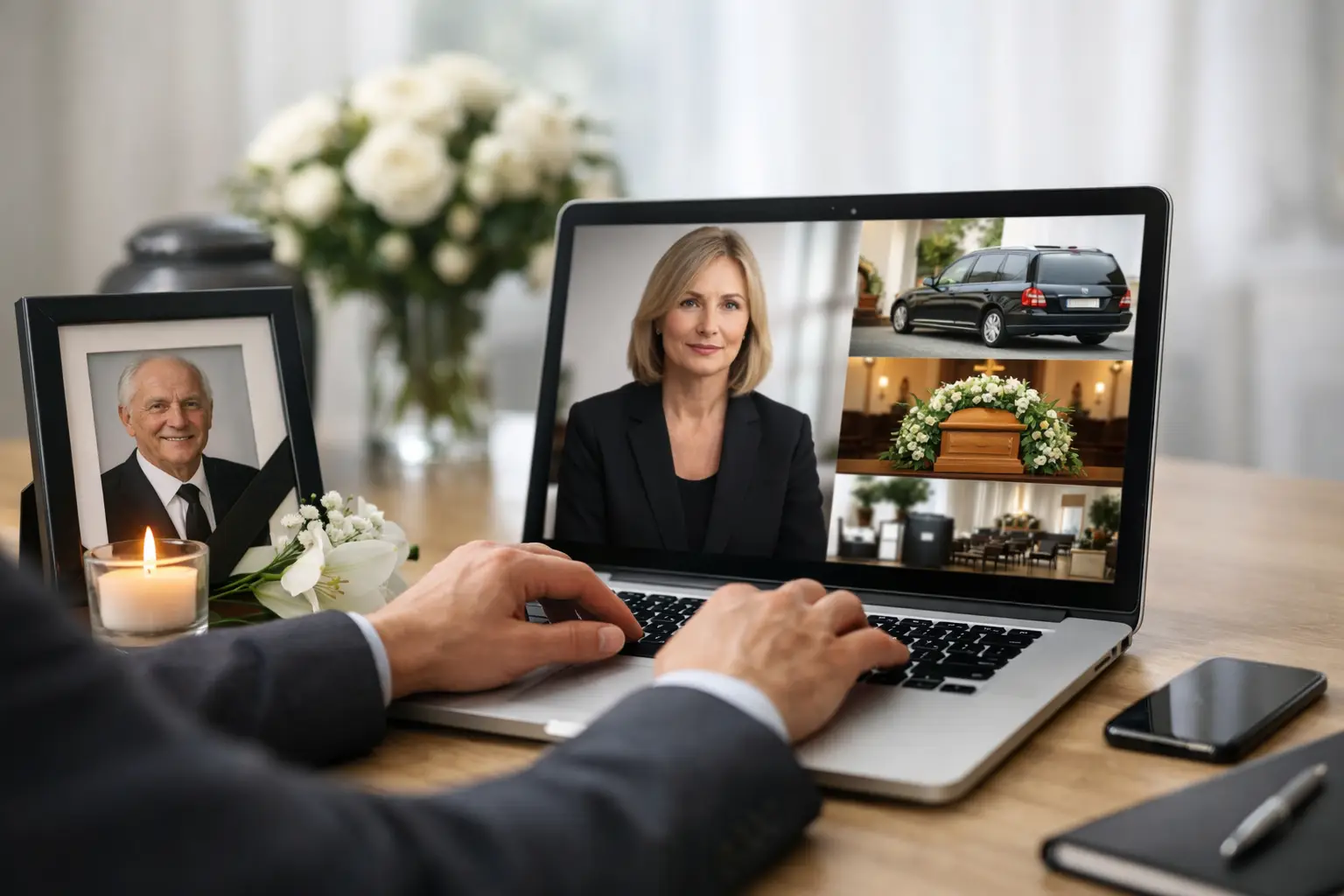
A death can place you in the difficult position of needing to make immediate decisions from another city, state, or country. Knowing how to arrange funeral remotely can bring needed structure to those first hours. You may not be able to be physically present, but you can still make informed choices, protect your loved one’s wishes, and create a service that feels personal and respectful.
A caring funeral home can coordinate much of the work by phone, video call, email, and secure electronic paperwork. The key is to begin with the immediate care of your loved one, identify who has legal authority to make decisions, and keep communication clear among family members.
Begin With One Call and Immediate Care
If your loved one has died at home, in a hospital, nursing facility, or while traveling, the first practical step is to contact a funeral home in the area where they are located. The care team can explain what happens next, arrange transportation when needed, and guide you through the timing of the required documents.
You do not need to decide every detail during the first conversation. A funeral director can begin the transfer into their care while you take a breath, notify close relatives, and gather essential information. If a death occurred under circumstances that require the medical examiner or coroner to become involved, the funeral home can explain how that process may affect timing.
When you call, share the loved one’s full legal name, current location, date of birth if known, and the best phone number for the person making arrangements. Also mention any immediate religious, cultural, or family customs that need attention. Some traditions have specific expectations around timing, washing, prayer, viewing, or burial, and early notice helps the funeral home honor them.
Confirm Who Can Make Funeral Decisions
Remote arrangements are easier when everyone understands who is authorized to sign documents and make final decisions. This person is often named in a preplanning agreement, health care proxy, or other legal document. When there is no written direction, state law and family circumstances usually determine the next person with authority, often a spouse, adult child, parent, or another close relative.
Families do not always agree immediately, especially when people are grieving from different places. It can help to designate one primary contact for the funeral home and one backup contact. That does not mean other relatives are excluded. It simply gives the care team a clear person to call for approvals and prevents conflicting instructions.
Ask the funeral director how authorizations can be completed from afar. Many documents can be reviewed electronically and signed through secure methods. Depending on the situation and local requirements, original signatures, identification, or notarization may still be needed. A good provider will explain what is required and why, rather than leaving you to guess.
Gather the Information Needed for Paperwork
The death certificate is central to many matters that follow a death, including insurance claims, banking, benefits, and estate administration. The funeral home generally prepares the necessary death certificate information with the family and submits it for registration.
Before your arrangement meeting, gather what you can: your loved one’s Social Security number, birth date and birthplace, current address, parents’ names, marital status, surviving spouse’s name, education and occupation history, and military discharge information if applicable. Do not worry if some details are unavailable. The funeral director can tell you what is essential now and what can be confirmed later.
If your loved one served in the armed forces, provide a copy of their discharge papers if you have them. These records may support veteran honors, burial benefits, or a flag presentation. If the paperwork is not immediately available, say so. It may still be possible to request records or discuss other ways to recognize their service.
Choose the Service Without Rushing the Meaning
Arranging remotely does not limit you to a bare or impersonal plan. You can choose burial, cremation, a traditional funeral, a memorial gathering, a graveside service, or a celebration of life based on your loved one’s wishes, faith, budget, and family needs.
A video arrangement conference can be especially helpful for reviewing options together. Ask the funeral director to explain the differences between a funeral with the person present, a memorial service after cremation, direct cremation, and a graveside gathering. Each choice has practical and financial considerations, but there is no single right answer for every family.
If relatives cannot travel, consider ways for them to take part from where they are. A service may be livestreamed where appropriate, with permission from those involved. Family members can send photographs for a tribute display, share memories for an obituary or eulogy, choose music, or record a reading or prayer. These small contributions often help people feel connected, even when distance prevents attendance.
Keep decisions clear and manageable
During a remote arrangement meeting, ask for prices and service details in writing. You should understand what is included, what is optional, and which items must be decided right away. For example, transportation, permits, and the timing of care may be urgent, while an obituary, flowers, printed materials, or keepsakes can often be handled after the main arrangements are set.
It is also reasonable to ask about payment procedures, insurance assignments, and any available assistance. Clear information is not a sales conversation. It is part of making decisions with confidence at a time when concentration may be difficult.
Coordinate Travel or Transportation Carefully
Sometimes the service will take place where the death occurred. In other cases, families need to bring their loved one home to New York, send them to another state, or arrange transportation overseas. These situations involve permits, airline or carrier requirements, receiving funeral homes, and schedules that should be handled by experienced professionals.
If you are arranging from abroad or your loved one must travel internationally, tell the funeral home at the start. International transportation may require consular paperwork, translated documents, specialized preparation, and coordination with authorities in more than one country. The same is true for domestic transfers across state lines, though the process is usually simpler.
Horizon Funeral Home regularly helps families coordinate nationwide pickup and international transportation, including the behind-the-scenes details that can otherwise feel overwhelming. Whether arrangements involve Brooklyn, another state, or another country, ask who is responsible for each part of the transfer and when you can expect updates.
Create a Communication Plan for the Family
Distance can make grief feel isolating, and group messages can quickly become confusing. Choose one method for sharing confirmed information, such as a family email thread or a single group message. Let relatives know that updates will be shared once details are final, rather than as each possibility is discussed.
For decisions that affect many people, a short video call can be kinder than a long chain of texts. Give family members a chance to share memories and preferences, but avoid putting every choice to a vote. The legally authorized person should make the final call after listening carefully and considering the loved one’s wishes.
If tensions are high, ask the funeral director to keep communication focused on practical next steps. Their role is not to settle family disagreements, but a calm, neutral explanation of options can reduce pressure and misunderstandings.
Make Space for Your Own Grief
Remote arrangements can leave a person feeling as though they are managing a project rather than mourning someone they love. You may be answering calls while at work, caring for children, arranging travel, or sitting thousands of miles away from the people who understand your loss best.
Try to take the process one decision at a time. Keep a written record of what has been confirmed, who is handling each task, and questions to ask during the next call. Accept help with meals, notifications, travel coordination, or gathering photographs. Being the decision-maker does not mean you have to carry every responsibility alone.
Even from afar, your presence can be felt in the care you give to each choice. A thoughtful phone call, a favorite song, a family story shared at the service, or a plan to gather later can create meaningful connection. There is no perfect way to arrange a funeral remotely. There is only the next caring step, taken with clear information and support around you.