A family may agree that they want a simpler, more earth-conscious farewell and still find themselves facing a difficult question: green burial versus cremation. Both choices can reflect care for the environment, a wish to avoid excess, or a loved one’s personal values. They are not, however, interchangeable. The right decision depends on what matters most to your family: the way the body is cared for, religious or cultural traditions, the availability of local options, cost, and the kind of place you want to visit in the years ahead.
There is no need to decide based on a label alone. A calm conversation about the details can make the choice clearer and help ensure the arrangements feel true to the person being honored.
Green Burial Versus Cremation: The Basic Difference
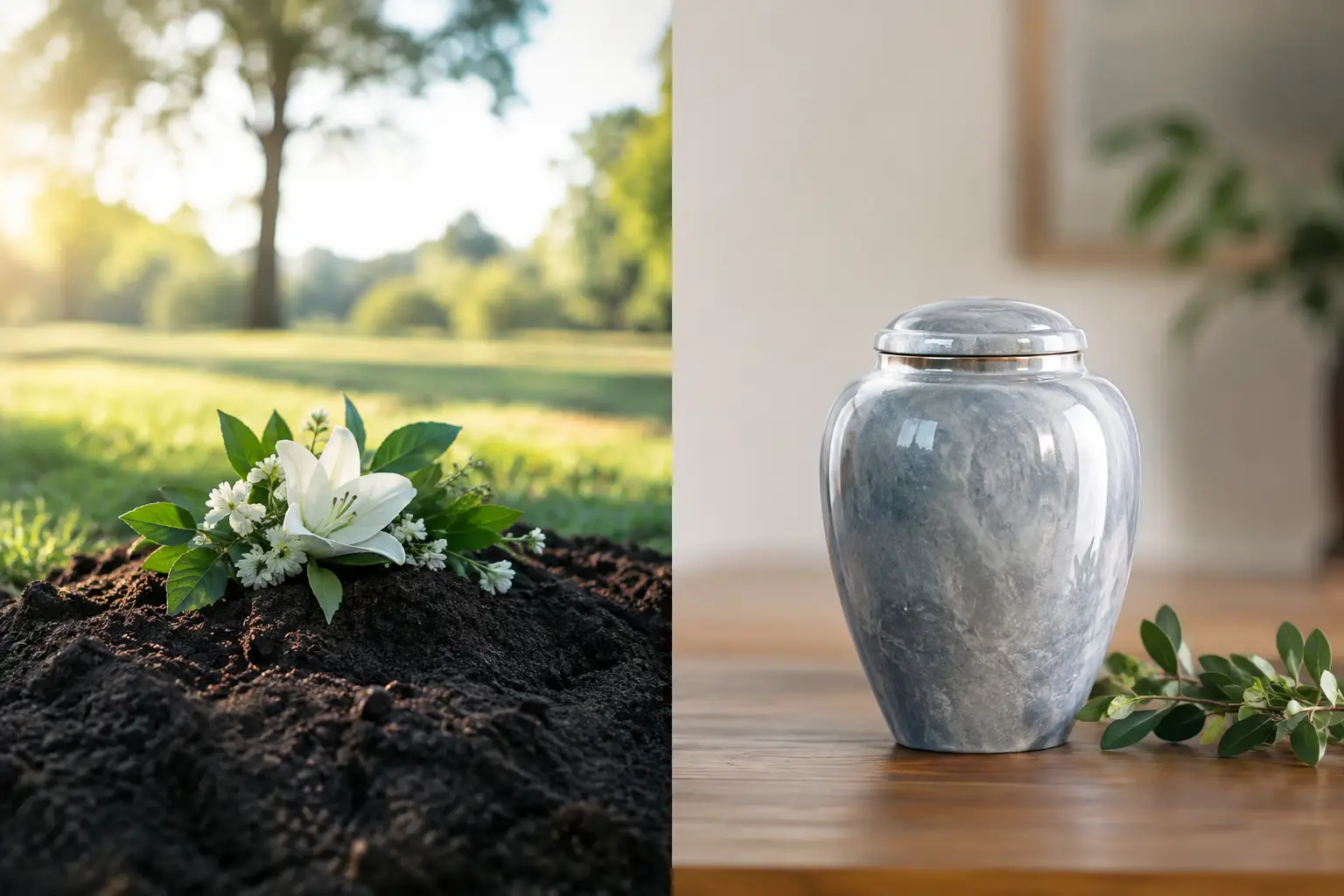
A green burial, sometimes called natural burial, returns the body to the earth with as little environmental impact as practical. It generally avoids embalming with conventional chemicals, metal caskets, concrete burial vaults, and permanent grave liners. The person may be placed in a biodegradable shroud, simple wood casket, wicker casket, or another approved natural container. The burial takes place in a cemetery or designated natural burial ground that permits these practices.
Cremation uses heat to reduce the body to cremated remains. Families may choose direct cremation without a viewing, or they may hold a visitation, religious service, funeral, or memorial before or after cremation. The remains can be placed in an urn, buried, kept by the family, scattered where permitted, or incorporated into a memorial option.
Both paths can be simple and meaningful. Green burial focuses on the body’s natural return to the soil. Cremation changes what happens after death and offers flexibility in the timing and location of a memorial.
Environmental Considerations Are Real, but Not Identical
Many families begin this comparison with environmental concerns. Green burial can reduce the use of manufactured materials and preserve land in a more natural state, particularly when the burial ground is managed for conservation. Skipping embalming, a metal casket, and a vault can also reduce the resources involved in a conventional burial.
Cremation generally requires less land than burial, but it uses significant energy and produces emissions. Modern crematories may use equipment designed to reduce certain emissions, yet cremation still has an environmental footprint. For some families, that trade-off feels acceptable because it avoids a casket, vault, and cemetery plot. Others feel more at peace with a natural burial because it allows the body to return directly to the earth.
There are also lower-impact variations within each option. A simple cremation in a combustible container uses fewer materials than an elaborate service with multiple products. A burial may be more environmentally considerate when the cemetery allows an unembalmed burial, biodegradable container, and no vault. The details matter more than the broad category.
Availability May Shape the Decision
Green burial requires a cemetery that specifically permits it. Not every cemetery offers natural sections, allows shroud burial, or waives vault requirements. In and around New York City, options may be more limited than families expect, and a suitable cemetery may be outside the immediate neighborhood. Transportation, cemetery rules, plot availability, and the family’s ability to travel for future visits can all affect the plan.
Cremation is often more readily available and may give families more time to gather. If relatives live in different states or countries, cremation can make it easier to schedule a memorial after everyone has arrived. It can also be helpful when a family is arranging a service in Brooklyn while coordinating a final resting place elsewhere.
Before making assumptions, ask the cemetery practical questions: Does it allow natural burial? Is embalming required? Is a vault required? Which containers are accepted? Can a marker be placed, and what kind? Clear answers protect families from discovering limitations after they have made a decision.
Faith, Culture, and Personal Meaning
Environmental values are only one part of this decision. For some faith traditions, burial is strongly preferred or required. Others permit cremation but have guidance about the handling or placement of cremated remains. Some families also have cultural customs involving washing, dressing, prayer, a period of visitation, or burial within a certain timeframe.
A green burial may feel especially meaningful to someone who loved gardening, conservation, or a simple life. Cremation may feel right for a person who wished for a memorial by the ocean, wanted their remains buried with a spouse later, or hoped to reduce the practical burden on their family. Neither choice is less loving or less dignified.
When relatives have different views, it can help to separate the decision into smaller questions. What did the person express? Is there a religious requirement? Does the family need a place to visit? Does the timing matter? Are there relatives who need to participate in a service before final disposition? A funeral professional can explain the available options without asking a family to set aside the traditions that matter to them.
Cost Depends on the Specific Arrangements
Families sometimes hear that cremation is always less expensive or that green burial is always the least costly choice. Either can be true, but neither is guaranteed. Direct cremation is often among the more economical options because it does not require a cemetery plot, grave opening and closing, or burial container beyond what is required for the cremation process.
Green burial can also avoid some expenses associated with a conventional burial, including embalming, a metal casket, and a vault. Yet natural burial plots may carry a premium in some areas, especially where dedicated green cemeteries are limited. Cemetery fees, transportation, a biodegradable casket or shroud, and a memorial gathering can change the total.
Ask for an itemized explanation of the arrangements being considered. It is reasonable to compare the funeral home’s charges with cemetery charges, container costs, transportation, permits, and any service or reception expenses. A clear estimate gives a family room to make a choice based on values rather than pressure.
What Happens Afterward Matters Too
A burial provides a permanent physical location, although the appearance of a natural grave may be deliberately modest. Some green cemeteries use native plants, GPS records, small markers, or communal memorial areas rather than traditional upright monuments. For families who find comfort in visiting a gravesite, this can be a meaningful benefit. Others may find it difficult if the cemetery is far from home or if the natural setting has limited markers.
With cremation, the family has more choices but also more decisions. Cremated remains may be buried in a cemetery, placed in a columbarium niche, kept at home, or scattered in accordance with local rules and the property owner’s permission. Leaving the decision open can be helpful during immediate grief, but it is wise to talk about a final plan rather than letting the urn become a source of uncertainty later.
A memorial service does not depend on either disposition. Families can hold a full funeral before cremation, a graveside gathering for a green burial, a religious service, or a celebration of life weeks later. The service can include photographs, music, military honors, prayers, readings, and the people who mattered most.
Questions That Can Bring Clarity
If you are considering green burial or cremation, begin with the person’s wishes, if known. Then consider whether any faith or cultural practice guides the decision, whether a local natural burial cemetery is available, and what kind of gathering your family needs. It also helps to ask who will be responsible for the final resting place and whether relatives need time to travel.
For advance planning, putting these preferences in writing can spare loved ones from having to guess. For an immediate loss, you do not have to answer every question at once. The first steps can be handled with care while the family considers the choices that need more time.
At Horizon Funeral Home, families can receive clear, pressure-free guidance on cremation, burial options, transportation, and services that respect their faith, culture, and budget. The most fitting choice is the one that lets your family look back and feel that the person’s life, values, and relationships were treated with care.