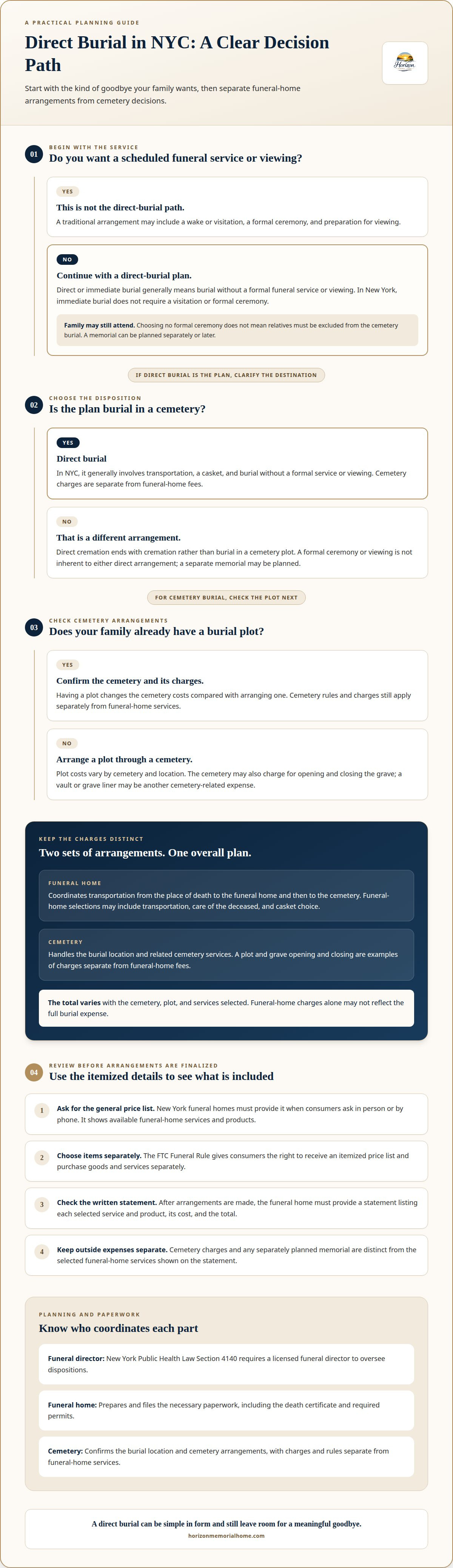
A direct burial in NYC means burial without a formal funeral service or viewing. Understanding what a direct burial in NYC involves can help you decide whether this simpler arrangement fits your family’s wishes. You can hold a memorial separately.
A simpler arrangement can still make room for a meaningful goodbye. This guide explains what direct burial in NYC involves, how funeral-home services and cemetery charges differ, and what planning and paperwork to expect. You can take each decision one step at a time.
Key Takeaways
- Separate funeral-home services from cemetery charges to understand what makes up the full burial arrangement.
- Review an itemized price list and written statement to see the selected services, products, and total cost clearly.
- Plan for cemetery arrangements, required paperwork, and the family’s preferences as part of the overall process.
- A New York burial-assistance application may be submitted up to 120 days after a loved one’s death, according to the New York City Human Resources Administration.
Table of Contents
- Burial without a formal funeral or memorial service
- What is a Direct Burial?
- General price lists and itemized costs
- Planning considerations and paperwork
- Horizon Funeral Home: Direct Burial
Burial without a formal funeral or memorial service
A direct burial focuses on burial rather than a scheduled funeral service, viewing, or embalming. In New York, immediate burial doesn’t require a visitation or formal ceremony.
Can family members attend? Yes. A burial without a formal funeral service can still include family at the cemetery. Choosing not to have a ceremony does not mean relatives must be excluded.
Cost Savings Compared With Traditional Funerals
Direct burial can cost less than a traditional funeral because it involves fewer services. A traditional arrangement may include a wake or visitation, a formal ceremony, and preparation for viewing, while direct burial centers on transportation and burial.
The difference is which services your family wants, not whether the goodbye matters. You can plan a memorial separately or later, giving relatives a chance to gather in a way that suits their needs.
Transportation to the Funeral Home and Cemetery
Transportation moves the deceased from the place of death to the funeral home and then to the cemetery. It is a practical part of coordinating direct burial, even when no formal funeral service is scheduled.
The funeral home generally arranges transportation, while the cemetery handles the burial location and related cemetery services. Keeping these roles distinct helps clarify which arrangements belong to the funeral home and which are handled by the cemetery.
New York funeral homes must provide a general price list when consumers ask in person or by phone. The itemized list helps you review available services and goods before choosing. After arrangements are made, the funeral home must provide a written statement listing each selected service and product, its cost, and the total.
The FTC Funeral Rule gives consumers the right to receive an itemized price list and purchase goods and services separately. You can review the listed items and choose those that fit the arrangement. Cemetery charges, such as the plot and grave opening and closing, are separate from funeral-home charges.
What is a Direct Burial?
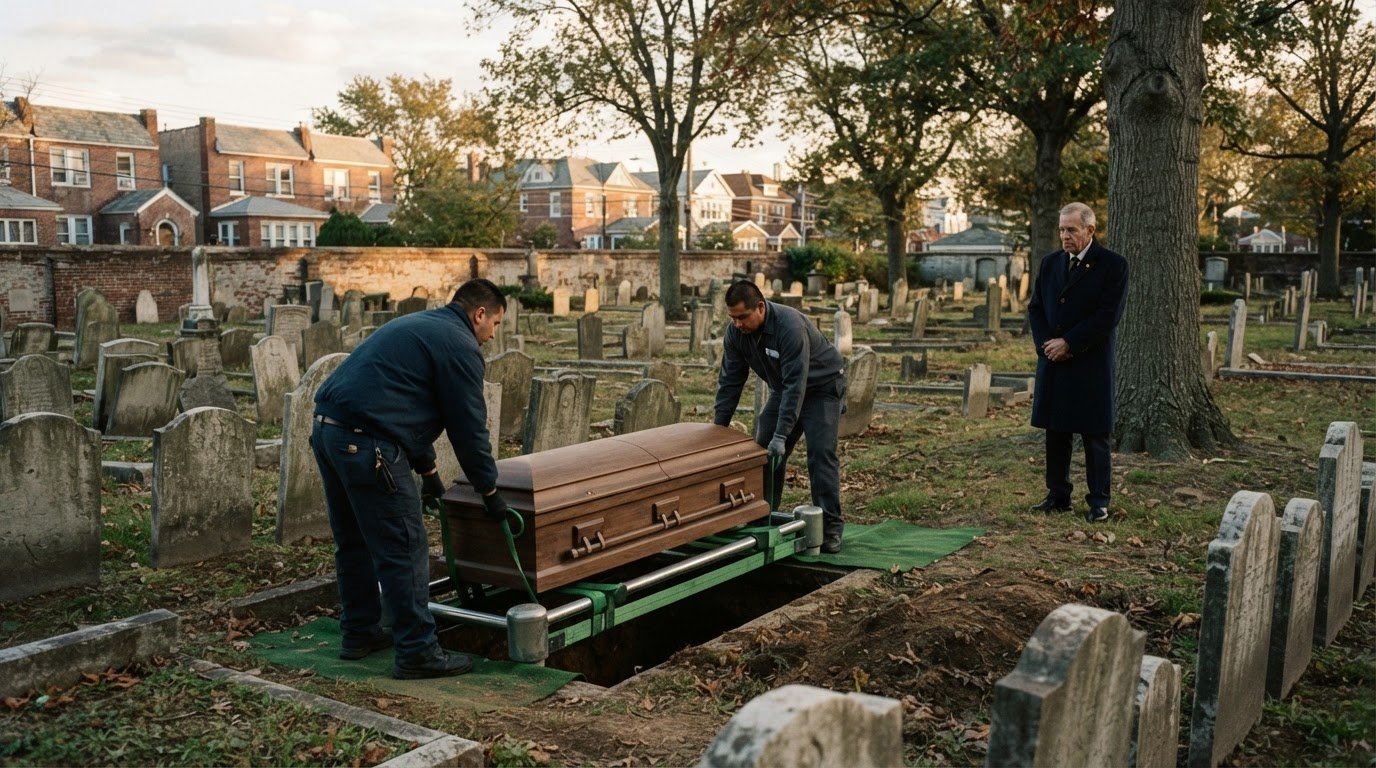
In New York City, direct burial generally involves transportation, a casket, and burial without a formal service or viewing. Cemetery charges are separate from funeral-home fees, so the total varies with the cemetery, plot, and services selected.
If your family does not already have a burial plot, it must arrange one through a cemetery. The cemetery may also charge for opening and closing the grave. These costs are separate from the funeral home’s services, so its charges alone may not reflect the full amount.
Plot costs vary by cemetery and location. This is why cemetery arrangements matter when considering the overall expense. A family with an existing plot will have different cemetery costs from one that needs to arrange a plot.
Before making arrangements, find out whether a burial plot is available and which cemetery will handle the burial. Cemetery charges and rules apply separately from funeral-home services. Keeping that distinction clear helps you identify who handles each part of the plan and which costs belong to each.
Direct burial and direct cremation are different choices. Direct cremation ends with cremation rather than burial in a cemetery plot. With burial, the deceased is placed in a casket and buried. A formal ceremony or viewing is not inherent to either direct arrangement, though families may plan a separate memorial.
An elaborate casket or viewing is not required for direct burial. Compare the arrangements under consideration and what each includes: funeral-home services, the casket, cemetery charges, and any separately planned memorial. This breakdown helps clarify the total without treating funeral-home charges as the entire expense.
General price lists and itemized costs
Direct burial involves funeral-home services and may also involve separate cemetery charges. An itemized breakdown helps you distinguish between them.
Direct burial and immediate burial generally describe burial without a formal funeral service or viewing. “Immediate” emphasizes that burial takes place without those services; it does not describe a different type of burial.
Potential Costs and Price Comparisons
A general price list shows which funeral-home services and products are available and how they are itemized. New York funeral homes must provide the list when consumers ask in person or by phone.
The total varies with the arrangements, including transportation, care of the deceased, casket selection, and cemetery or other outside-provider charges. Review the listed services alongside the written statement provided after arrangements are made. It identifies each selected service and product, its cost, and the total.
Immediate Burial and Excluded Costs
An immediate burial arrangement may not include every expense associated with burial. Cemetery charges are separate from funeral-home charges and may include a plot and grave opening and closing.
Embalming is not always required for direct burial without a public viewing; confirm what applies to the specific arrangements. A family may plan a memorial separately, as an event distinct from the burial arrangements. The itemized statement helps distinguish selected services from separate cemetery or memorial expenses.
Casket, Plot, and Headstone Costs
A casket, cemetery plot, and headstone are separate items to consider in a burial plan. The casket is used for burial, the plot provides the cemetery location, and a headstone can mark the grave.
A cemetery may charge separately for opening and closing the grave. A vault or grave liner may also be a cemetery-related expense. These are not funeral-home services, so review the written statement and cemetery charges as separate parts of the total.
Planning considerations and paperwork
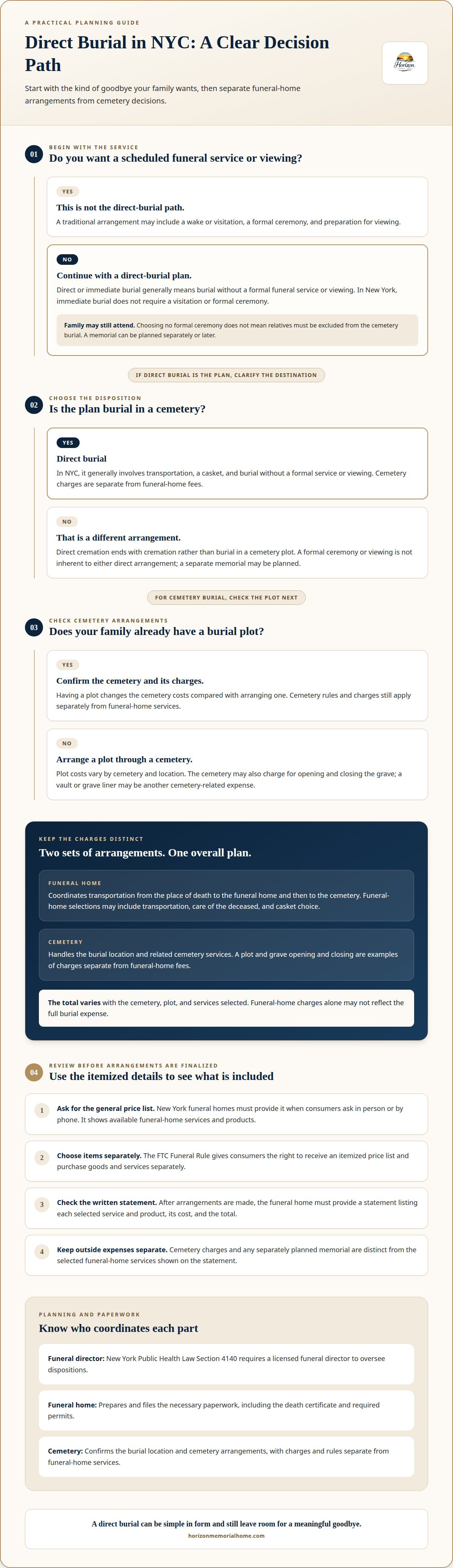
Planning direct burial means coordinating the family member responsible for decisions, the funeral director, the cemetery, and required documents. Clarifying who may authorize arrangements and whether you want a later memorial can help organize the process.
What are the NYC rules and permits for direct burial? New York Public Health Law Section 4140 requires a licensed funeral director to oversee dispositions. The funeral home prepares and files the necessary paperwork, including the death certificate and required permits.
How do you arrange a direct burial in New York City? Work with a funeral home to coordinate transportation, burial, and cemetery arrangements. Identify who has authority over the deceased’s remains and whether a ceremony will take place separately.
Families can decide how many copies they need for practical matters, while the funeral home coordinates the death certificate and required permits connected with disposition. Keeping documents organized can make the administrative steps clearer as relatives make personal decisions.
New York State law gives next of kin primary rights over a person’s remains. A person may appoint an agent in writing to control disposition; according to the New York State Legislature, the appointment must be signed by the person and agent and witnessed by two people. This can clarify who will make arrangements if family members need guidance about responsibility.
Financial assistance may also be relevant for families considering an affordable arrangement. According to the New York City Human Resources Administration, a burial-assistance application may be submitted up to 120 days after a loved one’s death. Families can consider that application alongside paperwork and ceremony planning, rather than treating it as a substitute for arranging burial.
For help coordinating the arrangements and paperwork, begin planning a direct burial with a funeral home.
Horizon Funeral Home: Direct Burial
Horizon Funeral Home provides direct burial for families who want burial without a traditional funeral service. If you are weighing burial against cremation or a traditional funeral, the team can explain the available arrangements and help you choose an approach that reflects your family’s wishes. Horizon also coordinates worldwide transportation, subject to verification of documents, carrier availability, and receiving-provider requirements.
Direct burial keeps the arrangements focused on burial, while families can choose to remember their loved one separately. The next step is a conversation about your preferences and how you would like to honor the person who has died. Contact Horizon Funeral Home to discuss direct burial and the support your family needs.
Choose the Next Step With Care
Understanding what a direct burial in NYC means can help you begin a family conversation, but you do not have to settle every personal detail at once. Start with what matters most: who will guide decisions, whether you want a gathering, and how you hope to remember your loved one. Those preferences can shape a thoughtful, manageable arrangement.
If your circumstances or wishes point toward another path, Horizon Funeral Home also offers traditional funeral services, cremation, and worldwide transportation. A conversation can help you consider which direction best fits your family’s needs and values.
Contact Horizon Funeral Home to talk through the arrangements. Take the next step at your own pace, with your family’s wishes at the center.
Frequently Asked Questions
What do you Need to Consider?
Start by identifying who will make the arrangements, whether a cemetery plot is available, and whether relatives want a later gathering. For families in Brooklyn, Queens, Staten Island, Manhattan, the Bronx, or Nassau County, the cemetery location can shape transportation and coordination. Also consider religious or personal preferences, who should be informed, and whether to hold a separate memorial. These choices help define the arrangement.
Can I be buried without a service?
Yes. A formal funeral service or visitation is not required for burial, and families can choose a simple arrangement without a ceremony. Relatives may still want a moment together, such as a private gathering after burial or a memorial later. The timing and format can reflect family traditions, the wishes of the person who died, and what feels manageable for those attending.
What about the Fees?
There is no universal total for every direct burial. The amount varies with the funeral-home services and merchandise selected, transportation, and outside providers. Cemetery or clergy charges, for example, may be separate from funeral-home fees. Request the selected items and total in writing, then distinguish funeral-home charges from those billed by a cemetery or another provider.
What does direct burial mean?
Direct burial means the deceased is buried without a formal funeral service or public viewing as part of the arrangement. It is burial, not cremation, and uses a casket for interment. Families can still gather or hold a separate memorial. This option may suit relatives who prefer a simpler service structure or want to plan a remembrance at another time.
How much does direct burial cost in NYC?
The total varies with the services and merchandise selected, transportation, and cemetery or other outside-provider charges. A cemetery plot, grave opening, and marker can affect the overall amount, especially if the family does not already have a plot. Request an itemized written estimate for the specific arrangements; it separates selected funeral-home items from charges set by outside providers.
How soon after death can a direct burial take place in NYC?
Direct burial in the United States commonly takes place within 24 to 72 hours after death, though arrangements may occur within a few days. In New York City, timing involves completing required paperwork and coordinating transportation and cemetery scheduling. The funeral director oversees disposition and related arrangements, while the cemetery’s schedule also shapes when burial can proceed.