
When a loved one passes away at home in Astoria or in a hospital in Flushing, the sudden silence can feel heavy with a thousand unspoken questions. You might feel a pressing need to act, yet the weight of your grief makes the simplest tasks feel monumental. Understanding the first steps after a death in Queens is about more than just paperwork; it's about finding a steady path through one of life's most difficult moments. It's completely natural to feel overwhelmed by the thought of New York City bureaucracy or the fear of missing an important legal deadline while your heart is elsewhere.
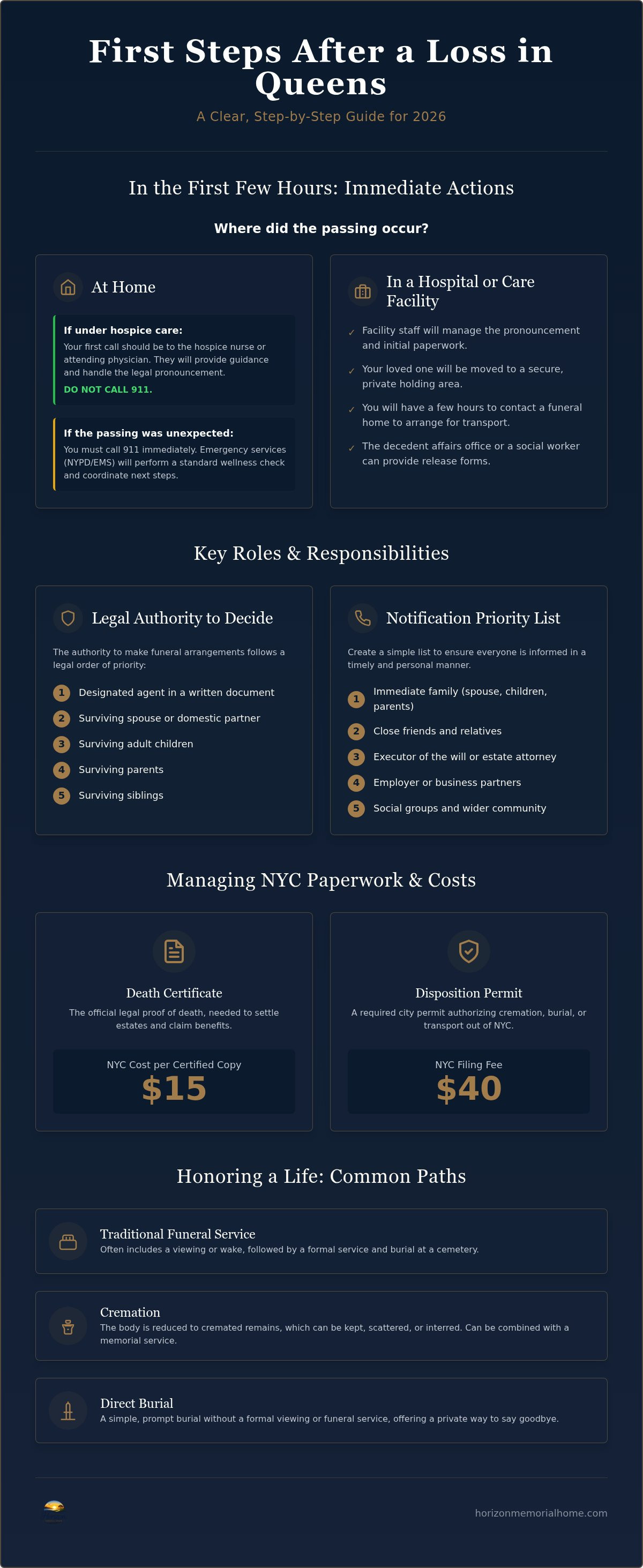
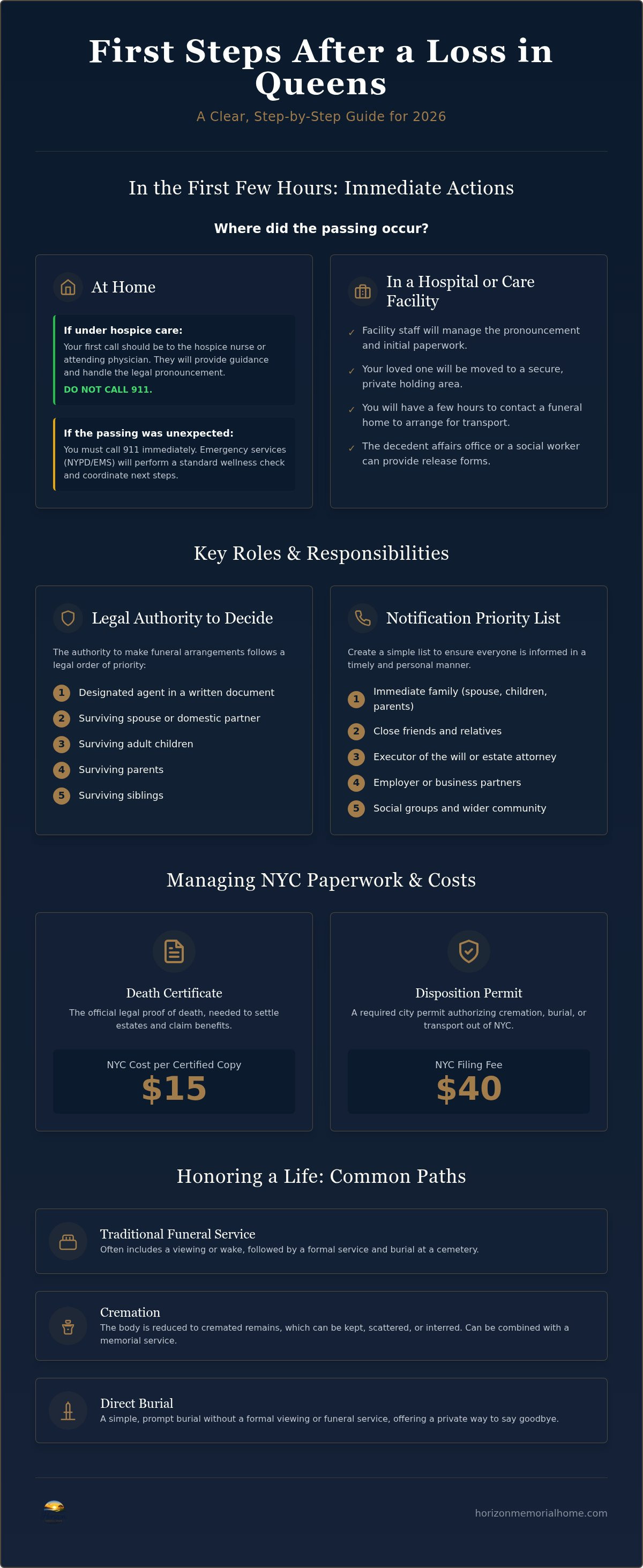
We understand that you need a sense of control and the reassurance that your loved one is being cared for with dignity. This guide offers a clear, step-by-step checklist to help you navigate the immediate logistical and legal requirements in 2026, from obtaining a $15 death certificate to securing the necessary $40 disposition permit. You'll learn exactly who to call first, how to ensure legal compliance, and how to begin the process of honoring a life well-lived. We'll walk through the essential notifications, transport logistics, and the quiet, methodical actions that will help you move forward with confidence and peace.
Key Takeaways
- Identify the immediate actions required based on whether the passing occurred at home or in a facility, including establishing legal next-of-kin authority.
- Navigate the essential first steps after a death in Queens with a clear checklist for notifying family and locating important pre-arranged funeral plans.
- Understand the specific NYC requirements for death certificates and disposition permits to ensure your loved one is cared for in full legal compliance.
- Explore the differences between traditional funeral services, cremation, and direct burial to find the path that best honors your family's traditions and heritage.
- Learn how professional coordination can manage complex logistics like worldwide transportation or veteran honors, giving you the space to focus on your emotional needs.
Table of Contents
- Immediate Steps: What to Do in the First Few Hours
- Notifying Family and Securing the Estate
- Arranging Transportation and Choosing a Funeral Home
- Managing Paperwork: Death Certificates and Legal Filings
- Planning the Service: Honoring a Life in Queens
Immediate Steps: What to Do in the First Few Hours
The moments following a loss are often a blur of emotion and quiet disbelief. While your heart needs space to grieve, there are practical requirements that begin almost immediately. Taking the first steps after a death in Queens involves identifying the setting and understanding the local protocols that ensure your loved one is treated with the highest level of care. In New York state, a legal pronouncement of death is the official declaration by a licensed healthcare professional confirming that life has ceased. This document is the foundation for all the arrangements that follow.
Identifying who has the legal authority to make decisions is a vital part of this early process. Generally, this responsibility falls to a designated agent named in a written instrument or the surviving spouse; followed by children, parents, or siblings. In some instances, the NYC Office of Chief Medical Examiner (OCME) may become involved. This usually happens if the death was sudden, accidental, or occurred under circumstances that require a medical investigation. While the involvement of a city agency can feel intimidating, the OCME's role is to provide clarity and ensure all legal standards are met before the body is released to a funeral home.
If the Death Occurs at Home in Queens
If your loved one was under hospice care, your first call should be to the hospice nurse or the attending physician. They'll guide you through the next steps and handle the pronouncement. You don't need to call 911 in this situation. However, if the passing was unexpected, you must call emergency services. When the NYPD or EMS arrives at a Queens residence, they're there to perform a standard wellness check and document the scene. It's a routine part of the city's safety protocol, though it may feel overwhelming during a time of loss. Once the police have completed their report, they'll coordinate with the Medical Examiner or allow you to contact a funeral director.
If the Death Occurs in a Hospital or Care Facility
In a setting like Mount Sinai Queens or a local nursing home, the facility staff will manage the initial paperwork and pronouncement. They'll move your loved one to a secure holding area while you begin making decisions. You'll typically have a few hours to notify a funeral director to coordinate the pickup. It's helpful to speak with the social worker or the decedent affairs office; they can clarify facility-specific timelines and release forms. This is also a time when many families begin reflecting on funeral customs and rituals that align with their family heritage. Asking the hospital staff about the release process early helps ensure a smooth transition to professional care without unnecessary delays.
Notifying Family and Securing the Estate
Once the immediate medical and legal pronouncements are handled, your focus naturally shifts to the people and possessions left behind. This phase of the first steps after a death in Queens is often the most emotionally draining. It requires you to be the bearer of difficult news while simultaneously managing the safety of a household. It's a heavy burden to carry, but taking these steps methodically can help you maintain a sense of order when everything feels uncertain.
Start by creating a simple notification priority list. Your first calls should go to immediate family members, followed by close friends and the executor named in the will. Because our Queens community is a vibrant tapestry of cultures, many families find themselves coordinating across multiple time zones. If you're managing international communication, consider using secure messaging apps for quick updates, but try to reserve the most significant news for a direct phone call. This personal touch respects the weight of the moment and offers a small sense of connection despite the distance.
Communicating the Loss Compassionately
Sharing the news of a loss is never easy. It's helpful to keep your initial message brief and direct. You might say, "I have some very sad news to share," and then allow a moment of silence for the other person to process your words. When it comes to social media, try to wait until you're certain all close relatives have been notified personally. If you find yourself overwhelmed by the prospect of coordinating with relatives in other countries, seeking specialized support for worldwide transportation and logistics can provide much-needed relief. Having an expert guide helps ensure that distant family members feel included and informed throughout the process.
Immediate Property and Legal Safeguards
While you're managing these conversations, you must also ensure the physical security of your loved one's estate. This includes locking their home, securing any vehicles parked on Queens streets, and checking that pets or dependents are receiving immediate care. Take a quiet moment to look for a "Letter of Instruction" or a folder containing pre-arranged funeral plans. These documents are often kept in a desk drawer or a small home safe. They serve as a roadmap, helping you honor your loved one’s specific wishes without the stress of second-guessing. Try to avoid making any major financial decisions or closing accounts in the first 48 hours. Your priority right now is simply gathering essential documents, like life insurance policies and the original will, so they're ready when you need them.
Arranging Transportation and Choosing a Funeral Home
Deciding on a final resting place is one of the most significant first steps after a death in Queens. This transition begins with the dignified transfer of your loved one from their place of passing to a professional care facility. It's a delicate moment that requires both technical skill and deep respect. As you look for a partner in this journey, remember that the FTC Funeral Rule is designed to protect you. Every funeral home is required to provide a General Price List (GPL) the moment you ask about services. This document ensures transparency, allowing you to understand the costs of Traditional Funeral Arrangements in Brooklyn or Queens without feeling pressured during a vulnerable time.
The logistics of moving a body across NYC boroughs requires a director who understands the rhythm of the city. From navigating the specific release protocols of local hospitals to managing the timing of transport through heavy traffic, professional coordination is essential. This process isn't just about moving from point A to point B; it's about ensuring your loved one is treated with the highest level of dignity at every stage of the journey.
Selecting a Local Guide in NYC
Queens is a place of incredible diversity, and your choice of a funeral director should reflect that. In 2026, it's important to find a guide who isn't just familiar with the geography of the boroughs but also deeply understands local cultural traditions. Whether your family requires specific religious rites or a secular celebration of life, the facility must be equipped to honor those wishes with precision. A director who acts as a patient listener can help coordinate the movement of your loved one across the city's busy landscape, ensuring they remain in safe, professional hands every mile of the way.
Special Considerations for International Transportation
For many families in our global community, honoring a loved one means returning them to their ancestral home. This involves a complex layer of international funeral transportation that requires meticulous coordination. Managing the requirements of various consulates and the strict regulations of international airlines at JFK or Newark can be overwhelming. Horizon Funeral Home specializes in this global logistical complexity. We handle the specialized permits, translation of documents, and secure transit arrangements, allowing you to focus on your family while we bridge the distance between Queens and the rest of the world.
Managing Paperwork: Death Certificates and Legal Filings
The administrative side of loss often feels detached from the emotional reality you're living through, yet it's a vital part of the first steps after a death in Queens. In New York City, the Department of Health and Mental Hygiene oversees the registration of all deaths. To begin this process, you'll need to gather specific details about your loved one. This includes their Social Security number, birthplace, and the full names of both parents, including their mother's maiden name. While the registration itself must happen within 72 hours of the passing, the typical 2026 processing time for NYC death certificates is approximately 24 to 48 hours once the medical professional and funeral director have completed their digital filings.
Most families find they need between 10 and 15 certified copies of the death certificate. While each copy costs $15 in New York City, having an ample supply prevents delays when you're ready to handle life insurance claims, property transfers, or closing bank accounts. If you're ordering these through the city's eVital system, keep in mind there's an additional $9.30 processing fee for online orders. It's a small logistical detail, but knowing these numbers ahead of time helps you maintain a sense of control over the process.
Working with the NYC Department of Health
Your funeral director acts as a steady advocate during this phase, navigating the Electronic Death Registration System (EDRS) on your behalf. They'll coordinate the payment of the $40 disposition permit fee and the $28 EDRS fee required by the city. It's essential to review the draft certificate with your director before it's finalized. Correcting a clerical error after the document is officially recorded can be a lengthy, frustrating process involving the city's correction unit. Taking a few extra minutes to verify spellings and dates now saves significant time later.
Notifications for Government Agencies
Once you have the certificates in hand, several agencies require prompt notification to prevent future legal or financial complications. You should contact the Social Security Administration to stop benefit payments; they'll also determine if you're eligible for the one-time $255 death benefit. For those who served our country, notifying the VA is a priority to arrange for veteran funeral honors in New York. Don't forget to reach out to union offices, former employers, and pension funds to discuss survivor benefits. If you find the mountain of paperwork daunting, our team is here to help you manage the NYC death certificate process with expertise and care.
Planning the Service: Honoring a Life in Queens
Once the legal forms are submitted and the physical care of your loved one is secured, you can finally turn your attention to the heart of the matter: telling their story. Planning a service is one of the most personal first steps after a death in Queens. It's a time to reflect on the values, traditions, and unique personality that defined a life. Whether you're considering a traditional burial, a quiet cremation, or a direct burial, the choice should feel like a natural extension of who your loved one was. Many families today find comfort in personalized memorial services in Brooklyn and Queens that break away from rigid formats to celebrate a life with music, shared stories, and cultural honors.
Selecting a venue is about finding a space that feels like a sanctuary for your grief and a stage for your memories. Queens offers a variety of settings, from traditional chapels to more contemporary spaces that reflect the borough's diverse character. We're here to help you coordinate the details, ensuring that religious rites, military honors, or cultural traditions are woven seamlessly into the ceremony. This meticulous coordination allows you to be present with your family while we handle the background logistics that make a service run smoothly.
Burial and Cremation Options
In our densely populated borough, tradition and personal preference often influence the path you choose. Traditional services offer a familiar structure, usually involving a viewing and a formal ceremony before a burial. Direct cremation or direct burial provide a simpler, more immediate approach. These are often chosen for their unhurried nature or to accommodate families who wish to hold a memorial service at a later date. If pre-planned arrangements already exist, we'll carefully review those documents to ensure every specific wish is honored. While local cemeteries have their own rules for markers and interments, crematories offer a different kind of flexibility for families who wish to keep their loved one’s remains close or scatter them in a meaningful location.
Finalizing the Details with Compassion
The beauty of a New York story often lies in the small, vivid details. As you write an obituary, think of the places they loved, from a favorite park in Sunnyside to a corner bakery they visited for decades. These human touches make a tribute feel authentic and deeply personal. While we manage the primary arrangements, you can select stationery and music that resonate with your family's heritage. For floral tributes, we'll coordinate with your chosen external providers to ensure the arrangements arrive on time and reflect your aesthetic. As you navigate these final steps, you might find yourself thinking about the future. Exploring funeral preplanning services in NYC can be a gentle way to provide peace of mind for yourself and your surviving family members, ensuring that the path forward is always paved with clarity and love.
Finding Your Way Forward with Peace and Clarity
Navigating the first steps after a death in Queens is a journey that requires both practical knowledge and emotional space. You've learned how to manage the immediate hours of a loss, from the initial legal pronouncements to the meticulous coordination of city paperwork. By securing essential documents like certified death certificates and identifying the rightful next of kin, you've already begun to build a foundation of order during a time of deep uncertainty. Remember that you don't have to carry the weight of these logistical details alone. Whether you're planning a traditional service or a simple cremation, the focus remains on honoring a unique life with dignity and respect.
Whether you need expertise in international repatriation or dedicated veteran honors coordination, we're here to stand beside you as a steady, patient guide. Our team is available 24/7 for immediate assistance across the NYC metro area, ensuring your loved one is cared for with the highest degree of professional reliability. Contact Horizon Funeral Home for steady, compassionate guidance during this difficult time. You have the strength to handle these next chapters, and we're honored to walk this path with you at a pace that feels right for your family.
Frequently Asked Questions
Who do I call first if someone dies at home in Queens?
If the death was expected under hospice care, call your hospice nurse or physician immediately. They'll handle the legal pronouncement and guide you through the next moments. For unexpected deaths, dial 911 so the NYPD and EMS can perform a standard wellness check. Once the authorities complete their report and clear the scene, you can contact a funeral director to begin the transfer process and ensure professional care begins.
How do I get a death certificate in New York City?
Your funeral director facilitates the electronic filing through the NYC Department of Health. To order certified copies, you'll use the city's eVital system. Each copy costs $15, and there's a $9.30 processing fee for online orders. Most families find it helpful to order 10 to 15 copies to handle various estate matters. This methodical approach ensures you have the documentation needed for banks and insurance providers without any unnecessary delay.
Does the funeral home handle the transportation from the hospital?
Yes, a licensed funeral director will manage the transfer from the hospital or nursing home. After you notify the facility's decedent affairs office, the funeral home coordinates the timing of the pickup. This is a vital part of the first steps after a death in Queens, as it allows the family to step back from logistics and focus on their emotional needs while professional care and preparation begin at our facility.
What is the role of the Queens Medical Examiner?
The Queens Office of Chief Medical Examiner becomes involved during sudden or unexplained passings. Their role is to investigate the cause of death and ensure all legal standards are met. While this city agency involvement can feel intimidating, it's a routine safety protocol. Once the examiner finishes their review, they'll release the body to your funeral director, who will then coordinate the next steps for the service, burial, or international transportation.
How many copies of the death certificate should I order?
We recommend ordering between 10 and 15 certified copies of the death certificate. You'll need original copies for closing bank accounts, filing life insurance claims, and transferring property titles. Since each copy costs $15, ordering them all at once is more efficient than making multiple requests later. This proactive step helps you maintain control over the administrative side of the estate while reducing future stress and paperwork for the entire family.
Can I arrange a funeral if the family is currently outside the US?
You can absolutely make arrangements even if you're currently overseas. We specialize in worldwide transportation and can manage the entire process through phone and digital communication. Our team handles the complex logistics of consulates and international transit, allowing you to focus on your family. We act as your local guide in Queens, ensuring your loved one is cared for with dignity while you coordinate every detail from a distance.
What happens if the deceased was a veteran?
Veterans are eligible for specific honors, such as a presidential memorial certificate and a burial flag. You'll need to provide the discharge papers, known as the DD-214, to verify eligibility. We offer dedicated support for veteran honors, coordinating with the VA to ensure a dignified tribute. This includes arranging for military honors at the service, honoring their commitment to our country with the respect and gratitude that their service deserves.
How long does it typically take to schedule a funeral in NYC?
It typically takes 3 to 7 days to finalize and hold a service in New York City. This timeframe accounts for the 72-hour registration requirement and the processing of the $40 disposition permit. Understanding these first steps after a death in Queens helps you plan with a clear mind. We work at a deliberate, unhurried pace to ensure every detail of the burial or cremation is handled with the care your family deserves.