
What if a traditional ceremony wasn't just a set of rigid rules, but a steady hand designed to hold you when everything else feels like it's falling apart? When you're moving through the early days of grief, the sheer volume of logistics can feel heavy and confusing. It's completely natural to worry about missing a meaningful step or to feel unsure about exactly what is included in a traditional funeral service beyond the basic professional fees. You deserve a sanctuary where you can focus on your memories rather than the fine print of a contract.
We understand that you need a partner who stands beside you, offering both professional reliability and gentle emotional support. In this guide, we'll help you find peace of mind by breaking down the essential components of a traditional farewell into manageable, bite-sized pieces. You'll gain a clear understanding of the service timeline, learn how to navigate service packages with confidence, and discover how to personalize a familiar structure to honor your loved one's unique story. From the quiet visitation to the final committal, we're here to ensure every detail is handled with dignity and care.
Key Takeaways
- Understand the three essential stages of a farewell, including the visitation, ceremony, and committal, and how they provide a structured space for communal healing.
- Gain clarity on what is included in a traditional funeral service, from the coordination of the basic services fee to the professional preparation of your loved one.
- Discover how to blend time-honored traditions with modern personal touches like live-streaming and tribute videos to reflect a unique life story.
- Learn how a meticulous coordinator manages complex logistical details, acting as a steady presence so you can focus on your family's emotional needs.
- Navigate the specific requirements of planning a dignified farewell within the NYC metro area with specialized guidance for Brooklyn and the surrounding boroughs.
Table of Contents
- What is a Traditional Funeral Service? Defining the Pillars of Remembrance
- The Three Main Stages of a Traditional Funeral Program
- The Role of the Funeral Director: Professional Services and Logistics
- Personalizing the Tradition: Honoring a Unique Life
- Moving Forward with Clarity and Peace
What is a Traditional Funeral Service? Defining the Pillars of Remembrance
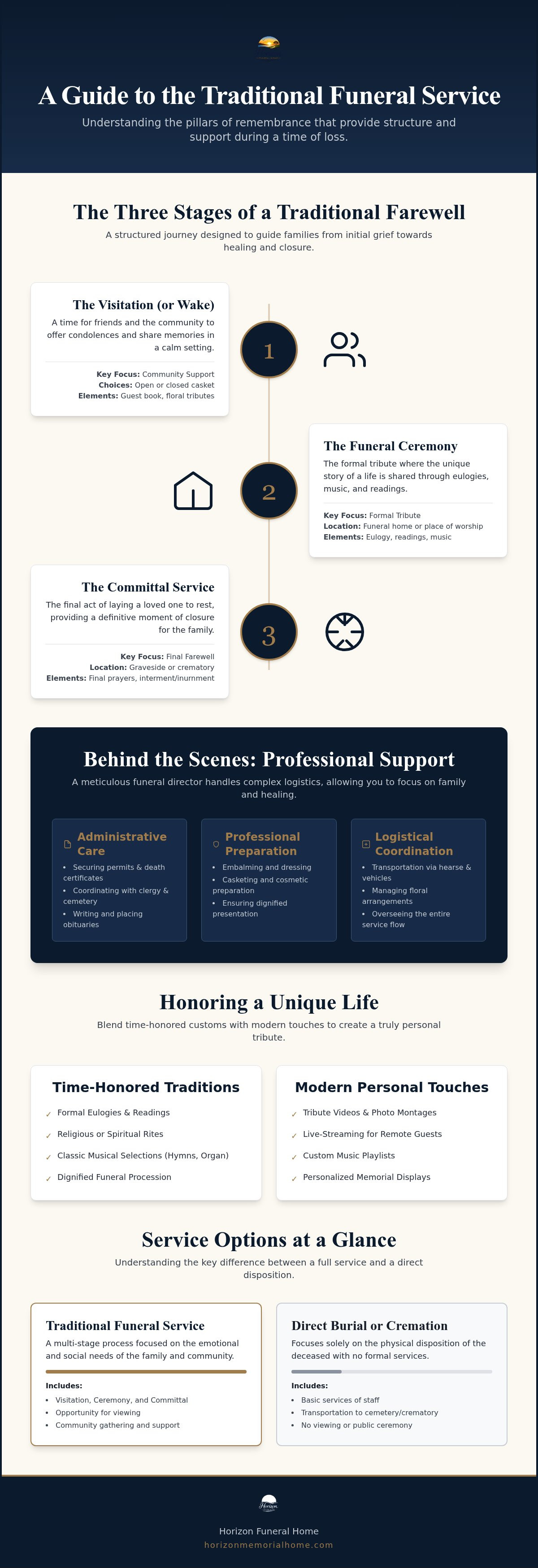
A traditional funeral is much more than a logistical checklist. It's a series of meaningful events designed to honor a life lived while supporting those left behind. This framework acts as a steady anchor for families during a time of total upheaval. When people ask what is included in a traditional funeral service, they're often seeking a roadmap through the heavy fog of grief. It's a structured journey that usually involves three distinct stages: a visitation, a formal ceremony, and a final committal at the resting place.
In 2026, the definition of "traditional" has expanded to be more inclusive. While many people still choose a casketed burial, a traditional service can also precede a cremation. The defining factor isn't the method of disposition, but rather the presence of these time-honored funeral customs and rituals that bring a community together. Unlike a "direct" burial or cremation, which focuses solely on the physical disposition, a full traditional service prioritizes the emotional and social needs of the survivors.
The Core Elements of the Traditional Framework
This multi-stage process provides a rhythm to the mourning period, helping families move from the initial shock toward a sense of peace. Each pillar serves a specific purpose:
- The Visitation (Wake): This is a time for community support. It offers friends and extended family a chance to offer condolences and, if the family chooses, to view their loved one one last time.
- The Funeral Service: This is the formal tribute. Whether held in a house of worship or a funeral home chapel, it's a dedicated space for prayers, eulogies, and music that reflects the individual's spirit.
- The Committal: This is the final act of laying a loved one to rest. It takes place at the graveside or the crematory, providing a definitive moment of closure.
Why Families Choose the Traditional Path
Choosing this path offers a sanctuary of stability. Familiar rituals provide comfort because they don't require you to reinvent the wheel while you're hurting. It's an opportunity to tell a full life story, ensuring that your loved one is remembered for more than just their final days. By understanding what is included in a traditional funeral service, you can see how a professional team steps in to handle every moving part. From coordinating with clergy to managing the logistical details, a meticulous coordinator ensures the process is smooth, leaving you free to focus on your family and your memories.
The Three Main Stages of a Traditional Funeral Program
A traditional program typically unfolds over two or three days, providing a deliberate pace for reflection and communal support. This chronological flow allows the community to gather, share memories, and eventually escort their loved one to their final resting place. Throughout these stages, the casket remains a central focus. It symbolizes the reality of the loss while offering a physical space for final respects. In a bustling city like New York, the funeral procession serves as a particularly poignant moment. It creates a dignified pause in the urban rush as the cortege moves from the ceremony to the cemetery.
The Visitation or Viewing
The visitation is often the first opportunity for friends and neighbors to offer their presence. We focus on creating a peaceful environment where conversation and quiet reflection can coexist. You'll need to decide between an open or closed casket. An open casket can offer a sense of finality for some, while others prefer the privacy of a closed lid. During this time, we manage the guest book and memorial folders, ensuring that every floral display from your chosen florist is placed with care. Understanding consumer rights under the Funeral Rule helps you feel empowered as you make these specific choices about what is included in a traditional funeral service.
The Formal Funeral Ceremony
The ceremony itself is the spiritual or secular core of the program. It typically includes readings, musical selections, and reflections led by a member of the clergy, a celebrant, or a close family member. The eulogy serves as the heart of the service's personal tribute. This is the moment where the individual's unique story is shared with the community. It bridges the gap between the person they were and the legacy they leave behind. If you're feeling unsure about how to structure these moments, our team can help you explore your options with patience and care.
The Committal Service at the Cemetery
The committal is the final act of service. At the graveside, the atmosphere shifts toward a quiet, definitive goodbye. This stage may include final prayers, the presentation of military honors for veterans, or symbolic gestures like placing a flower on the casket. We handle the meticulous coordination with cemetery staff for the opening of the grave and guide the pallbearers in their vital role. It's a heavy moment, but having a steady presence to manage the logistics ensures the transition to the final resting place is handled with the utmost dignity.
The Role of the Funeral Director: Professional Services and Logistics
When you begin exploring what is included in a traditional funeral service, you'll find that the expertise of a funeral director is the foundation of the entire process. The "Basic Services Fee" is a non-negotiable part of the arrangement because it covers the professional direction and logistical care that families need most. It includes the initial consultation, the planning of the service, and the constant coordination required to manage dozens of small but vital details. We take on this weight so you don't have to, acting as a steady presence that allows you to focus on your emotional needs and your family.
Behind-the-Scenes Coordination
Our team handles the administrative burden that can feel so heavy during the early days of grief. We secure the necessary health department permits and file the death certificate with precision, ensuring all legal requirements are met. This behind-the-scenes work involves constant communication with third parties, including clergy, musicians, and cemetery staff, to ensure everyone is in the right place at the right time. In the NYC metro area, managing the logistics of a funeral procession through unpredictable traffic is a specialized skill that requires a meticulous coordinator. We also help you navigate consumer rights under the Funeral Rule, ensuring you have total clarity on every service provided. If your loved one needs to be returned to their home country, we manage the complex paperwork and logistics of international funeral transportation with a steady, experienced hand.
Care and Preparation of Your Loved One
The physical care of your loved one is a sacred responsibility that we approach with quiet confidence. We maintain high professional standards for embalming, which is often necessary for public viewings and open-casket visitations to provide a sense of peace for the community. Our cosmetologists and dressing specialists work with a gentle touch to ensure a natural appearance that reflects the person you knew. For families of those who served our country, we offer dedicated support for veteran funeral honors. This includes the careful preparation of the military uniform and coordinating with honor guards for the final ceremony. We stand beside you as a patient listener, ensuring that every detail of the preparation is handled with the dignity and respect your loved one deserves.
Personalizing the Tradition: Honoring a Unique Life
There's a common misconception that choosing a traditional path means accepting a generic ceremony. In reality, the framework is just the beginning. While we've explored the logistical stages, the actual content of those moments is deeply flexible. When you look at what is included in a traditional funeral service, you'll find it's actually a supportive structure designed to be filled with the unique details of your loved one's life. This balance allows you to lean on time-tested rituals while ensuring the tribute feels authentic and personal.
Modern technology has become a gentle bridge for families separated by distance or circumstance. In 2026, we frequently integrate high-quality tribute videos and live-streaming into the traditional program. These digital touches don't detract from the dignity of the event; instead, they ensure that every friend and family member can participate in the community's goodbye. You can learn more about how personalized memorial services can be woven into a traditional framework to create a truly one-of-a-kind experience.
Creative Tributes Within the Ceremony
The visitation and service offer several opportunities to showcase the personality of the person being honored. We encourage families to think beyond standard templates. You might consider:
- Curated Playlists: Music is a powerful vessel for memory. Whether it's a favorite jazz record, a classic rock anthem, or a specific cultural melody, the right music sets a tone that feels right for your family.
- Hobby Displays: If your loved one was a gardener, a painter, or a dedicated sports fan, displaying their tools or creations brings their spirit into the room.
- Storytelling Eulogies: We help you craft a tribute that balances professional dignity with intimate storytelling. These shared memories are what turn a formal event into a heartfelt celebration of a full life.
Cultural and Heritage Considerations
Our role as a meticulous coordinator is to ensure that your specific heritage is respected and celebrated. We have deep experience accommodating diverse religious rites and community traditions, from specific prayer structures to unique mourning customs. Cultural Sensitivity is the cornerstone of modern funeral direction. We act as a patient listener, learning what matters most to your community so we can facilitate those rituals with quiet confidence. If you're ready to start planning a farewell that reflects your family's values, you can discuss these personal details with our team at any time.
Planning a farewell in the heart of New York City brings its own set of challenges. From the complexity of local regulations to the logistical puzzle of our streets, you need a steady presence to lead the way. We act as your calm, expert guide, standing beside you as you navigate the many choices involved in what is included in a traditional funeral service. Our goal is to provide a sense of sanctuary and stability, ensuring that every logistical detail is handled with meticulous care so you can focus on what truly matters: your family and your memories.
Serving the Five Boroughs and Beyond
Our experience stretches across every corner of the NYC metro area. Whether you are seeking traditional funeral arrangements in Brooklyn, or need assistance in Queens, Manhattan, the Bronx, Staten Island, or Nassau County, we understand the specific needs of these communities. We manage the delicate process of transfers between hospitals, nursing homes, and our care center with the utmost respect. For families who find themselves coordinating services from overseas, we provide a reliable point of contact here in the city. We act as your local hands and feet, managing the paperwork and coordination required to bring your loved one home or to their final resting place with quiet confidence.
Taking the Next Step with Compassion
The journey begins with the initial arrangement conference. This is a supportive, face-to-face conversation where we sit down together to map out the details of the ceremony. To help this meeting feel less overwhelming, it's helpful to bring along any vital statistics, a recent photograph for preparation, and any pre-arranged documents your loved one may have left. We also offer comprehensive funeral preplanning services in NYC for those who wish to ease the future burden on their families. This proactive step allows you to make decisions with a clear mind, ensuring your wishes are known and respected. Whether you are facing an immediate loss or simply looking for information for the future, we are here to offer the professional reliability and gentle emotional support you deserve. Please reach out to our team whenever you feel ready to talk.
Moving Forward with Clarity and Peace
Choosing a traditional path doesn't mean following a rigid template. It means embracing a supportive framework that has helped families find closure for generations. By understanding what is included in a traditional funeral service, you can move away from the overwhelming fog of logistics and toward a space of meaningful remembrance. You now have a clearer picture of how the visitation, ceremony, and committal work together to honor a life, and how professional coordination handles the heavy lifting of permits and preparation.
We're here to be that steady presence for you. Whether you need expert coordination of NYC logistics across all five boroughs, specialized help with worldwide transportation and repatriation, or dedicated assistance for veteran honors and benefits, our team stands ready to help. You don't have to navigate these complex details alone. We'll walk beside you, ensuring every detail is handled with the meticulous care and quiet dignity your loved one deserves.
Speak with a compassionate guide at Horizon Funeral Home today. You deserve the time and space to focus on your family, knowing that every detail is in safe, experienced hands.
Frequently Asked Questions
How much does a traditional funeral service typically cost in New York?
Costs in the NYC metro area depend on your specific choices and the service package you select. Rather than a flat fee, you'll receive a General Price List that itemizes every component from the basic services fee to transportation. This transparency is a legal right. it ensures you only pay for what you truly need while planning a dignified farewell in Brooklyn or the surrounding boroughs.
Can we have a traditional funeral service if we choose cremation?
Yes, you can certainly choose cremation while following a traditional framework. Many families in Manhattan and Queens opt for a full visitation and a formal ceremony with the casket present before the cremation takes place. This allows you to maintain the comfort of familiar rituals while choosing the final disposition that feels right for your loved one's wishes or your family's specific needs.
What is the difference between a wake and a funeral service?
A wake, also known as a visitation, is an informal period where the community gathers to offer support and share memories. It often includes a viewing of the loved one. In contrast, the funeral service is the formal ceremony that follows. It's a structured tribute involving readings, music, and eulogies, usually held in a chapel or house of worship before the final committal at the cemetery.
How long does a traditional funeral service usually last?
A formal funeral ceremony typically lasts between 60 and 90 minutes, though this can vary based on religious rites or the number of speakers. When looking at the broader timeline of what is included in a traditional funeral service, the entire process usually spans two to three days. This includes the visitation periods and the travel time required for the procession through the five boroughs.
What should I wear to a traditional funeral service in 2026?
In 2026, the expectation for funeral attire in New York has shifted toward respectful business professional clothing. While traditional black is always appropriate, many families now prefer dark, muted colors like navy or charcoal. The most important factor is showing respect for the occasion. We suggest checking with the family or the funeral director if there are specific cultural or personal dress requests for the service.
Is a casket required for a traditional funeral service?
A casket is a standard part of a traditional service, especially when a viewing or visitation is involved. If you've chosen cremation, we can discuss options like a rental casket for the ceremony or a simple alternative container. Under the Funeral Rule, you have the right to purchase a casket from a third party, and we'll handle the coordination and delivery with the same meticulous care.
Can we personalize a traditional service with non-religious elements?
You can absolutely personalize a traditional service with secular or non-religious elements. The framework is designed to be a supportive vessel for your loved one's unique story. This might include a curated playlist of their favorite music, a digital tribute video, or a eulogy focused on their personal achievements and hobbies. We act as a patient listener to help you blend these modern touches with time-honored dignity.
How soon after death does a traditional funeral usually take place?
Most traditional services take place within three to seven days after a loss. This window allows enough time for the meticulous coordination of permits, the preparation of your loved one, and for family to travel to the NYC area. If your situation involves international transportation or specific religious requirements, we work closely with you to adjust this timeline while maintaining a steady, supportive presence throughout the process.