
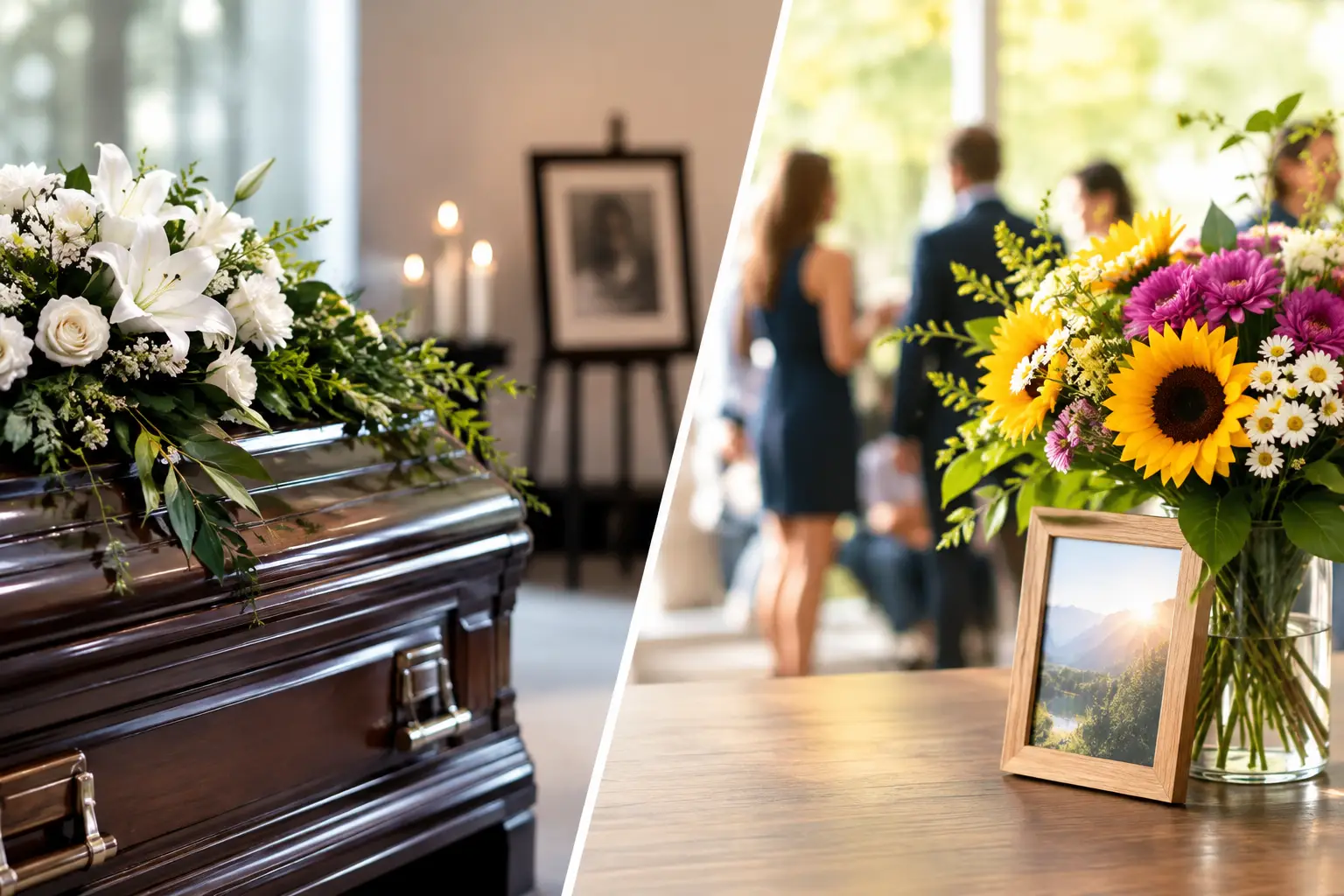
A family may know immediately that they want people together, yet still be unsure what kind of gathering will feel right. When considering a wake versus celebration service, the choice is rarely about choosing one “correct” way to grieve. It is about deciding what will give your family room to say goodbye, receive support, and honor the person who died in a way that feels true to them.
The terms can overlap, and customs vary widely across faiths, cultures, and families. A wake may be quiet and traditional, a celebration service may be formal and deeply spiritual, and either one can be held before or after burial or cremation. Understanding the purpose of each can make the decision feel more manageable.
What Is a Wake?
A wake is a gathering where family and friends come to pay respects to the person who died and offer comfort to those closest to them. It is often held before a funeral or burial, commonly at a funeral home, place of worship, or family home. In many traditions, the person may be present in an open or closed casket, though a viewing is not required for a gathering to be called a wake.
The atmosphere is usually reflective and personal. Guests may approach the family, share a memory, offer condolences, pray, or simply sit nearby. Some wakes follow longstanding religious or cultural customs, including prayers, readings, food, music, or designated times for visitation. Others are less structured, allowing people to arrive during scheduled hours and spend time with the family as they are able.
For many families, the value of a wake is its unhurried nature. A funeral ceremony can move quickly, especially when burial, transportation, or a religious schedule is involved. A wake creates more time for conversation, for extended family to gather, and for friends to be present without the pressure of a formal program.
When a wake may feel right
A wake can be especially meaningful when viewing the person is important to the family or when loved ones need a private, quiet setting before a larger funeral. It may also fit families with traditions that call for visitation, prayers, or an overnight gathering before final rites.
A wake does not have to be elaborate to be meaningful. A few photographs, a favorite piece of music, a memory table, or a guest book can help make the room feel personal. Families can also choose a closed casket, a photograph display, or an urn if an open-casket viewing does not feel right.
What Is a Celebration Service?
A celebration service, often called a celebration of life, centers on the person’s story, relationships, character, and impact. It may take place soon after death, following cremation or burial, or weeks or months later when relatives have had time to travel. The tone may be uplifting, but it does not require anyone to hide sadness. Laughter, tears, gratitude, and grief can all belong in the same room.
Rather than following a fixed order of worship or funeral ritual, a celebration service often gives families more freedom to shape the gathering. It might include favorite songs, a slideshow, spoken tributes, poetry, religious readings, military honors, a shared meal, or a display of personal items. A service for a devoted gardener, for example, may include seeds for guests to take home. A gathering for a musician may feature a playlist or live performance.
A celebration service can be held at a funeral home, restaurant, community space, home, place of worship, or another appropriate venue. The setting matters less than whether it is accessible, comfortable, and suitable for the number of people expected.
A celebration does not have to feel informal
Some families hear “celebration” and picture a casual party. That can be right for some people, but it is not the only option. A celebration service can be dignified, carefully planned, and spiritually meaningful. It can include clergy, formal remarks, prayer, and a clear service order while still focusing on the life that was lived.
Likewise, a celebration does not need to be cheerful every moment. Calling it a celebration of life gives people permission to remember what made someone special. It should never create pressure to perform happiness before a family is ready.
Wake Versus Celebration Service: The Meaningful Differences
The clearest distinction in a wake versus celebration service is usually the focus. A wake often emphasizes presence, farewell, and support for the immediate family. A celebration service often emphasizes storytelling, remembrance, and the individual life of the person being honored.
Timing is another difference. Wakes are commonly held in the days before a funeral, burial, or cremation. Celebration services are often more flexible and may happen after final disposition, especially when family members are coming from other states or countries.
There are practical considerations as well. If the person will be present for viewing, arrangements for care, preparation, clothing, and visitation are needed. If the gathering will take place after cremation, an urn may be present, but it does not have to be the focal point. A family can also hold both: a wake for close family and community members before the funeral, followed by a celebration service later when there is more time to gather and share memories.
Neither option is more loving, more respectful, or more complete than the other. The best choice depends on your loved one’s wishes, your family’s traditions, and what people need at this particular moment.
How to Decide What Your Family Needs
Start with any wishes your loved one expressed. They may have spoken about a viewing, a religious service, cremation, favorite music, military recognition, or a preference for a simple gathering. Written preplanning instructions are helpful, but conversations and family memories can offer guidance too.
Then consider the people who will be affected most by the service. A spouse may need quiet time with close relatives. Adult children may want friends and coworkers to have a chance to pay respects. Grandchildren may find comfort in sharing stories or participating in a small reading. There is room to honor different needs within one plan.
These four questions can help bring the decision into focus:
- Would seeing the person, or having time beside the casket or urn, bring comfort to the family?
- Are there faith, cultural, or military traditions that should be included?
- Do important guests need time to travel to New York or from abroad?
- Would your loved one be best remembered through a formal farewell, personal stories, or a combination of both?
It is also reasonable to consider capacity. A large public visitation may be emotionally difficult for a small immediate family, while a private gathering may leave a wide circle of friends looking for a way to show support. Funeral professionals can help create boundaries, such as private family time before public visitation or a separate reception after the ceremony.
You Can Combine Tradition and Personal Meaning
Families do not need to choose between a traditional service and a personal one. A funeral can include a eulogy, favorite music, photographs, and a reception. A celebration service can include prayers, a procession, a clergy member, or readings from a faith tradition. The most meaningful arrangements often bring together what has mattered to the family over generations and what mattered to the person being remembered.
This is particularly important in culturally diverse families. Relatives may have different expectations about viewing, prayer, mourning periods, food, music, or the role of children at the service. Listening to those perspectives early can prevent misunderstandings later. It may not be possible to include every custom in full, but acknowledging what matters to each side of the family can make the gathering feel more caring and complete.
At Horizon Funeral Home, families can receive clear guidance on the practical details while keeping control of the decisions that are personal. That includes arranging visitation, coordinating cremation or burial, accommodating religious practices, and helping relatives who need time or support to participate.
Give Yourselves Permission to Choose Gently
There is no need to create a perfect service while grief is fresh. Choose the elements that feel most essential, and let the rest be simple. A room filled with familiar faces, a song that brings someone to mind, and a few honest words can carry more meaning than an elaborate program.
The gathering is not a test of how well a family grieves. It is a chance to make space for love, memory, and care for one another. Whatever form you choose, let it reflect the person you miss and give your family a place to begin carrying their memory forward.