
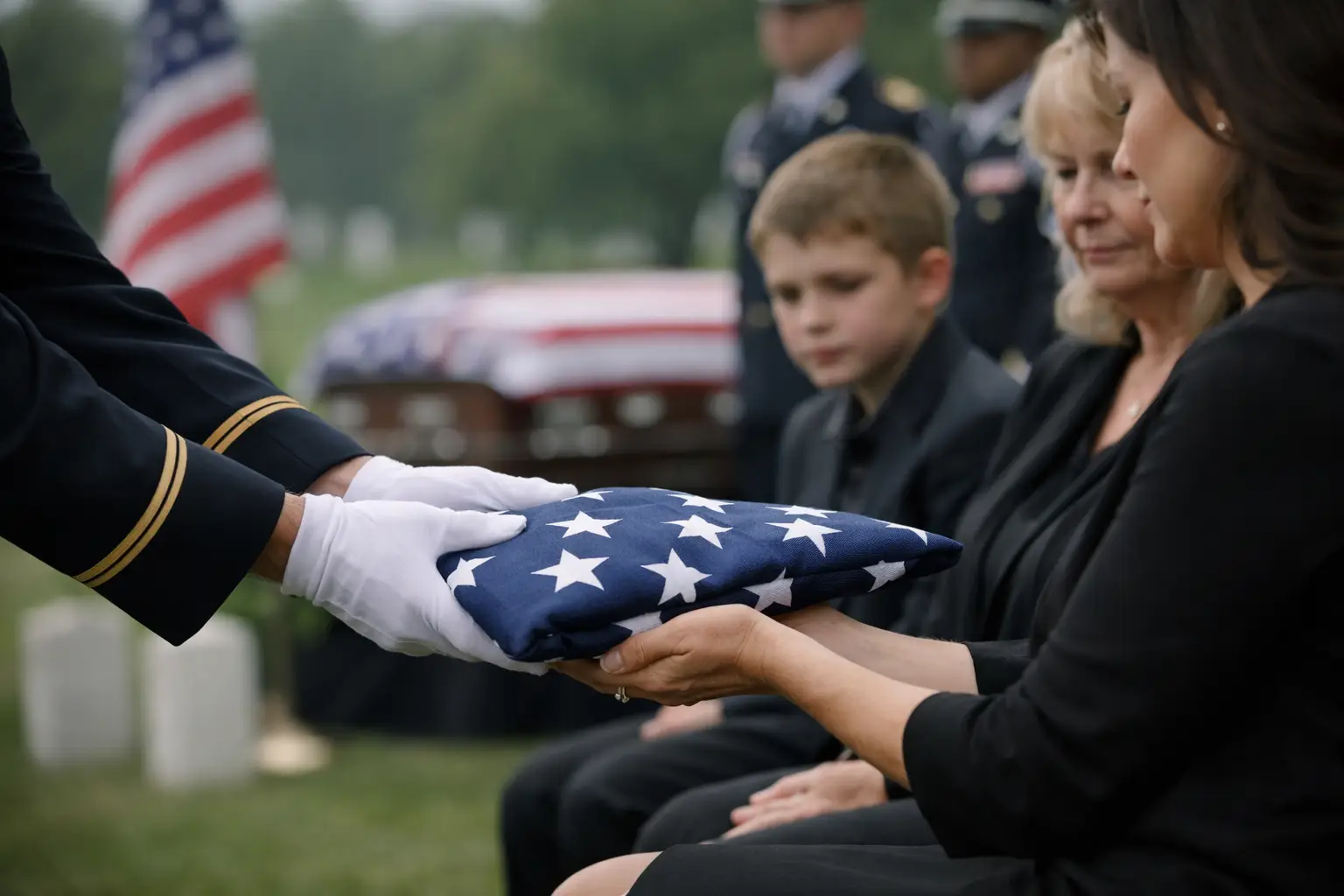
When a veteran dies, a family may be entitled to meaningful recognition and financial assistance, but veteran funeral benefits are not one single benefit that happens automatically. Burial honors, a gravesite, a flag, a government marker, and reimbursement for some expenses each have separate rules. A calm, early review can help your family receive what your loved one earned through service without making assumptions during a difficult week.
What veteran funeral benefits may include
The Department of Veterans Affairs and the Department of Defense offer several forms of support. What is available depends on the veteran's discharge status, service history, place of burial, and sometimes the circumstances of death.
For an eligible veteran, benefits may include a burial allowance or reimbursement for certain burial and funeral costs. The available amount and qualifications can change, so families should confirm the current rules before counting on a specific payment. Reimbursement is generally not intended to cover the full cost of a funeral.
An eligible veteran may also receive military funeral honors. This usually includes an honor guard detail of at least two uniformed service members, the folding and presentation of the United States flag, and the playing of Taps. The detail may come from an active-duty unit, a Reserve component, or an authorized veterans organization. Families can request honors for burial, cremation, a memorial service, or a graveside committal.
Other benefits can include a burial flag, a government headstone or marker, a medallion for placement on a privately purchased headstone, and a Presidential Memorial Certificate. In certain circumstances, surviving spouses and eligible dependents may qualify for burial in a VA national cemetery alongside the veteran.
These forms of recognition are available whether a family chooses burial or cremation. Cremated remains may be placed in a national, state, or private cemetery, interred in a columbarium, or honored at a memorial service. The choice of disposition does not remove a veteran's right to dignified recognition.
Understanding VA burial options
A VA national cemetery can provide an eligible veteran with a gravesite, opening and closing of the grave, perpetual care, a government headstone or marker, and a burial flag. For casketed burial, the cemetery also provides a government-furnished grave liner. These provisions can ease a significant part of the cemetery expense.
They do not usually include funeral home services, embalming or preparation, a casket or urn, transportation, flowers, clergy, obituary notices, or a gathering after the service. Families may still hold a visitation, church service, cultural ceremony, or celebration of life before the committal at the cemetery.
A private cemetery can be the right choice when a family has an existing plot, wants to remain close to relatives, follows a particular faith tradition, or needs a location that is more accessible for loved ones. In that setting, a government headstone, marker, or medallion may still be available for an eligible veteran. Cemetery rules, installation costs, and required foundations vary, so it helps to ask those questions before selecting a memorial.
State veterans cemeteries are another possibility. Their eligibility and available services can differ from VA national cemeteries. A funeral director can help a family compare timing, location, religious needs, and transportation requirements, particularly when a veteran is being brought to New York from another state or country.
Who may qualify for veteran funeral benefits?
Many honorably discharged veterans qualify for some benefits, but eligibility is not identical across every program. A discharge other than dishonorable may qualify a person for certain VA burial benefits, while specific service requirements can apply in other cases. Veterans who served in the Reserves or National Guard may be eligible depending on whether they were called to active duty and the nature of that service.
The most useful document is the DD Form 214, commonly called the DD-214. It records separation from military service and generally shows dates of service and character of discharge. If the original cannot be found, do not delay calling the funeral home or beginning arrangements. A family can request a replacement record, and experienced staff can explain what information will be needed while that request is underway.
Military honors are requested through the appropriate honors coordinator, often with the help of the funeral home. Availability depends on notice and scheduling, especially around holidays or during periods of high demand. Requesting honors as soon as possible gives the coordinating team the best opportunity to meet the family's preferred service time.
Documents to gather before making requests
Families do not need to solve every detail before asking for help. Still, having a few documents ready can make applications and cemetery coordination much smoother. If available, gather:
- The veteran's DD-214 or other separation papers
- A certified copy of the death certificate when it becomes available
- The veteran's Social Security number and VA claim number, if known
- Itemized funeral and cemetery bills, plus proof of who paid them
- Information about the planned burial location and date
Keep copies of every application and receipt. Burial allowance claims often require proof of expenses and payment, and the person who paid the costs may be the person eligible to submit the claim. A funeral director can prepare needed statements and help identify the correct current VA claim process, but the family should retain its own records as well.
A practical order for arranging honors and benefits
The first decision is usually where and when the service will take place. Once a family knows whether it prefers a VA national cemetery, a state veterans cemetery, or a private cemetery, the funeral home can begin coordinating the committal and request military honors.
Next, confirm eligibility using the DD-214 or service information. This is also the time to decide whether the family would like a burial flag, a government marker, a medallion, or a Presidential Memorial Certificate. Some items can be requested after the funeral, but discussing them early prevents missed opportunities and gives the family time to make a thoughtful choice.
Then review costs with clear expectations. Military honors and several VA memorial items are provided without charge to eligible veterans, but a funeral service itself still involves choices and expenses. A direct burial or cremation may suit one family, while another may want a full visitation, religious rite, or reception. There is no single military funeral that every veteran or family must have.
At Horizon Funeral Home, families can receive help requesting honors and organizing the details around a service that reflects both military service and the person's life beyond the uniform. That may mean a formal flag presentation, a quiet graveside farewell, prayers in a family's preferred language, or a gathering where stories are shared across generations.
Common questions families ask
Does the VA pay for the entire funeral?
Usually, no. A VA burial allowance may reimburse part of eligible expenses when the qualifications are met, but it is not generally a full payment for funeral home, cemetery, and memorial costs. The amount and rules depend on the type of claim and the circumstances of the death.
Can a veteran receive military honors after cremation?
Yes. Military funeral honors can be arranged for a cremation service, memorial service, or interment of cremated remains. The flag presentation and Taps can be included even when there is no casketed burial.
What if the veteran's records cannot be located right away?
Begin the conversation anyway. The family can provide the veteran's full name, date of birth, branch of service, approximate service dates, and any available military paperwork. Records can often be requested, while funeral and cemetery planning continues.
A veteran's service deserves care, but the family deserves care too. Take one decision at a time, ask for every option to be explained plainly, and leave room for the personal traditions that will make the farewell feel true to the person you love.