
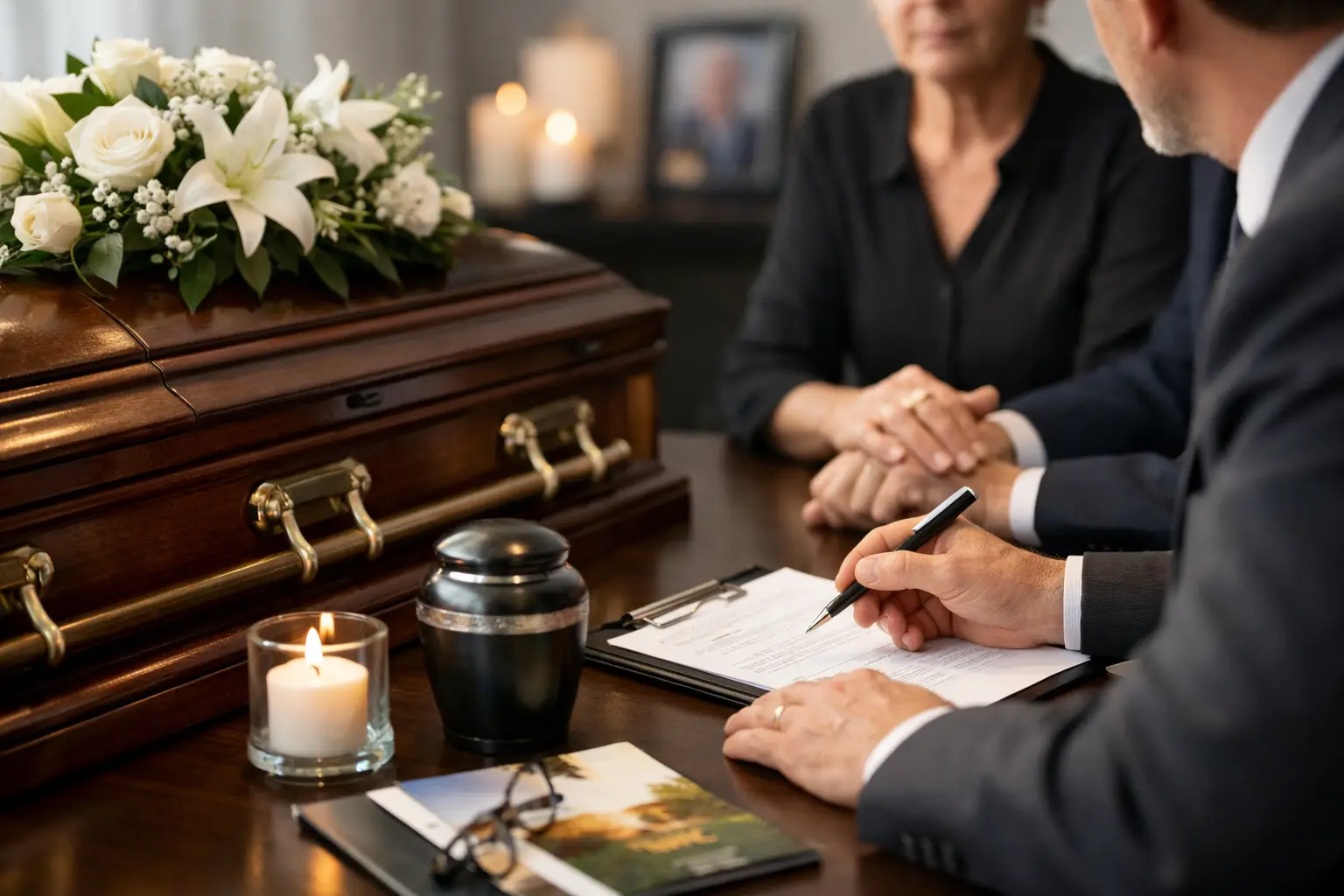
A traditional funeral often brings loved ones together at a time when words can be hard to find. Traditional funeral service planning gives the family a clear way to honor a life, receive support from their community, and carry out religious, cultural, or personal wishes with care. The details may feel numerous at first, but they do not all have to be decided at once.
For some families, a traditional service means following customs that have guided generations. For others, it means creating a familiar gathering with a viewing, funeral ceremony, and burial. Both approaches can be meaningful. What matters is that the service reflects the person who died and gives those closest to them time and space to say goodbye.
What Is Included in a Traditional Funeral Service?
A traditional funeral service commonly includes preparation and care of the person who died, a viewing or visitation, a formal ceremony, transportation, and burial at a cemetery. Families may also choose an obituary, flowers, printed programs, music, clergy or another officiant, a procession, and a gathering afterward.
The exact order depends on faith, family traditions, cemetery requirements, and personal preference. A Catholic funeral, Orthodox service, Jewish burial, Armenian memorial tradition, or nonreligious ceremony may each follow a different rhythm. There is no need to set aside meaningful customs simply because the family is also trying to manage practical arrangements.
A funeral director can explain what must happen within a particular timeframe and what can be adjusted. For example, a burial may need to be scheduled around cemetery availability, while a memorial meal or larger celebration can take place later. Separating those decisions can relieve pressure when relatives are traveling or family members need more time.
Traditional Funeral Service Planning Begins With Immediate Care
When a death occurs, the first need is safe, respectful transportation and care. If the death takes place at a hospital, nursing facility, hospice center, or private residence, staff may ask which funeral home the family has selected. A funeral home can then coordinate the transfer and begin guiding the family through next steps.
Before making arrangements, gather any documents or information that may help: the person's legal name, date of birth, Social Security number, military discharge papers if applicable, cemetery information, and any preplanning paperwork. Do not worry if some of these items are unavailable right away. A caring funeral professional can explain what is needed now and what can be handled later.
If the death was unexpected or involved the medical examiner, there may be additional procedures and timing considerations. This can be unsettling, but it does not prevent a family from planning a respectful service. Clear communication is especially helpful in these circumstances, because it allows everyone to understand what is happening and why.
The Decisions That Shape the Service
Families are often asked to make several decisions in a short period. It helps to focus first on the choices that affect timing and care, then move toward the personal details.
Care and Preparation
Some families choose embalming and preparation for a viewing, while others prefer a private identification or a closed casket. A viewing can offer comfort and a sense of reality for those who need it, but it is not required for a meaningful funeral. Religious customs, the condition of the person who died, and the family's wishes all matter.
The choice of casket is also personal. Families may select a style based on appearance, material, religious practice, cemetery rules, or budget. A funeral home should explain each option plainly and allow space for questions without making anyone feel rushed.
The Service and Those Who Lead It
The ceremony may be held at a funeral home, house of worship, graveside, or another approved location. An officiant, clergy member, celebrant, family member, or close friend may lead it. Some services center on formal prayers and readings; others include personal stories, favorite music, photographs, or a eulogy from a child or grandchild.
There is value in keeping the service simple when a family is emotionally exhausted. There is also value in making room for details that feel deeply personal. A familiar hymn, a poem in a loved one's first language, military honors, or a reading chosen by a spouse can say more than an elaborate program ever could.
Burial and Final Committal
The committal at the cemetery is often the most private part of the day. It may include prayers, final words, the lowering of the casket, or a quiet moment for each person to place a flower. Cemetery arrangements can involve choosing a grave, opening and closing the grave, a vault if required, and later selecting a monument or marker.
Not every decision about a marker needs to happen immediately. Many families choose to wait until the first weeks of grief have passed. Taking time can make it easier to select wording, a design, or a memorial inscription that feels right.
How to Balance Tradition, Budget, and Family Wishes
A traditional funeral can be deeply meaningful, but it can also involve several costs. Honest planning starts with a written explanation of the services and merchandise being considered. Families deserve to know what each item is for, which choices are required, and which are optional.
It may help to identify the two or three elements that matter most. One family may prioritize a full viewing because it is central to their faith and grieving process. Another may prefer a simple ceremony and invest in transportation so relatives can attend from another state or country. Neither choice is more loving than the other.
Differences of opinion are common, especially when several relatives are involved. If possible, choose one or two family representatives to communicate with the funeral director and keep everyone informed. This does not silence other voices. It creates a calmer process and reduces the chance that important decisions get lost in a difficult conversation.
For families in New York with relatives elsewhere, logistics may become part of the plan. A loved one may need to be brought to Brooklyn from another state, or transported abroad for burial. These arrangements require careful coordination, documentation, and attention to airline or consular requirements. They are manageable when handled by an experienced care team, but they should be discussed early because they can affect timing.
Making Space for Culture, Faith, and Language
A traditional funeral should never require a family to explain away its traditions. Whether a service includes specific prayers, a certain period before burial, ritual washing, particular music, foods, clothing, or customs around mourning, those needs deserve respect.
Language matters, too. During grief, it is easier to make informed decisions when explanations are given in the language a family speaks most comfortably. Families should feel able to ask for clarification, repeat a question, or include a religious leader and trusted relatives in the conversation.
At Horizon Funeral Home, families can receive patient guidance in English, Russian, Armenian, Georgian, and Spanish, with respect for all faiths, cultures, and family structures. The goal is not to fit every family into one model of service. It is to make the process understandable while honoring what matters to them.
Planning Ahead Can Be a Gift to Your Family
Traditional funeral service planning can also happen well before a death. Preplanning allows a person to document preferences for burial, a viewing, religious rites, music, military honors, and the people they would like involved. It can also help a family understand expected costs and avoid having to guess during a crisis.
Preplanning is not a promise that every detail must remain fixed. Circumstances, relationships, finances, and wishes can change. A good plan leaves room for updates while giving loved ones a dependable starting point.
If you are planning after a death, remember that you are not expected to become an expert overnight. Ask what needs a decision today, what can wait, and what support is available after the service. A thoughtful farewell is built through care, honesty, and the small choices that help a family recognize the life they shared.