
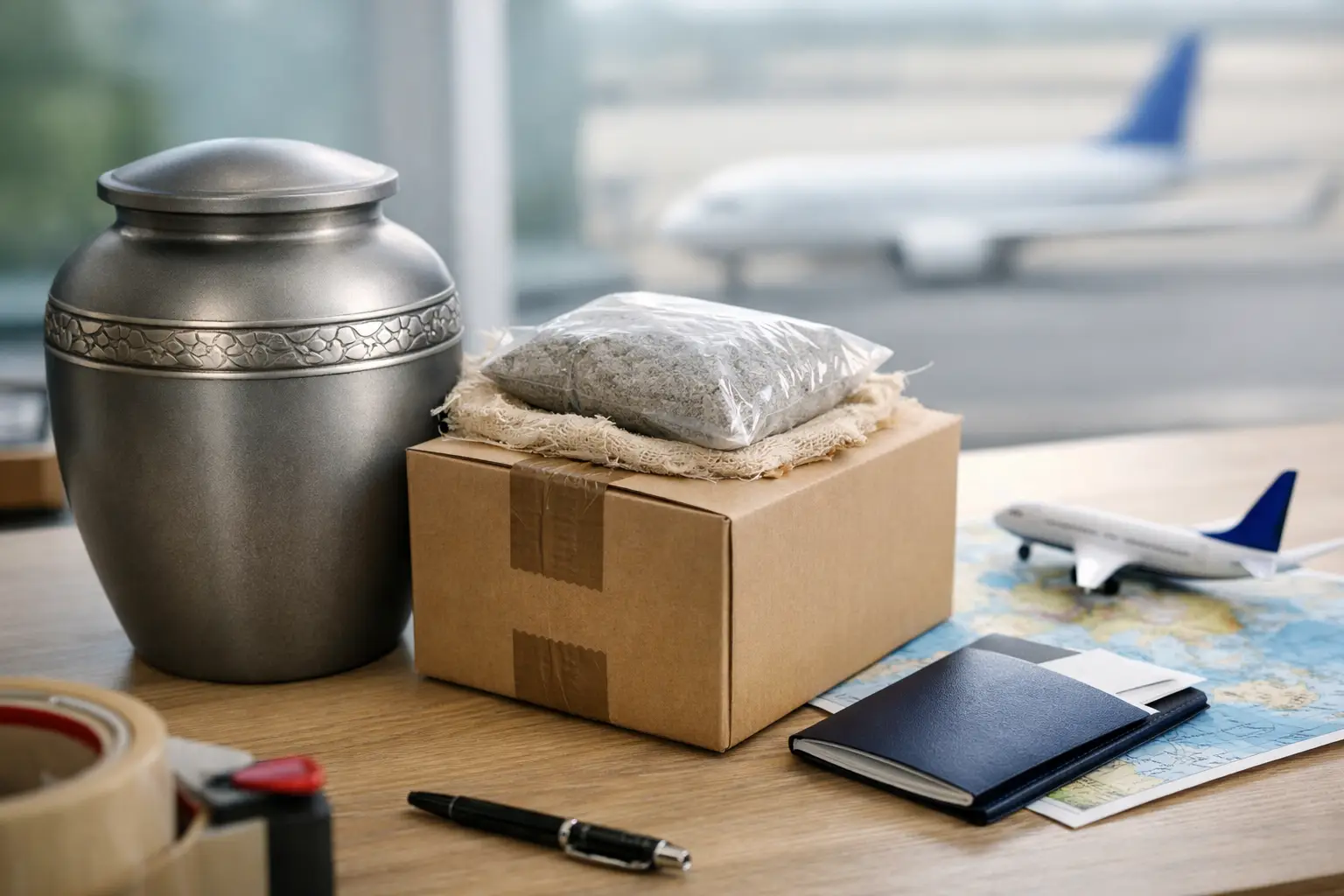
A family may want a loved one’s ashes returned to the country where they were born, placed near relatives abroad, or carried home after a death in New York. Mailing ashes overseas can make that possible, but it requires more than choosing a shipping service. The destination country, postal carrier, paperwork, container, and local customs rules must all be addressed before the package is accepted.
The process can feel especially difficult when family members are grieving across different time zones or languages. Taking it one step at a time helps. A funeral director experienced in international arrangements can confirm the requirements, prepare the documents, and help prevent a painful delay at the border.
Can You Mail Ashes Overseas?
In many cases, yes. The United States Postal Service permits cremated remains to be sent internationally through its approved express international mail service, subject to the destination country’s rules and service availability. However, acceptance by a U.S. post office does not guarantee that another country will allow the remains to enter.
Each country sets its own requirements. Some permit cremated remains with standard documentation. Others require advance permission from a consulate, a health authority, customs office, or local funeral provider. A few countries have restrictions that make mailing impractical, even when carrying the ashes with an airline may be allowed.
This is why the first question is not simply, “Can we ship them?” It is, “What will the receiving country require, and who can receive the shipment there?” A family should have that answer before selecting an urn or paying for postage.
Start With the Receiving Country’s Rules
The destination country has the final say. Requirements may depend on its public health regulations, postal system, customs procedures, and religious or cultural practices. Rules can also change without much notice.
A funeral home or international transport coordinator will usually verify whether the country accepts cremated remains by mail, which mailing method is recognized, and whether a named person must be available to receive the package. It is also wise to ask about local holidays, customs processing times, and whether the documents need to be translated.
For example, a country may ask for a certified death certificate and cremation certificate, while another may require those records to be apostilled or authenticated. An apostille is a form of official certification used by countries that participate in an international agreement. Where an apostille is not accepted, further consular legalization may be needed. These steps can add time, so it is best not to schedule a memorial or burial abroad until the documentation is confirmed.
Documents Families May Need
The exact paperwork varies, but international shipments commonly involve a certified death certificate, cremation certificate, and a letter identifying the contents as cremated human remains. The receiving country may also request a copy of the deceased person’s passport, the sender’s identification, or a permit for importation.
If documents are not in the official language of the destination country, certified translations may be necessary. Families should not assume an English-language certificate will be accepted everywhere. A name discrepancy can also cause trouble. If the name on the death certificate differs from a passport, marriage record, or shipping form, address that difference before the package is sent.
Keep copies of every document with the family and provide the recipient abroad with copies as well. If customs contacts the recipient, they should be prepared to explain what is arriving and provide any requested records promptly.
Choosing a Container That Can Travel Safely
The urn chosen for a home, service, or permanent display is not always the best container for international mailing. Shipping rules generally require a secure inner container that prevents any loss of contents, placed inside a strong outer mailing package. The remains should be protected from damage and clearly identified according to the carrier’s current requirements.
A simple, temporary shipping container is often the practical choice. Once the ashes arrive, the family can transfer them to a decorative urn, scatter them where legally permitted, or arrange a burial or placement in a cemetery, church, temple, or other meaningful location.
Do not seal an urn in a way that prevents inspection if customs or postal officials are entitled to examine the package. At the same time, avoid loosely packed or fragile containers. The goal is respectful protection, not unnecessary complexity.
The Mailing Service Matters
Cremated remains cannot be sent through just any mail class. USPS has specific requirements for domestic and international mailing of cremated remains, including use of its approved express service and required labeling. Postal staff may not handle these shipments every day, so it can help to visit a larger location or work through a funeral professional who handles the mailing process regularly.
Private courier policies differ. Some carriers do not accept cremated remains for international shipment, while others may accept them only under limited conditions. Never assume that a carrier that transported other personal belongings will accept an urn. Confirm the policy in writing or directly with the carrier before preparing the package.
Tracking is helpful, but it does not remove customs risk. International tracking may show that a package has reached the destination country while it is still waiting for clearance. Families should expect that customs review can take several days or longer, particularly if paperwork is incomplete or an official is unavailable.
When Mailing Is Not the Best Choice
Mailing can be a thoughtful solution when no one can travel, when the destination accepts postal shipments, and when the family has a reliable recipient abroad. It is not always the fastest or simplest option.
If a relative is already traveling, carrying cremated remains may be preferable. Airlines and security agencies have their own rules, usually requiring a container that can be screened and documents that identify the contents. Some families instead arrange professional transportation through a funeral home and a receiving funeral provider overseas. This can be particularly helpful where permits, translations, local collection, or burial arrangements are involved.
The right choice depends on the destination, timeline, budget, and family’s wishes. A lower shipping cost can become more expensive if a package is delayed, returned, or held because the paperwork was not prepared correctly. For a time-sensitive religious observance or graveside service, professional coordination may offer more reassurance.
A Practical Checklist Before Sending
Before mailing ashes overseas, make sure these points are settled:
- The destination country confirms that cremated remains may be mailed and identifies any permits or customs forms required.
- The recipient abroad knows the shipment is coming and can respond to customs or postal requests.
- Certified documents, translations, apostilles, or consular approvals are complete.
- The inner container and outer package meet the current carrier requirements.
- The shipment uses an approved service, required labels, and tracking.
- The family has copies of documents, tracking details, and a plan if clearance is delayed.
These are not merely administrative tasks. They protect the family’s ability to carry out a final wish without uncertainty at a difficult time.
Give the Process the Time It Deserves
It is understandable to want a loved one’s ashes home as soon as possible. Still, rushing international arrangements can lead to missed permits or a package arriving before the recipient is ready. Whenever possible, allow time for document certification, translation, carrier preparation, and customs review.
Families also deserve to make choices that reflect their traditions. Some may wish for a quiet return to a family village. Others may be planning a religious service, a burial beside relatives, or a gathering in more than one country. Those wishes can shape the transportation plan, and they should be discussed early.
You do not have to sort through international rules alone. For families in Brooklyn and beyond, Horizon Funeral Home can help coordinate the documentation and overseas arrangements with patience and respect. A careful plan gives your family room to focus on what matters most: bringing your loved one to the place that feels right.