
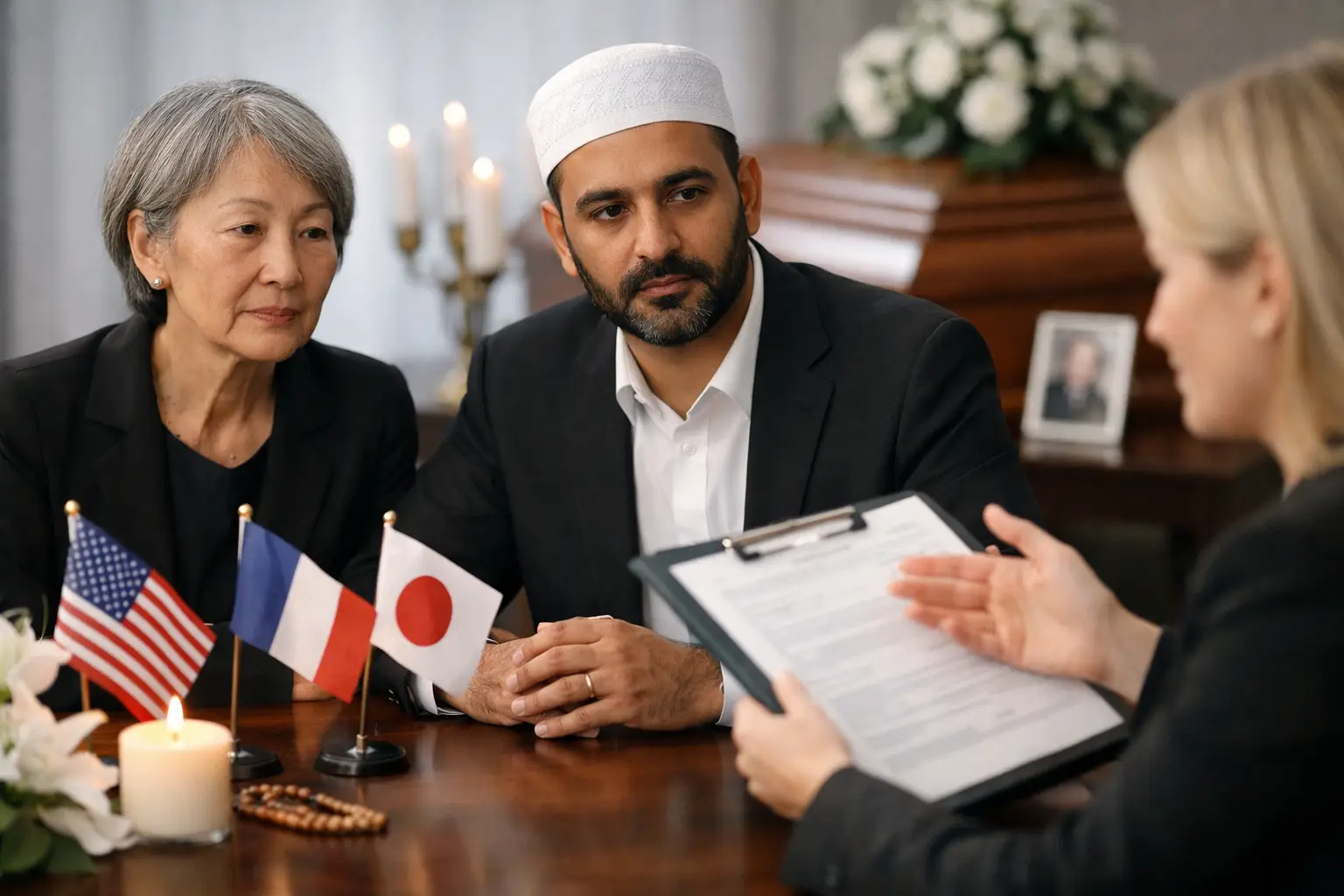
When relatives are grieving in different languages, even a simple question can become difficult: Did everyone understand the cemetery schedule? Does a grandparent know what documents are needed? Can a prayer, eulogy, or condolence be shared in the language that feels most like home? Learning how to arrange a multilingual funeral begins with making sure no one is left outside the conversation.
A multilingual funeral is not simply a service with two languages spoken from the front of the room. It is an arrangement process where family members can ask questions, understand their options, observe their traditions, and participate in meaningful ways. With patient planning and clear communication, a service can honor both the person who died and the people who loved them.
Start With the Family's Communication Needs
Before choosing flowers, music, or service times, identify who needs information and which language they prefer. Some families speak one language at home and another at work. Others have relatives who understand everyday English but feel more comfortable discussing faith, legal documents, or end-of-life decisions in Russian, Armenian, Georgian, Spanish, or another first language.
Ask each key decision-maker how they would like to receive information. A family may prefer one shared meeting with interpretation, separate conversations for elders, or written details translated into the languages most needed. Do not assume that the youngest bilingual relative should carry every explanation. They may want to help, but they are grieving too.
It also helps to name one or two family contacts who can receive updates from the funeral home and share them with relatives. This reduces conflicting messages while still making space for everyone to be heard. A designated contact should coordinate communication, not make cultural or financial decisions alone unless the family has agreed to that role.
Choose a Funeral Home That Can Communicate Clearly
A funeral director should be able to explain every choice without rushing the family or relying on vague assurances. If the staff speaks your family's language, ask whether the same person can remain involved through arrangements, the service, and any transportation coordination. Consistency can bring real comfort when many details are changing quickly.
If interpretation is needed, discuss it early. A professional interpreter may be especially helpful for arrangements involving authorizations, cremation consent, insurance matters, cemetery contracts, or international transportation. A bilingual family member can interpret casual conversations or personal stories, but formal decisions deserve careful, accurate communication.
At Horizon Funeral Home, families can receive support in English, Russian, Armenian, Georgian, and Spanish. Just as important, the care team should listen for differences within a community. A shared language does not mean every family follows the same religious practices, regional customs, or family traditions.
Ask for Plain Explanations, Not Assumptions
Funeral terminology can be confusing in any language. Ask the funeral director to explain what each service includes, what is optional, what timing is required, and what costs apply before you decide. If something is unclear, pause and ask for it to be repeated in simpler terms.
It is reasonable to request written estimates, schedules, and next steps. When possible, review them with a trusted relative who understands both the language and the family's wishes. Clear information is not a luxury during a loss. It allows a family to make decisions with confidence rather than pressure.
Decide Which Languages Belong in the Service
There is no required formula for a bilingual or multilingual funeral. The right approach depends on who will attend, the faith tradition, the family's capacity, and what would have mattered to the person being honored.
A service may include prayers in one language and a reading in another. A clergy member may speak in the family's heritage language while an officiant offers a brief English explanation for guests. Eulogies can remain in the language in which they were written, with a printed translation or a short spoken summary. Music, poems, and recorded messages can also carry meaning across language barriers.
Trying to translate every word can make a service feel long or overly formal. On the other hand, using only one language may leave close relatives unable to follow important moments. Aim for inclusion, not perfect symmetry. A brief explanation before a prayer or ritual can help all guests understand its significance without interrupting its meaning.
Create Materials Guests Can Follow
A printed program can be one of the simplest ways to include everyone. It may list the order of service in two languages, identify speakers, provide a translation of a reading, or explain a cultural observance for guests who are unfamiliar with it.
For a small gathering, a family member may quietly help older relatives follow along. For a larger service, consider whether projected translations, bilingual signage, or an interpreter would be helpful. The practical choice depends on the venue, the number of languages involved, and the comfort of the speakers.
Protect Religious and Cultural Traditions
Many funeral customs have specific timing, preparation, visitation, prayer, burial, or mourning requirements. Tell the funeral director about these needs at the first call, particularly if a death occurs near a holiday, on a weekend, or when family members are traveling from abroad.
Some families need a rapid burial. Others need time for a wake, a religious service, a traditional meal, or relatives arriving from another state or country. There may be customs surrounding who prepares the deceased, who participates in the procession, how flowers are handled, or whether cremation is acceptable. These decisions should never be treated as minor details.
If relatives hold different views, begin with the wishes of the person who died, if known. Then give family members a calm space to talk through what is essential. Often, a thoughtful compromise is possible: a traditional prayer service before cremation, a viewing that follows family customs, or a memorial held later for relatives who could not travel.
Plan for Family Members Who Are Far Away
Multilingual funerals often involve more than language. They may involve relatives in another state, another country, or a different time zone. Let distant family know the schedule as soon as possible, including viewing hours, service location, burial timing, and whether they can participate remotely.
If a loved one must be transported to or from New York, international documents, airline requirements, consular coordination, and timing can add complexity. Work with a funeral provider experienced in nationwide pickup and worldwide transportation. Families should not have to piece together those logistics while also trying to notify relatives in several languages.
For people who cannot attend, consider inviting a recorded remembrance, a written message to be read aloud, or a prayer offered at the same time from another location. These gestures do not replace being present, but they can help a family feel connected across distance.
Give Children and Elders a Way to Participate
Children and older relatives can be unintentionally excluded when the service moves between languages. A child may not understand a formal eulogy but may want to place a flower, draw a picture, carry a photograph, or share one sentence about their loved one. An elder may have a memory to tell in their first language, even if someone else offers a translation afterward.
Make room for these contributions without requiring anyone to perform their grief publicly. A private letter placed with the deceased, a voice message played at the gathering, or a family memory book can be just as meaningful.
Keep the Days After the Funeral in Mind
The need for understandable communication does not end when the service is over. Families may still need death certificates, help with obituary wording, information about cremated remains, cemetery coordination, veterans' honors, or guidance about what comes next. Ask how follow-up information will be provided and whether someone can explain it in the family's preferred language.
Grief also changes over time. A family may need practical support immediately, then later want help planning a memorial, selecting a keepsake, or finding a grief resource that feels culturally and linguistically comfortable. There is no need to make every decision in the first days after a death.
The most meaningful multilingual funeral is one where every person who loved the deceased can recognize the care being taken, even when they do not understand every word. Give your family permission to slow down, ask for explanations, and choose the languages, rituals, and memories that make the farewell feel true.