
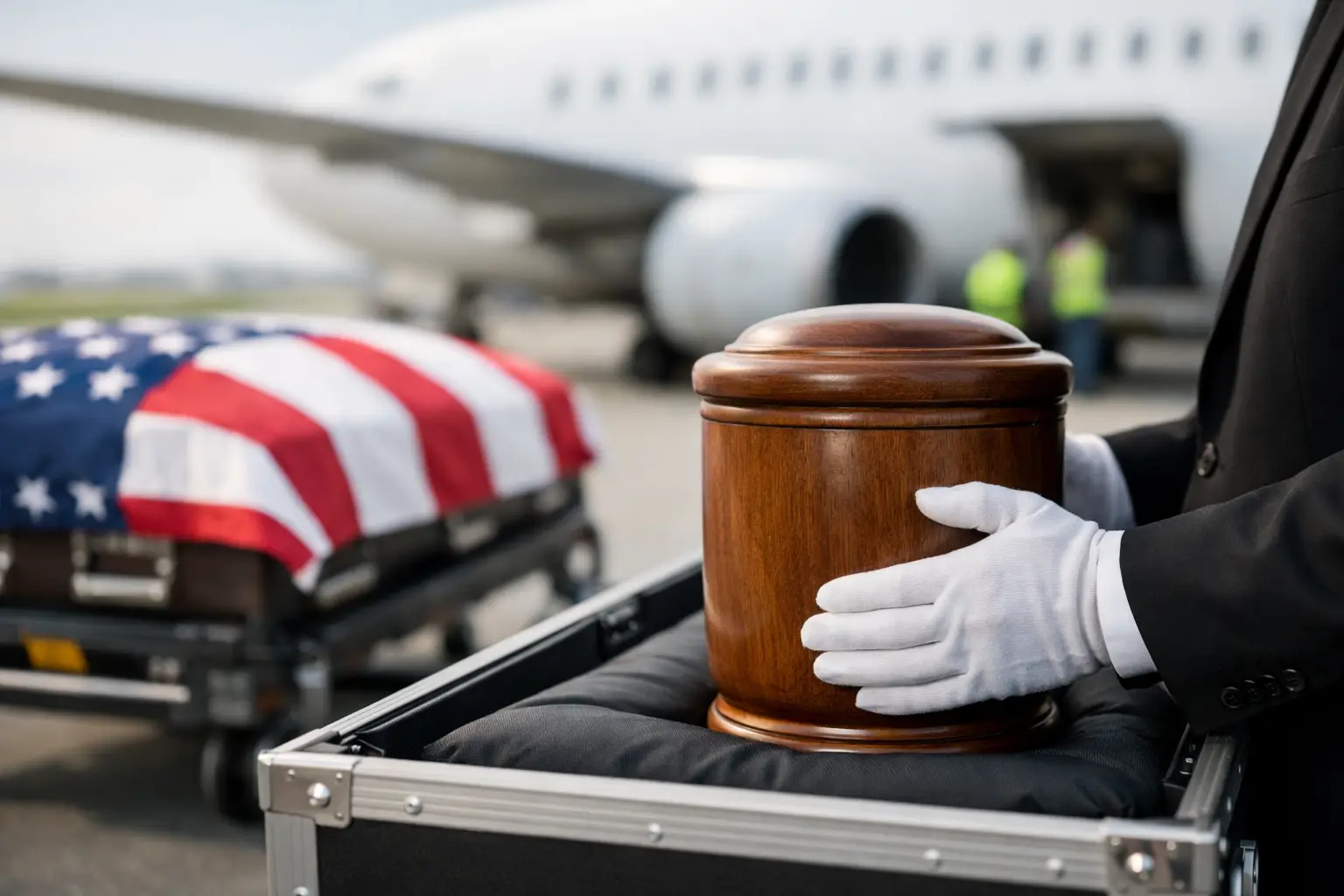
When someone dies far from home, the desire to bring them back to family can feel immediate and deeply personal. This guide to repatriating human remains explains what families can expect, from the first calls and required documents to travel arrangements, cultural considerations, and the decisions that may affect timing.
Repatriation usually refers to returning a person who died abroad to their home country, though families also use the term when arranging a long-distance transfer between states. The process has legal, logistical, and emotional parts. A funeral home experienced in transportation coordination can manage much of the paperwork and communication, allowing the family to focus on the person they love.
What repatriation involves
Repatriating human remains means arranging for a deceased person to travel from the place of death to another country or region for burial, cremation, or services. Depending on where the death occurred and where the person is going, this may involve local authorities, a physician or medical examiner, an embassy or consulate, airlines, customs officials, and funeral professionals in both locations.
The family does not need to contact every party on their own. In many cases, the funeral home receiving or sending the person coordinates directly with an overseas funeral provider, cargo carrier, and relevant government offices. The exact path depends on local law, airline requirements, the cause and location of death, and whether the person will travel in a casket or as cremated remains.
For an interstate transfer within the United States, the process is generally more straightforward. There are no international customs or consular requirements, but transportation, permits, receiving arrangements, and timing still need careful coordination.
Start with one point of contact
In the first hours after a death, families are often asked questions before they have had time to absorb what happened. Begin by choosing one family representative who can receive updates and communicate the family’s wishes. That person can work with a funeral director, while other relatives are kept informed without having to repeat difficult details.
If the death occurred outside the United States, notify the nearest U.S. embassy or consulate as soon as possible. Consular staff can help confirm the death, explain local procedures, provide information about local funeral providers, and assist with communication. They do not typically pay for transportation or make private arrangements, but they can be a valuable source of guidance.
A funeral home in the destination city should also be contacted early. The receiving funeral director can confirm what will be needed before the person arrives and can coordinate burial, cremation, a viewing, religious rites, or a memorial service after arrival.
Documents needed to repatriate human remains
Documentation is the part of repatriation that most often affects the schedule. Requirements vary by country, and originals, certified copies, translations, or consular authentication may be required. A qualified funeral professional should confirm the current rules for the specific departure and destination countries before travel is booked.
Common documents may include:
- An official death certificate, sometimes with a certified translation
- A burial transit permit or other authorization for transportation
- A certificate confirming preparation of the remains, such as embalming when required
- A letter or affidavit from the funeral home describing the contents and sealing of the casket
- Consular paperwork, a passport copy, or identification documents for the deceased
- Airline cargo documents and customs clearance forms
Not every transfer requires every item. Some countries require a special coffin or a metal liner, while others have particular rules about embalming, sealing, or arrival airport procedures. When cremated remains are being transported, a death certificate and cremation certificate are commonly requested, and the airline may require an appropriate container that can be screened.
Choosing between burial, cremation, and return before services
Families sometimes assume repatriation must happen before any service can take place. That is not always the case. A short prayer, visitation, or private farewell may be possible where the death occurred, followed by transportation and a full service at home. Other families prefer to bring their loved one home first so the community can gather together.
For some faiths and cultures, burial should happen quickly. For others, returning to a family cemetery, ancestral community, or home country matters most, even if the process takes additional time. There is no single right choice. The best plan respects the deceased person’s wishes, the family’s beliefs, and the practical realities of the transfer.
Cremation can simplify certain international arrangements and may reduce transportation costs, but it is not appropriate for every family or faith tradition. It also may not reflect what the person wanted. Families should never feel pressured to choose cremation solely because international logistics are difficult. A funeral director can explain the options clearly and help identify a path that honors the person without adding unnecessary expense.
Timing: what families can realistically expect
A repatriation may take several days or longer. The timeline depends on how quickly the death is registered, whether a medical examination or investigation is required, how fast documents are issued, flight availability, and the requirements at the destination.
Delays can occur when a death happens on a weekend or holiday, when documents need translation, or when officials must review the circumstances of the death. A sudden, accidental, or unexplained death may require additional review by local authorities before release is permitted. These delays can be painful, but they are not a reflection of how carefully your loved one is being handled.
Ask the funeral director for updates in plain language: what has been completed, what is pending, who is responsible for the next step, and whether the expected arrival date has changed. Clear communication can make an uncertain wait more manageable.
Understanding costs without pressure
The cost of repatriation varies widely. It may include local transfer from the place of death, professional preparation, a suitable casket or air tray, permits and certificates, translation or consular fees, airline cargo charges, customs handling, and transportation from the arrival airport to the funeral home or cemetery.
Distance is only one factor. A transfer from one country may involve fewer fees than a shorter trip from a location with complex documentation requirements. Expenses may also change if a family chooses a viewing casket, religious services before departure, or an escort traveling with the remains.
Request an itemized estimate and ask which costs are fixed, which are estimates, and which are paid directly to outside parties. If the deceased had travel insurance, life insurance, a prepaid funeral plan, or an employer benefit, those resources may help. A funeral home can often provide the documents needed for a claim, though coverage and reimbursement rules depend on the policy.
Preparing for arrival home
Before travel is confirmed, decide what should happen when your loved one arrives. The receiving funeral home can arrange transportation from the airport, secure care until the family is ready, and coordinate with a cemetery, crematory, clergy member, or celebrant.
This is also a good time to consider who needs to be notified. Relatives abroad may be waiting for details, while family members at home may need help with travel, obituary information, military honors, or a gathering after the service. It is fine to make these decisions gradually. The immediate priority is safe, respectful care and a plan that the family understands.
For families in Brooklyn and the greater New York area, Horizon Funeral Home can coordinate nationwide and international transportation while helping families understand each step in English, Russian, Armenian, Georgian, or Spanish. The goal is not to rush a family through decisions, but to bring order to a process that can feel overwhelming.
A loved one’s return home is more than a transportation arrangement. It can be the beginning of a final goodbye surrounded by the people, language, faith, and traditions that shaped their life. Ask questions, take the time you need when time allows, and let experienced professionals carry the administrative burden with care.