A family may know they want a meaningful farewell yet feel unsure what to decide first. If you’re searching for local guidance, consider which location you need. Horizon Funeral Home proudly serves Brooklyn, Queens, Staten Island, Manhattan, the Bronx, and Nassau County.
Burial, cremation, memorial choices, and family logistics can be difficult to sort through while you’re grieving. You don’t have to settle every detail at once. Start with your family’s wishes, then organize the practical arrangements around them.
This guide explains the main options, including traditional funeral services, direct burial, cremation, and personalized memorials. It also covers what can help you begin, from the kind of gathering your family hopes for to the relatives and clergy who may need to be involved. Whether you’re making arrangements now or thinking ahead, use it as a starting point for a personal, respectful farewell.
Key Takeaways
- Compare traditional services, direct burial, cremation, and memorial gatherings to see which approach best reflects your family’s wishes.
- Consider personal preferences, coordination needs, and gathering logistics when comparing funeral services westchester families may search for.
- Begin by collecting known wishes, identifying key family contacts, and deciding which arrangements matter most.
- Funeral direction can bring practical details together while keeping the farewell personal and respectful.
- Horizon Funeral Home supports families with traditional arrangements, cremation, direct burial, memorials, preplanning, and veteran honors.
Table of Contents
- Funeral Services in Westchester: What Families May Need to Arrange
- Funeral and Memorial Options That Can Honor Different Traditions
- How to Compare Funeral Services in Westchester County
- What to Prepare Before Arranging Funeral Services
- How Horizon Funeral Home Can Guide a Thoughtful Farewell
Funeral Services in Westchester: What Families May Need to Arrange
After a death, even familiar decisions can feel difficult to manage. You don’t need every answer at once. This overview explains the main arrangements families may consider and practical ways to begin. Horizon Funeral Home serves Brooklyn, Queens, Staten Island, Manhattan, the Bronx, and Nassau County.
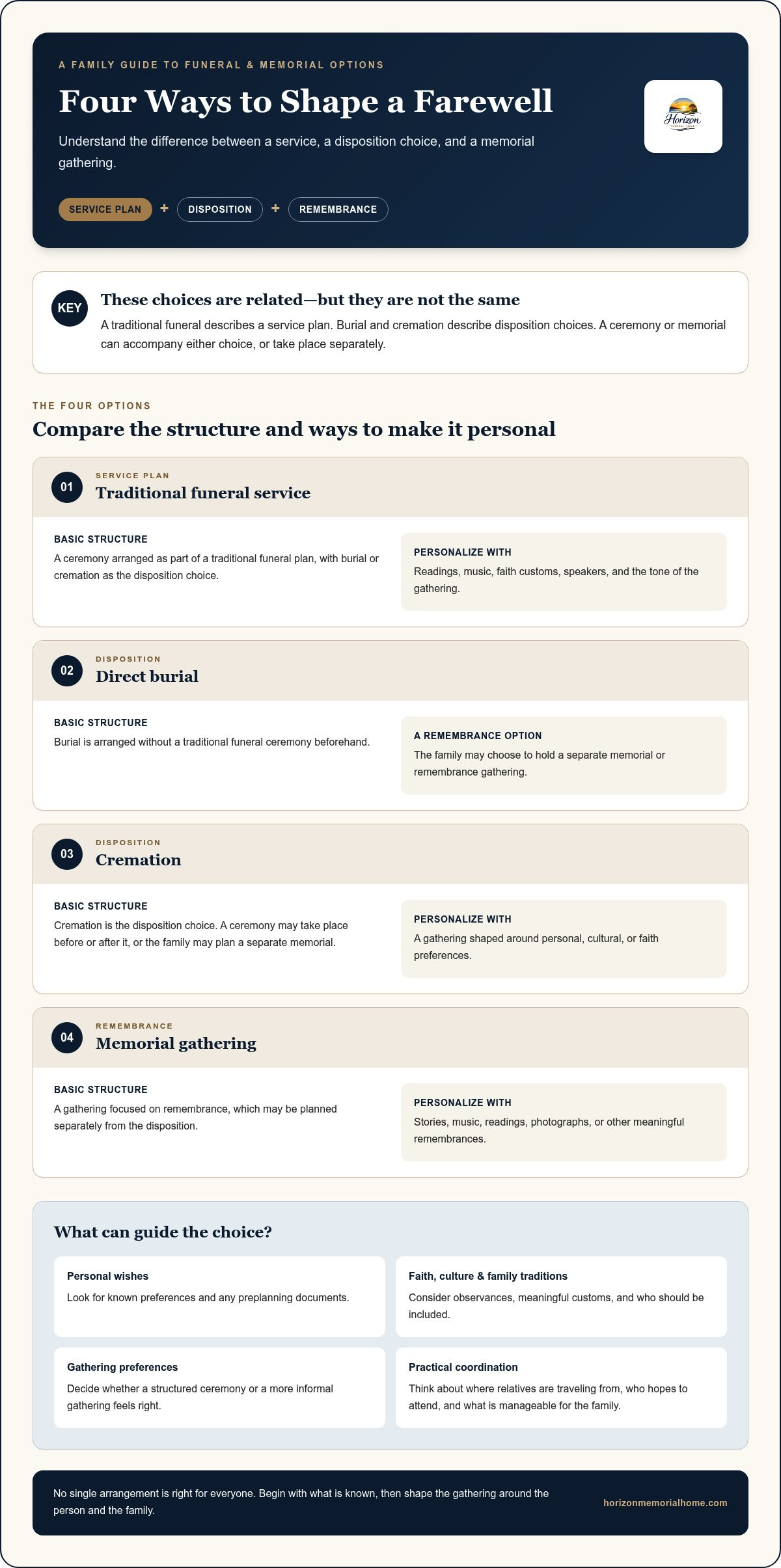
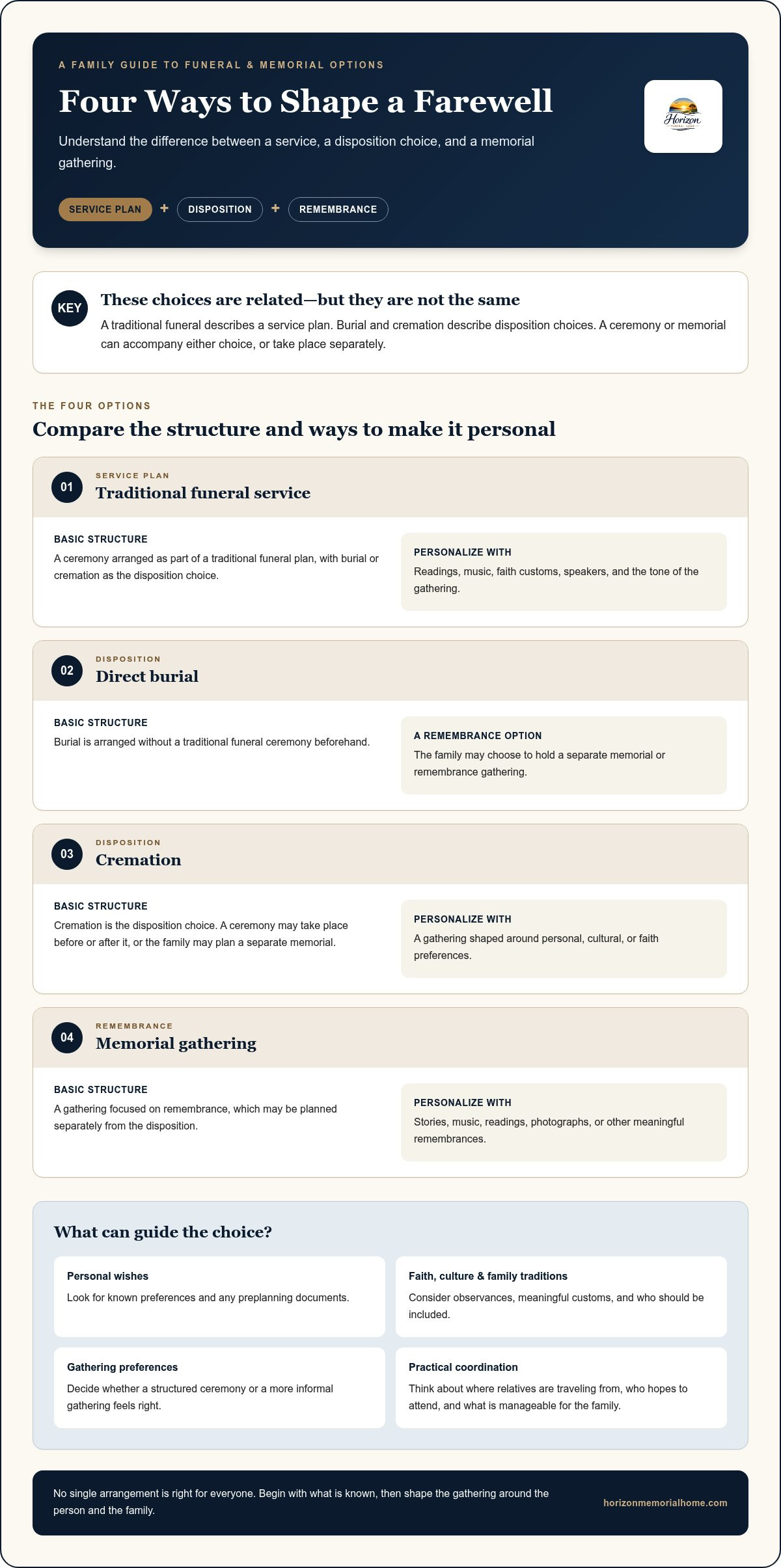
Funeral services bring arrangements together to honor the person who has died and support those gathering to remember them. Families typically consider three related choices: the ceremony or service, the disposition of the person’s remains, and a memorial gathering. These can be planned together or separately, guided by personal wishes, traditions, and practical needs.
As you plan, consider where relatives are traveling from, who hopes to attend, and what kind of gathering will be manageable for the family. Those details can help shape the service and its timing.
What can funeral services include?
Families may choose traditional funeral arrangements, direct burial, cremation, or a memorial or celebration-of-life gathering. Burial and cremation are disposition choices; a ceremony or memorial gives loved ones a way to gather and remember. A service may accompany burial or cremation, or take place separately.
Details can reflect faith, culture, personal preferences, and family traditions. Some families value a structured ceremony, while others prefer an informal gathering centered on stories, music, or shared memories. For a broader perspective on funeral traditions and customs, explore how practices vary across religious and secular settings. No single arrangement is right for everyone.
Where can families begin after a death?
Start with what’s already known. These practical steps can make the first conversation easier:
- Gather contact information for close family members and others involved in decisions.
- Look for notes about the person’s wishes, including any preplanning documents.
- Discuss priorities, such as religious or cultural observances, the kind of gathering, and who should be included.
A funeral director can help organize arrangements and clarify which decisions remain. You can begin with incomplete information. Sharing what you know and what still feels uncertain gives the conversation a practical starting point without requiring the family to decide everything immediately.
Funeral and Memorial Options That Can Honor Different Traditions
There isn’t one format that fits every family. Comparing the main options helps separate decisions about disposition from choices about the gathering, while leaving room for personal and faith traditions.
| Option | Basic structure | Ways to personalize |
|---|---|---|
| Traditional funeral service | A ceremony is arranged as part of a traditional funeral plan, with burial or cremation as the disposition choice. | Consider readings, music, faith customs, speakers, and the tone of the gathering. See this traditional funeral arrangements guide for further ideas. |
| Direct burial | Burial is arranged without a traditional funeral ceremony beforehand. | Families may choose to hold a separate memorial or remembrance gathering. |
| Cremation | Cremation is the disposition choice. A ceremony can take place before or after it, or the family may plan a separate memorial. | Shape the gathering around personal, cultural, or faith preferences. The Brooklyn cremation services guide offers related context. |
| Memorial gathering | A gathering focused on remembrance, which may be planned separately from the disposition. | Share stories, music, readings, photographs, or other meaningful remembrances. |
How do burial and cremation arrangements differ?
Traditional funeral arrangements describe a service plan; direct burial and cremation describe disposition choices. These options can each be paired with different forms of remembrance. For families comparing arrangements, the Federal Trade Commission explains consumer rights under the Funeral Rule, including the right to choose only the goods and services they want.
How can a memorial reflect personal or faith traditions?
A memorial can include a faith leader, a reading, music, or time for loved ones to speak. Families observing Jewish customs, for example, may find practices such as shiva or yahrzeit meaningful. These are examples, not expectations for every Jewish family or any other tradition. Ask what feels significant to those closest to the person, and use inclusive language that respects varied beliefs, relationships, and family structures.
Religious guidance, family customs, and practical considerations such as travel may shape when and how people gather. Thoughtful coordination helps bring a family’s needs together without assuming one schedule or ceremony suits everyone. Explore funeral and memorial guidance.
How to Compare Funeral Services in Westchester County
Comparing funeral services westchester families may consider is easier when you look beyond package labels. Start with the family’s wishes, then consider the arrangements needed, the coordination involved, and whether explanations are clear and respectful. The goal isn’t to choose the most elaborate plan. It’s to understand what each arrangement includes and whether it supports a farewell that feels right for the person and those gathering.
It also helps to distinguish funeral direction from related decisions. Funeral arrangements focus on coordinating the service and disposition. Cemetery plot purchases, legal probate matters, and floral retail are separate considerations. Keeping these categories clear can make conversations more focused and help families understand which practical questions relate to funeral arrangements.
Which questions help clarify the family’s priorities?
You don’t need to have every answer before beginning. These prompts can help bring the most important considerations into view:
- Would a formal ceremony, a quieter gathering, or another approach feel most respectful?
- Has the person expressed a preference for burial or cremation?
- Are there readings, music, faith customs, or personal details the family hopes to include?
- Could veteran honors or documented preplanning wishes be relevant?
- Will domestic or international transportation coordination be part of the arrangements?
Some families know their priorities clearly; others need time to talk them through. A funeral director can organize practical details around the choices the family shares, without requiring every decision to be made at once.
How can arrangements accommodate different family needs?
A gathering can include religious customs, secular elements, or a blend of both. For example, a family might include a faith leader and traditional readings alongside personal stories or music chosen by relatives. The personalized memorial services guide offers further ideas for making a remembrance feel individual.
When relatives are traveling from different places, consider how guests will get to the gathering, which family members need to participate, and whether the timing gives people a practical chance to attend. Avoid assuming everyone can make the same arrangements. Clear communication about the plan can help relatives stay informed and reduce confusion.
As you compare options, notice whether explanations are patient and easy to follow and whether the conversation stays centered on the family’s wishes. Those qualities can turn unfamiliar decisions into manageable next steps.
What to Prepare Before Arranging Funeral Services
Grief can make even simple tasks feel like a great deal. You don’t need to arrive with every answer or gather a perfect set of documents. If you’re beginning to plan funeral services westchester families may search for, a few notes and conversations can give the first discussion a calmer, more useful starting point.
A funeral director can coordinate practical arrangements and talk through decisions with the family. Use these steps as a guide, not a requirement to settle everything at once:
- Gather known wishes. Note anything your loved one shared about a ceremony, burial or cremation, faith or cultural customs, and the kind of remembrance they would have valued. Keep any preplanning notes available.
- Identify family contacts. Write down how to reach relatives and others the family hopes to involve, such as a clergy member or close friend. One person can help share updates, if that feels useful.
- Discuss priorities. Consider what matters most right now: the form of remembrance, who should take part, and any coordination needs. It’s all right if some answers are still uncertain.
What information can help the first planning conversation?
A short checklist can help you remember what you want to discuss. Include only what feels manageable. There’s no fixed list families need to complete before speaking with a funeral director.
- Any wishes or preplanning information you already know about.
- Traditions, readings, music, or other details that would make the remembrance feel personal.
- Contact details for relatives, clergy, or others the family wants included.
- Questions about traditional arrangements, direct burial, cremation, memorials, veteran honors, or transportation coordination, if relevant.
These notes help make the conversation specific to your family. They don’t need to be polished, and you can add to them as decisions become clearer.
How can families manage timing and coordination?
Service timing may depend on family availability, religious observances, travel, and practical arrangements. If relatives are coming from different places, share updates and consider their travel needs when planning a gathering.
Clergy may also help guide timing. For example, Kol Ami’s guidance describes coordinating with a rabbi and funeral home. This illustrates why families observing a faith tradition may want to speak with their religious leader as arrangements take shape. A funeral director can bring the relevant people and practical details into the planning conversation without assuming one schedule fits every family.
If you’re ready to talk through your family’s wishes and next steps, begin a funeral planning conversation.
How Horizon Funeral Home Can Guide a Thoughtful Farewell
Planning a farewell involves personal choices and practical details, often at a time when it’s hard to hold everything in mind. Horizon Funeral Home offers thoughtful guidance to help families bring those pieces together. For families considering funeral services westchester options, the conversation can begin with what matters most, without needing every decision settled beforehand.
What support can Horizon provide to families?
Horizon coordinates traditional funeral arrangements, direct burial, cremation, and personalized memorials and celebrations. These are distinct options, and the right plan depends on the person’s wishes, family traditions, and the kind of remembrance loved ones want to share. A funeral director can organize practical arrangements around those priorities and explain the choices in clear, approachable terms.
Horizon also supports preplanning and veteran honors. If a loved one made plans in advance, those wishes can guide the conversation. When veteran honors are part of the family’s hopes, they can be included in the planning. Throughout, the family’s beliefs, customs, and preferences deserve care and respect.
Good guidance leaves room for questions. Talk through what’s known, identify what remains undecided, and take the next steps at a manageable pace. The aim is a respectful farewell shaped around the person, with the details coordinated thoughtfully.
What if loved ones need transportation across borders?
Distance can add another layer of coordination when a loved one needs to be transported within the country or internationally. Horizon coordinates domestic and worldwide transportation logistics, helping families organize this practical part of the arrangements alongside their plans for remembrance. Details can vary with the circumstances, so include the family’s transportation needs in the planning conversation.
For a closer look at the considerations involved, read the international funeral transportation guide.
You don’t have to begin with a complete plan. If you’re ready to talk through your family’s wishes and possible next steps, speak with Horizon Funeral Home for thoughtful guidance.
Take the Next Step at Your Own Pace
A meaningful farewell starts with the family’s wishes, not a particular package or tradition. As you consider funeral services westchester families may need, remember that burial, cremation, and memorial gatherings are distinct choices. The details can reflect personal beliefs, family customs, and practical needs. Begin by gathering known wishes, identifying who should be involved, and discussing what matters most.
Horizon Funeral Home is an independent funeral home serving the New York metropolitan area, including Brooklyn, Queens, Staten Island, Manhattan, the Bronx, and Nassau County. Its services include traditional arrangements, direct burial, cremation, personalized memorials, preplanning, and support for veteran honors. Horizon also coordinates worldwide transportation logistics when loved ones need to travel across borders.
You don’t need every answer before starting a conversation. Speak with Horizon Funeral Home to discuss your family’s wishes and next practical steps. With thoughtful guidance, a difficult process can become more manageable, one decision at a time.
Frequently Asked Questions About Funeral Services
What funeral services are available to families in Westchester County?
Families may consider traditional funeral arrangements, direct burial, cremation, and memorials or celebrations of life. The ceremony, disposition, and gathering can be arranged together or separately, with choices shaped by personal wishes and traditions. When searching for funeral services westchester, make sure the location matches your needs. Horizon Funeral Home serves Brooklyn, Queens, Staten Island, Manhattan, the Bronx, and Nassau County.
How do I begin arranging a funeral after someone dies?
Begin by gathering any known wishes or preplanning notes and identifying the relatives or other people the family wants involved. Think about the preferred form of remembrance and any faith or cultural customs that matter. A funeral director can organize practical arrangements and clarify decisions as they arise. You don’t need to have everything settled before starting the conversation. Share what you know and what remains uncertain.
Can a funeral service include both religious and personal elements?
Yes. A service can bring together religious customs and personal tributes in a way that feels respectful to the person and their loved ones. For example, a family might include a faith leader and traditional readings alongside music, shared stories, or personal reflections. There’s no single format every family must follow. Discussing the customs that matter and the people the family hopes to include can help shape a genuine, welcoming gathering.
What is the difference between a funeral and a memorial service?
A funeral service is generally connected with the person’s disposition and may take place as part of traditional funeral arrangements. A memorial service focuses on gathering to remember the person and can be held separately from the disposition. Families may choose a ceremony before or after cremation, or plan a distinct remembrance gathering. The timing and format depend on family wishes, traditions, and practical considerations, rather than a single required approach.
How do families choose between burial and cremation?
There’s no universally right choice. Families often begin with any wishes the person expressed, then consider faith or cultural traditions, the kind of remembrance they envision, and practical needs such as travel and family coordination. Burial and cremation are disposition choices, while a ceremony or memorial is a separate decision. A funeral director can explain how different arrangements fit together so the family can weigh options without feeling rushed toward one choice.
How much do funeral services in Westchester cost?
The total depends on the arrangements a family selects and any separate third-party expenses, so there isn’t one figure that applies to every service. To understand what’s included, request an itemized General Price List and review selected goods and services separately from outside charges. The Federal Trade Commission’s Funeral Rule gives consumers the right to receive a General Price List upon request. Ask for an explanation of any line item that’s unclear.
Can funeral arrangements include veteran honors or transportation abroad?
Yes. Funeral arrangements can include support for veteran honors, and Horizon Funeral Home coordinates domestic and international transportation of loved ones. Sharing relevant wishes and travel needs with the funeral director can help shape the plan. Horizon serves Brooklyn, Queens, Staten Island, Manhattan, the Bronx, and Nassau County. Families can discuss how veteran honors or transportation logistics fit with the remembrance they’re planning.