
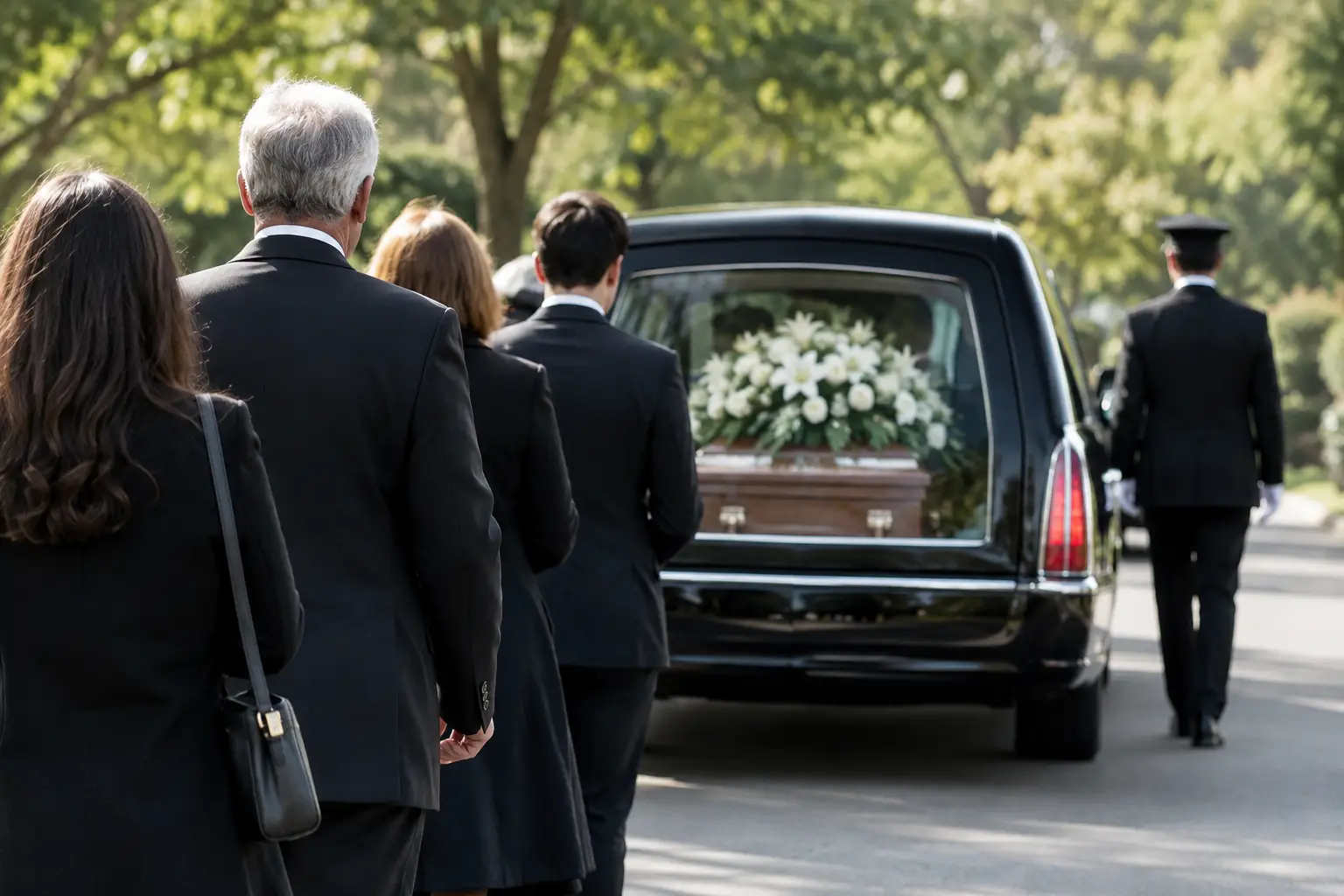
A funeral procession is a final act of accompaniment: family and friends traveling together to honor someone they love. In the middle of grief, though, road decisions can feel stressful and urgent. Funeral procession laws govern how processions interact with traffic, intersections, escorts, and other drivers, but the rules are not the same in every state, county, or city.
For families arranging services in Brooklyn or elsewhere in the New York area, the clearest approach is to plan the route carefully and follow the direction of law enforcement, traffic officers, or a qualified funeral professional. A dignified procession should never require mourners or other drivers to take risks.
Why Funeral Procession Laws Vary
There is no single national rule that gives every funeral procession automatic right-of-way. Some states have laws allowing a properly identified procession to proceed through an intersection as one group after the lead vehicle has entered lawfully. Other jurisdictions require every driver in the procession to obey each traffic signal and stop sign individually unless an authorized officer directs traffic.
Local rules may also address procession permits, police escorts, use of headlights, flags or window markers, and the number of vehicles allowed on a particular route. A rule that is familiar to a family from another state may not apply in New York City, Long Island, New Jersey, or Pennsylvania.
That is why it helps to avoid assumptions such as, “Other cars must always stop for us,” or, “We can follow the car ahead through any light.” Whether that is permitted depends on the location and the circumstances. A funeral director can help families understand the practical plan for the day, while questions about a specific legal requirement should be directed to the appropriate local authority or legal professional.
Right-of-Way Does Not Mean a Guarantee of Safety
Even where funeral processions receive certain traffic accommodations, drivers in the procession still have a duty to use care. Other motorists may not see the line of vehicles, may be unfamiliar with local rules, or may be distracted. An escort vehicle can improve visibility and help manage a route, but it does not make unsafe driving safe.
Every driver should slow down when approaching an intersection, watch for pedestrians and cyclists, and leave enough room to react. The lead vehicle sets the pace. A slow, steady route gives mourners time to remain together without encouraging anyone to rush through traffic.
It is also wise to prepare for the possibility that the group may be separated. Traffic lights change, drivers merge between cars, and congestion is common in New York City. Being separated from the line is not a failure or a reason to drive aggressively. Families should receive the cemetery or final destination address in advance, along with a contact number in case someone needs help finding the group.
Traffic Signals and Stop Signs
A green light, red light, flashing signal, or stop sign is not something mourners should interpret on their own based on what the vehicle ahead has done. If a police officer is actively directing traffic, that officer’s direction controls. Without that direction, drivers should follow applicable traffic laws and the instructions provided for the route.
Drivers should never enter an intersection blindly, drive around a stopped vehicle, block a crosswalk, or use an emergency lane to keep up with a procession. These actions can endanger people who are grieving, as well as pedestrians and other road users.
What Other Drivers Should Do
Seeing a funeral procession can call for patience and courtesy. Other drivers should avoid cutting into the line, honking unnecessarily, or trying to pass closely on a narrow road. If traffic is being directed by an authorized officer, motorists should follow that officer’s instructions.
At the same time, other drivers should not be expected to guess the rules. A clearly planned procession, with visible identification when appropriate and professional coordination where available, reduces confusion for everyone sharing the road.
Planning a Procession With Fewer Unknowns
A thoughtful plan turns a complicated drive into one less burden for the family. Before the service, confirm whether the procession will travel directly from the funeral home to the cemetery, crematory, place of worship, or reception. Consider the time of day, construction, school zones, street closures, and the needs of elderly guests or relatives traveling with children.
If the route involves a large number of vehicles, a busy urban area, or travel across municipal boundaries, ask whether an escort, permit, or additional coordination is appropriate. Not every procession needs the same level of support. A short trip with a few cars may be managed differently than a large procession traveling through dense city traffic.
Families may also choose not to hold a traditional procession. Guests can receive the destination details and meet there independently, especially when parking is limited or attendees are unfamiliar with the area. This option can be calmer for some families and is no less meaningful. The focus is on arriving safely and being present for the committal, burial, memorial, or gathering that follows.
A Simple Briefing for Drivers
Before leaving, the person coordinating the service should give drivers a few practical instructions. Share the destination address, approximate travel time, parking expectations, and a phone number for assistance. Let everyone know whether they should follow a lead vehicle, use their own navigation, or meet at the destination.
Drivers should keep headlights on if instructed, remain in the designated line when possible, and avoid using hazard lights unless there is a genuine emergency or local direction to do so. They should keep a safe following distance, buckle all passengers, and put phones away before the vehicles begin moving.
For families with guests who speak different languages, written directions in the languages most comfortable for those attending can prevent confusion. Clear communication is a practical form of care, especially when people are managing grief and unfamiliar travel at the same time.
When Police or Professional Escorts Are Involved
An authorized escort can help with a complicated route, but families should understand what that service does and does not provide. Police officers and trained traffic professionals may direct vehicles at intersections, help maintain order, and assist with safe movement when their role has been arranged and permitted. Their instructions should always be followed.
A private escort vehicle is not the same as an emergency vehicle, and its presence does not automatically override traffic controls. No one should attempt to imitate a police vehicle, use unauthorized emergency-style equipment, or expect other motorists to yield based only on a flashing light or a vehicle decal.
A funeral home can explain the available options and coordinate the appropriate details behind the scenes when an escort is part of the plan. The goal is not to make the procession feel hurried or official. It is to create a safer, more orderly passage for the family.
Common Questions About Funeral Procession Laws
Do funeral processions always have the right-of-way?
No. Rights and responsibilities vary by state and local jurisdiction. Even where a procession receives special recognition, drivers must still act safely and comply with lawful traffic direction.
Can a procession go through a red light?
Drivers should not assume they may proceed through a red light because they are following a funeral procession. Only follow the direction of an authorized traffic officer and the applicable local rules.
What happens if a vehicle gets separated from the procession?
Continue safely, use the destination address provided, and contact the designated family member or funeral home if needed. Do not speed, run signals, or make unsafe turns to catch up.
Is an escort required for a funeral procession?
Not always. The need for an escort depends on the route, local requirements, traffic conditions, and the size of the group. A professional can help determine what is appropriate.
A funeral procession should give family and friends space to honor a life, not add fear to an already difficult day. With clear directions, a realistic route, and respect for local traffic rules, the journey can remain calm, orderly, and centered on the person being remembered.