
Imagine receiving a phone call from thousands of miles away, the kind that makes the world go quiet. Suddenly, your grief is interrupted by a mountain of paperwork and the daunting question of how to bring your person home to New York. Knowing what to do when a loved one dies abroad feels nearly impossible when you're facing language barriers and foreign regulations alone. It's a heavy burden to carry, especially when you're already navigating the first waves of loss. You want them back on familiar soil, but the path home looks like a maze of red tape.
We understand that the fear of the unknown can be paralyzing. You may feel anxious about international shipping costs or confused about whether to call an embassy or a funeral home first. This guide serves as a steady hand to lead you through the process. We'll provide a clear, calm roadmap for the next 48 hours, ensuring your loved one is treated with dignity. By the end, you'll know exactly how to coordinate with foreign authorities and why a local Brooklyn partner is essential for a seamless journey home through JFK or Newark.
Key Takeaways
- Identify the essential first contacts you must make with foreign authorities and the U.S. Embassy to protect your loved one's rights.
- Gain a clear roadmap of what to do when a loved one dies abroad, helping you manage those first complex hours with quiet confidence.
- Learn about the Consular Report of Death Abroad (CRODA) and the specific paperwork required to bring a person home to New York.
- Understand the technical requirements for international air travel, such as specialized containers that ensure a dignified and secure journey.
- Discover how a dedicated Brooklyn coordinator handles the logistics at JFK or Newark, allowing you the space to focus on honoring your loved one.
Table of Contents
- Immediate Steps: What to Do in the First 24 Hours
- Understanding the Legal Paperwork and CRODA
- Logistics of International Funeral Transportation
- Planning the Arrival and Service in New York
- Why Expert Coordination is Essential for Repatriation
Immediate Steps: What to Do in the First 24 Hours
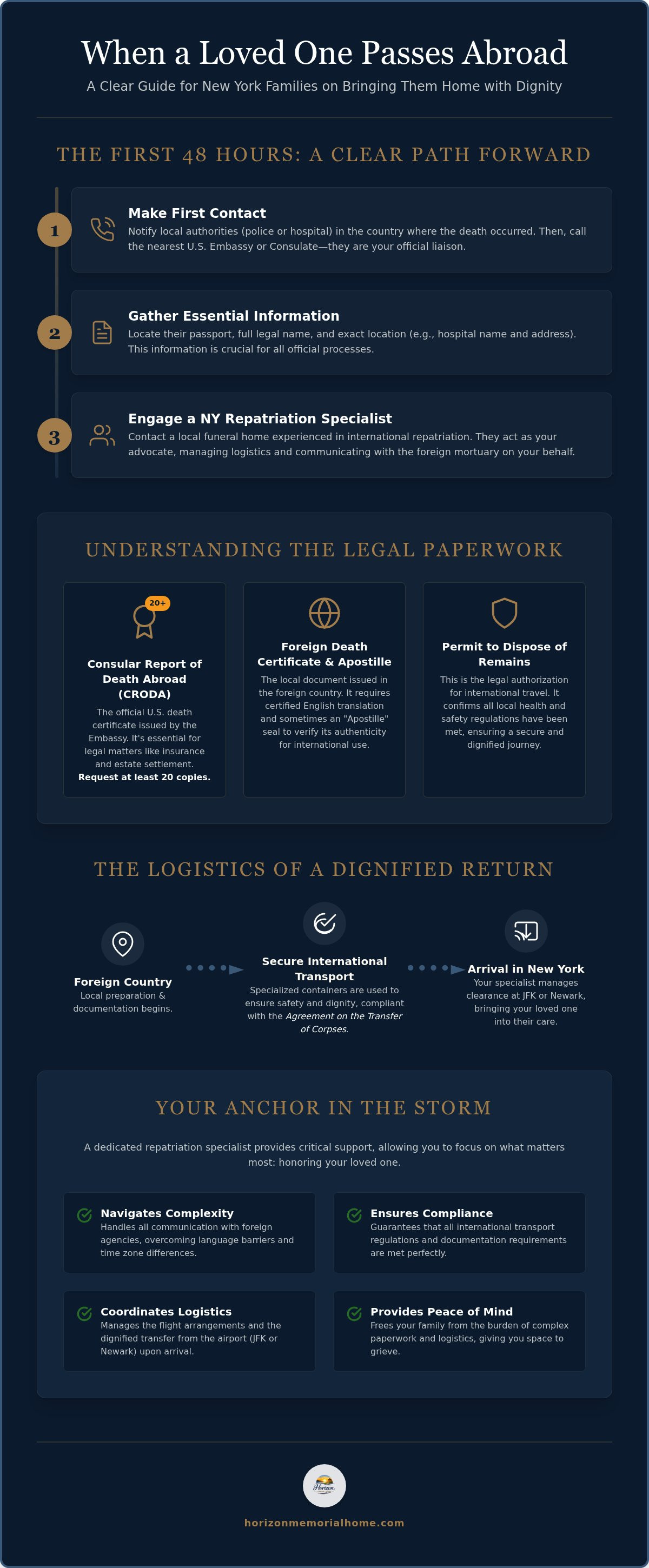
The first few hours after losing someone are often a blur of shock and profound sadness. When that loss happens in a different country, the distance can make you feel even more untethered. Knowing what to do when a loved one dies abroad starts with finding a steady path through the immediate fog. Your first priority is to contact the local authorities in the country where the death occurred, such as the local police or hospital staff. They will begin the necessary local documentation, but you don't have to walk this path alone.
Once the local authorities are aware, you'll need to gather a few essential items to help identify your loved one and begin the official process. Try to locate their passport, full legal name, and their exact current location, whether that is a medical facility or a local mortuary. Having these details ready will be a quiet source of strength as you begin the next steps of the journey home.
Notifying the U.S. Embassy
Your next vital call is to the nearest U.S. Embassy or Consulate. A Consular Officer acts as a dedicated liaison between your family and the foreign government. They are experts in local laws and will help you report the death of a U.S. citizen officially. It's helpful to know that while the embassy provides guidance, they don't have funds to pay for the return of remains. You should ask them for their "List of Funeral Directors," which includes local providers experienced in preparing remains for international transport. This list is a helpful starting point, but the real coordination begins when you connect that foreign service with your home in New York.
Engaging a New York Repatriation Specialist
While the embassy handles the official paperwork, you'll need a local expert in Brooklyn to manage the logistics of the flight and arrival. Reaching out to a New York repatriation specialist early is essential. We act as your advocate, working directly with the foreign mortuary to ensure every detail follows the Agreement on the Transfer of Corpses. This international treaty sets the standards for dignity and safety during transport.
Having a local partner means you don't have to struggle with language barriers or manage complex logistics across different time zones. We take over the heavy lifting of communication, ensuring that your loved one is treated with the utmost respect from the moment they leave the foreign country until they arrive at JFK or Newark. This partnership allows you to step back from the "red tape" and find a small sanctuary of peace during a period of deep uncertainty.
Understanding the Legal Paperwork and CRODA
The legal side of loss often feels cold compared to the warmth of your memories. When you're trying to figure out what to do when a loved one dies abroad, the paperwork can feel like a secondary language you weren't prepared to speak. It's more than just administrative tasks. These documents are the keys that unlock the door to bringing your loved one home. Each form serves a specific purpose. It ensures the transition is legally sound and respectful of international laws while protecting your family's rights during a vulnerable time.
The Importance of the CRODA
The Consular Report of Death Abroad (CRODA) is the official record of a US citizen's death abroad for legal purposes. This document is issued by the U.S. Embassy or Consulate and acts as the primary legal equivalent of a domestic death certificate. You'll find that it's indispensable for settling an estate, claiming life insurance, or managing social security benefits. Because so many institutions require original or certified copies, we usually recommend requesting at least 20 copies. Having an ample supply now prevents the stress of trying to secure more from a foreign office during the probate process later on.
Navigating Foreign Death Certificates
Before the CRODA can be issued, the local authorities in the host country must provide their own documentation. This often includes hospital records or police reports. These will likely be in the local language, requiring certified English translations to be recognized back in New York. For certain regions, such as Georgia or Armenia, an Apostille may be required. This is a specialized seal that verifies the document's authenticity for international use. A dedicated coordinator can manage these details, ensuring that every seal and signature is correct before the journey begins.
Beyond the death certificate, you'll need to secure a "Permit to Dispose of Remains." Though the title sounds clinical, it's simply the legal authorization required for international transit. It confirms that all health and safety regulations have been met for the flight. Managing these specific requirements is where a partner like Horizon Funeral Home can provide a sense of sanctuary. We take these logistical burdens off your shoulders so you can focus on your family. Knowing what to do when a loved one dies abroad often means trusting an expert to handle the fine print, ensuring your loved one is received with the dignity they deserve. This meticulous attention to detail prevents delays at the border and keeps the focus on the person you lost, rather than the paperwork they left behind.
Logistics of International Funeral Transportation
Deciding how to honor a loved one is a deeply personal choice. When death occurs in another country, you generally face three options: local burial, local cremation, or international repatriation. While choosing a local service abroad may feel simpler in the moment, many families find a lasting sense of peace by bringing their person back home to New York. If you decide on shipping, the process becomes a meticulous dance of international standards and careful coordination.
Technical requirements for air travel are strict to ensure safety and dignity. New York State law requires that remains be encased in a rigid, leak-proof container. Most international carriers mandate the use of a zinc-lined casket, which is hermetically sealed. This inner container is then secured within an outer wooden box or a specialized air tray for the flight. These preparations aren't just administrative hurdles; they're designed to protect the sanctity of your loved one's body throughout a journey that can span thousands of miles.
Security protocols also play a significant role in the timeline. Airlines operate under "Known Shipper" regulations, which means only certified funeral directors can book and manage these shipments. TSA security protocols are strictly followed at every stage. Typically, the timeline for international mortuary shipping ranges from five to ten days. This window depends on the country of origin, local holiday schedules, and flight availability to major hubs like JFK or Newark.
Air Travel for Human Remains
Preparing for a long-haul flight involves a close partnership between the foreign funeral home and the airline cargo department. A critical part of this process is "Consular Sealing." A representative from the U.S. Consulate verifies that the casket contains only the remains and the necessary documentation before applying an official seal. This step ensures that the casket remains undisturbed during transit, maintaining the integrity of the journey until it reaches New York soil.
Repatriation of Cremated Remains
Choosing cremation abroad often simplifies the return journey, but it still requires careful attention. You can generally carry an urn as carry-on luggage, provided you have the death certificate and the cremation certificate ready for customs. It's essential to use TSA-approved urn materials such as wood, plastic, or non-lead-lined ceramic. These materials allow X-ray machines to clearly see the contents. If an urn is lead-lined, security may be unable to verify the contents, which can lead to painful delays. Understanding what to do when a loved one dies abroad means choosing the right vessel to ensure their final flight is as smooth and respectful as possible.
Planning the Arrival and Service in New York
Bringing a loved one back to New York soil is a significant milestone in the grieving process. It marks the moment when the complex international logistics end and the personal journey of saying goodbye begins. While you've already managed the initial steps of what to do when a loved one dies abroad, the homecoming requires its own delicate coordination. We step in here to ensure that the transition from a cargo manifest to a dignified memorial is handled with the quiet grace your family deserves.
Airport Pickup and Customs Clearance
When the aircraft touches down at JFK, LGA, or EWR, our work moves to the airline cargo terminals. You don't need to worry about being at the airport or navigating the industrial areas of the terminals. We manage the entire interaction with U.S. Customs and Border Protection (CBP) to ensure all international health and transit permits are verified. Our team coordinates the secure and respectful transfer of your loved one from the airline's care to our facility in Brooklyn. Once they're safely in our sanctuary, we can begin the gentle process of preparation for their final service.
Honoring Their Journey with a Service
A funeral is more than a ritual; it's a reflection of a life lived, even one that ended far from home. We help you create a service that honors their travels and their heritage. If your loved one was a member of the armed forces who passed away while overseas, we specialize in integrating veteran honors into the ceremony. This includes coordinating with military branches to provide a proper tribute for their service. It's a way to ensure their commitment is recognized with the highest level of dignity.
Scheduling the service requires a bit of patience and flexibility. International travel can sometimes be unpredictable due to weather or flight delays. We work closely with you and local New York cemeteries to find the right time for the burial or memorial. While we don't sell cemetery plots ourselves, we act as your meticulous coordinator to ensure everything is ready at the graveside. You can learn more about how we structure these meaningful moments in our guide to traditional funeral arrangements Brooklyn.
If you're currently facing the challenge of a loss overseas, our team is ready to act as your steady guide. Please reach out to us at Horizon Funeral Home to begin the process of bringing your loved one back to the city they called home.
Why Expert Coordination is Essential for Repatriation
When the distance between two countries feels like an insurmountable gap, a steady partner becomes the bridge. Understanding what to do when a loved one dies abroad isn't just about following a checklist. It's about having a navigator who understands the subtle rhythms of international transit and the weight of foreign regulations. Expert coordination ensures that your loved one is never treated as a line item on a manifest, but as a person returning to their community with the highest level of dignity.
The risk of delays or rejected documentation at the border is a source of high anxiety for many families. A single missing seal or an uncertified translation can halt the journey for days. We act as a meticulous coordinator to prevent these setbacks, verifying every document before it reaches customs. This careful oversight provides a sense of sanctuary, allowing you to step away from the logistics and focus on the emotional reality of your loss. You shouldn't have to manage language barriers or navigate the "red tape" of a foreign government while you are in the depths of grief.
Specialized Expertise in Global Logistics
Horizon specializes in worldwide transportation, with a particular focus on routes that require deep local knowledge. We have extensive experience managing the unique paperwork and cultural expectations for repatriation from Georgia and Armenia. These regions often have specific requirements for Apostille seals and specialized transit permits that differ from Western standards. By handling these complexities, we ensure a smooth path home for those in the Eastern European and Caucasian communities. You can find more detail on these technical processes in our guide to international funeral transportation.
A Compassionate Partner in Brooklyn
Our commitment to you is to be a steady presence that is available but never intrusive. As an independent, local funeral home in Brooklyn, we prioritize the personal details of your story. We don't just coordinate flights; we coordinate the transition of your loved one back into the arms of their family. This local partnership means you have a direct point of contact who understands both the international landscape and the specific requirements of New York's arrival hubs.
Choosing an expert guide helps you feel more grounded during a period of intense uncertainty. We take pride in being patient listeners who value tradition and cultural sensitivity. If you are currently trying to determine what to do when a loved one dies abroad, please know that you don't have to find the answers alone. We are here to stand beside you and manage every detail of the journey. For immediate support, contact us for immediate assistance with international repatriation.
Bringing Your Loved One Peacefully Home
The journey from a foreign shore back to New York is undeniably complex. It requires more than just paperwork; it requires a deep respect for the person you lost and the life they lived. By understanding what to do when a loved one dies abroad, you've already taken the first steps toward bringing them home. From managing the Consular Report of Death Abroad to coordinating the specialized requirements for international air travel, every detail serves the purpose of honoring your loved one's memory.
You don't have to carry this burden alone. At Horizon Funeral Home, we specialize in meticulous worldwide transportation, including expert coordination for specialized routes like Georgia and Armenia. We're here to provide a sanctuary of stability for families in Brooklyn and across the NYC metro area. Our team handles the consular seals and airline logistics so you can focus on your family's needs. Contact Horizon Funeral Home for steady, expert help with international repatriation. We're ready to stand beside you, ensuring your loved one is received with the dignity, peace, and warmth they deserve.
Frequently Asked Questions
Does the US government pay to bring a body home from abroad?
The U.S. government doesn't cover the costs of returning remains to the United States. While the Department of State provides essential guidance and issues the necessary legal documents, they have no funds allocated for repatriation or burial. Families are responsible for all expenses. This is why many people look for a steady partner to help manage costs and logistics during this difficult time, ensuring their loved one is always treated with the utmost dignity and respect throughout the journey.
How long does it take to ship human remains back to the United States?
Shipping remains back to the United States typically takes between five and ten days. This timeline depends on the country where the death occurred and how quickly local authorities issue death certificates. Some regions have more complex requirements that can extend this window. We work closely with international carriers to ensure the journey is as swift and dignified as possible, keeping you informed at every step as your loved one makes their way back home to New York soil.
Can I fly with my loved ones ashes in my carry-on luggage?
You can fly with cremated remains in your carry-on luggage if you have the proper documentation. You'll need the original death certificate and the cremation certificate. It's vital to use an urn made of wood, plastic, or non-lead-lined ceramic so it can pass through TSA X-ray machines. If the container is lead-lined, security may not be able to clear it for the flight. This ensures a peaceful journey through customs and onto the plane without any unnecessary delays.
What is a Consular Report of Death Abroad (CRODA)?
The Consular Report of Death Abroad (CRODA) is the official record of a U.S. citizen's death in a foreign country. Issued by the local U.S. embassy or consulate, it serves as the primary legal document for insurance and probate in the United States. Knowing what to do when a loved one dies abroad often centers on securing this document, as it acts as the domestic equivalent of a death certificate for all legal and estate matters.
Do I need to hire two funeral homes for international repatriation?
Most international repatriations require two funeral homes to coordinate the journey. You'll need a local provider in the foreign country to handle the initial preparation and transport to the airport. Simultaneously, a New York funeral home manages the arrival at JFK or Newark and the final service. This partnership ensures that your loved one is cared for with professional reliability from the moment they leave the foreign shore until they arrive safely back home to the city.
Is an autopsy required if someone dies in a foreign country?
An autopsy isn't always required, but it depends on the local laws of the host country and the circumstances of the death. Some nations mandate an autopsy for any non-natural death or when the cause isn't clear. If an autopsy is performed, it may delay the repatriation process by a few days. We can help you communicate with foreign officials to understand their specific requirements and keep the process moving forward with professional reliability and gentle care.
What happens if the deceased did not have travel insurance?
If the deceased didn't have travel insurance, the next of kin is responsible for all repatriation costs. This can feel overwhelming, but we're here to help you understand the most efficient routes and options. When deciding what to do when a loved one dies abroad without a policy, focus on finding a coordinator who can break down the logistics into manageable pieces. We offer steady support to help you navigate these unexpected expenses with confidence and clarity.
Can a funeral service be held in New York before the body arrives?
You can certainly hold a memorial service or celebration of life in New York before the remains arrive. This allows friends and family to gather and support one another during the initial period of grief. While a traditional funeral with the casket requires the remains to be present, a meaningful tribute can happen at any time. We can help you plan a service that honors your loved one's story while we coordinate their flight back home to the city.