
The final journey home shouldn't be defined by a maze of complex paperwork or the stress of hidden fees. When you're grieving, the last thing you need is the added weight of confusing international regulations or the fear that your loved one won't be treated with the dignity they deserve. You likely have many questions about the cost of repatriating remains from USA, and you deserve answers that are as clear as they are compassionate. We understand that this isn't just a logistical task. It's a sacred responsibility to return a family member to their heritage and their home.
We believe that clarity is a form of kindness. In this guide, we'll walk beside you to explain how the process works in 2026. You'll gain a thorough understanding of the total cost structure involved in international transportation without the stress of the unknown. We'll explore the essential documentation required by consulates, the nuances of airline coordination, and how a dedicated partner can handle the heavy lifting for you. Our goal is to provide you with a sense of sanctuary and stability. By the end of this article, you'll have the expert guidance needed to move forward with quiet confidence and peace of mind.
Key Takeaways
- Understand the logistical differences and financial impacts of choosing between full-body transportation and the more streamlined process of repatriating cremated remains.
- Identify the often-overlooked fees, such as consular documentation and legal permits, that contribute to the total cost of repatriating remains from USA.
- Learn how specialized shipping containers and air cargo regulations ensure your loved one is transported with the highest level of safety and dignity.
- Discover how to access financial support through travel insurance policies or employer benefits to help manage the complexities of international transit.
- Find peace of mind by learning how a dedicated coordinator at a major international hub like New York City can simplify the paperwork and offer a steady presence throughout the journey.
Table of Contents
- Understanding the Scope of Repatriation Costs from the USA
- Breakdown of International Transportation Expenses
- Hidden Costs: Documentation, Permits, and Legal Requirements
- Strategies to Manage and Reduce Repatriation Expenses
- How Horizon Funeral Home Navigates the Logistics for You
Understanding the Scope of Repatriation Costs from the USA
The journey home is often the final wish of those who have spent their lives far from their birthplace. Repatriation is a sacred return. It's much more than a logistical transfer of a casket or an urn. It represents a journey of dignity, ensuring that a loved one rests where they truly belong. When you begin looking into the cost of repatriating remains from USA, it's helpful to see the process as a partnership. You aren't just paying for airfare. You're investing in a coordinated effort that spans borders, languages, and complex legal systems. This global perspective on repatriation highlights how deeply rooted these traditions are in our shared human experience.
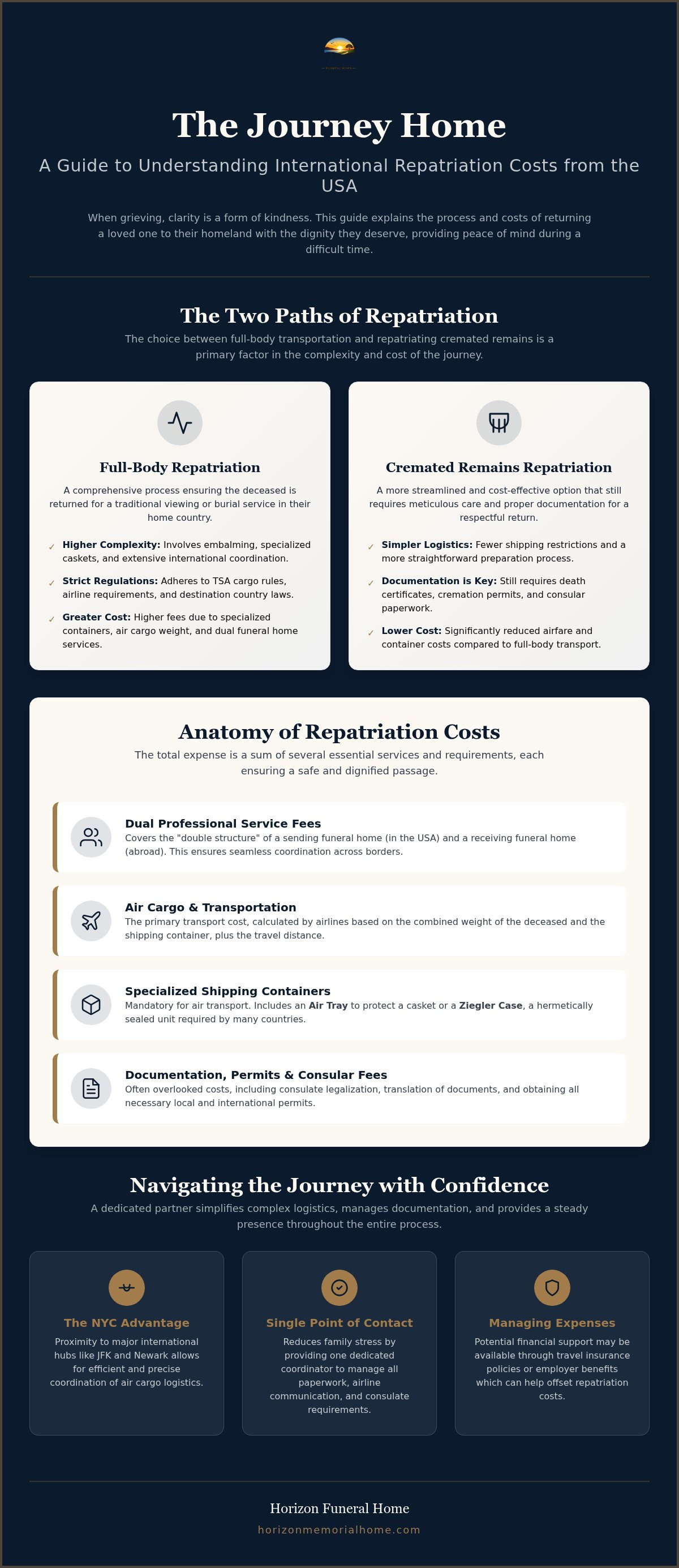
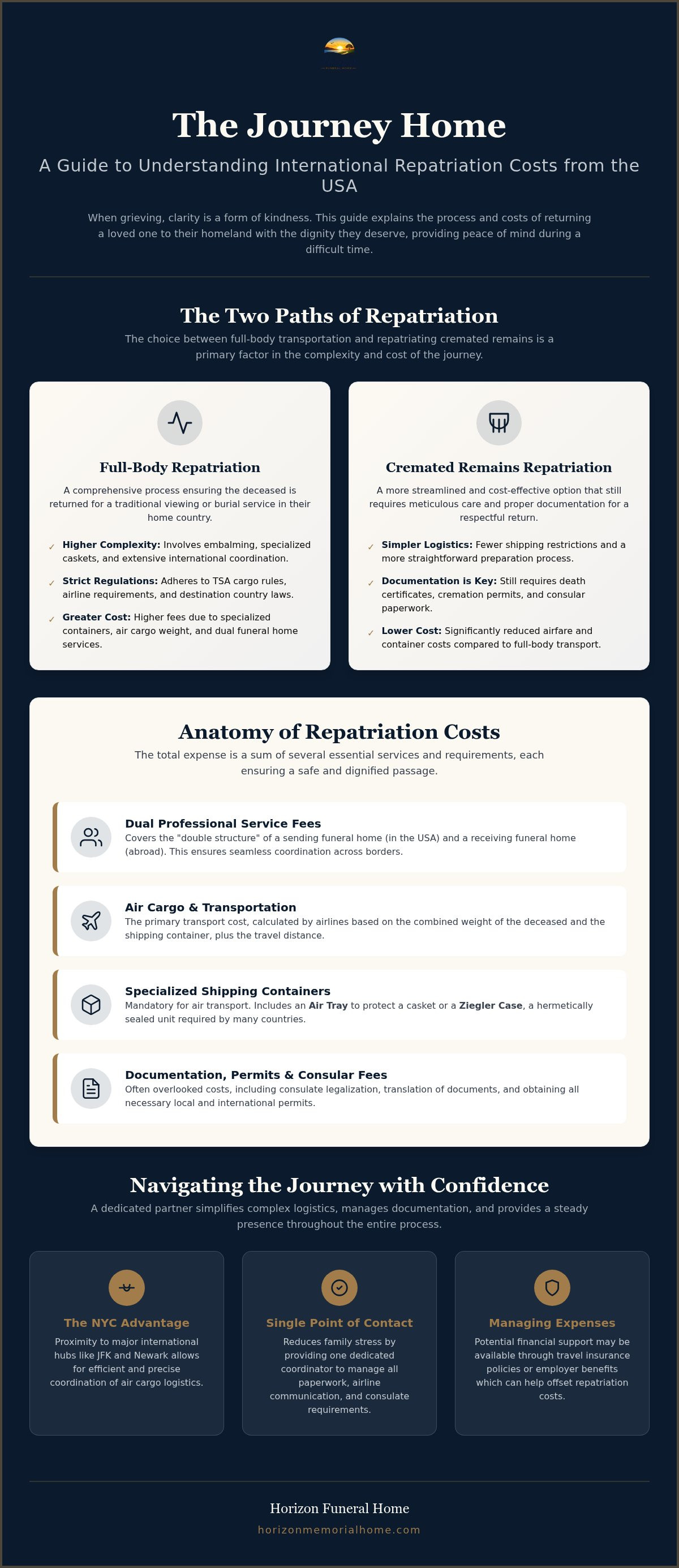
The path you choose usually falls into two categories: full-body repatriation or the transport of cremated remains. These paths differ significantly in their requirements. A full-body transfer involves specialized preparation, specific shipping containers, and coordination with international airlines. Transporting cremated remains is often more straightforward, but it still requires meticulous documentation to ensure the journey is respectful and legal. Every country has its own set of rules. Some require specific seals on the casket. Others need extensive translations of legal documents. This is why the cost of repatriating remains from USA varies so much. Your funeral director acts as a steady anchor during this time, managing these details so you don't have to.
Repatriation vs. Local Burial: A Financial Comparison
Choosing between a local service in New York City and an international transfer is a significant decision. A local burial involves one funeral home and one set of services. Repatriation involves a "double" structure. You'll work with a sending funeral home here in the States and a receiving home in the destination country. Each provides essential care. The sending home handles the preparation and the TSA-regulated air cargo arrangements. The receiving home manages the arrival and the final service. This dual coordination is a primary factor in the overall logistical budget.
The Emotional Value of Bringing a Loved One Home
For many families, the value of returning to ancestral grounds cannot be measured in simple terms. It's about honoring a legacy. We understand that these cultural traditions are vital. Our location in Brooklyn provides a unique advantage for these journeys. Being close to major international air hubs allows us to manage pickups and deliveries with precision. We focus on being a single point of contact. This reduces your anxiety during a period of deep uncertainty. We pride ourselves on being a patient listener, ensuring that every cultural detail is respected while we handle the complex coordination required to bring your loved one home.
Breakdown of International Transportation Expenses
Moving a loved one across the globe involves several physical and administrative layers. The core of the cost of repatriating remains from USA often begins with air cargo fees. These fees are calculated based on a combination of the total weight and the distance to the destination. Beyond the flight itself, specialized shipping containers are a requirement for safety and dignity. An Air Tray is used to protect a casket during transit, while a Ziegler Case is a hermetically sealed metal liner often required by specific countries or airlines. These items ensure that your loved one is treated with the highest level of care throughout the flight. Understanding these specifics helps clear the fog around the total cost of repatriating remains from USA and allows you to focus on your family.
You'll also find that professional service fees are a significant part of the budget. These fees cover the meticulous coordination that a funeral home provides. It's about having a single point of contact who understands international protocols and ensures every detail is perfect. This includes coordinating ground transportation from the place of death to the airport cargo terminal. If you have questions about how these logistics work for your specific situation, we are here to provide worldwide transportation guidance that honors your family's needs.
The NYC Advantage: JFK and Newark Logistical Hubs
Shipping from New York City offers a distinct logistical advantage. Our proximity to JFK and Newark, two of the world's busiest cargo hubs, often results in more competitive pricing and more direct flight options. Direct flights are preferable. They minimize the number of times a casket is moved or transferred, which protects the dignity of the remains. Because we are based in Brooklyn, we can manage the timing of these transfers with precision, ensuring that the journey begins without unnecessary delays.
Airline Policies and Known Shipper Requirements
Airlines have strict safety protocols that only allow "Known Shippers" to book these services. This is a status granted by the TSA to licensed funeral homes that have undergone rigorous vetting. You cannot book these flights as an individual. We handle the communication with the airlines to determine if "Accompanied Remains" or "Cargo" is the best option for you. We also ensure that all preparations meet CDC importation regulations and IATA standards. This careful management of the timeline ensures that the transit window is respected and the arrival is coordinated with the receiving home abroad.
Hidden Costs: Documentation, Permits, and Legal Requirements
Beyond the physical transportation we discussed earlier, a significant portion of the cost of repatriating remains from USA involves the administrative and legal work required to cross international borders. These aren't just bureaucratic hurdles. They are the legal safeguards that ensure your loved one is recognized and respected by both the United States and the receiving nation. Managing these details requires a meticulous hand and a deep understanding of international law, which can often feel overwhelming during a time of loss. We see our role as your advocate in these spaces, ensuring every "i" is dotted and every "t" is crossed.
You'll need to account for several specific legal steps that contribute to the total cost of repatriating remains from USA, including:
- Death Certificates: You'll need multiple certified copies for various international and domestic agencies.
- The Apostille Process: This is a specialized certification from the Secretary of State that authenticates a document for use in another country. It's essential for the destination country to recognize the validity of the U.S. death certificate.
- Certified Translations: If the destination country's official language isn't English, all legal documents must be translated by a certified professional to ensure compliance with local laws.
- Sanitary Certificates: These documents from the health department prove that the remains have been prepared according to international health standards, preventing delays at customs.
The Complexity of Consular Coordination
Working with foreign consulates is a vital part of the journey. Because we are located in the New York City area, we have direct access to a vast network of international consulates. Each nation has its own set of requirements for issuing a transit permit. Some consulates require a physical inspection of the shipping container or casket before it's sealed. Others charge specific fees for official stamps and ledger entries. We act as your liaison, navigating these appointments and paperwork so you can focus on your family's emotional needs rather than administrative delays.
Mandatory Preparation and Sanitary Standards
Health regulations for international transit are much stricter than for local services. Most countries require professional embalming to ensure the remains are preserved for the duration of the flight and subsequent services abroad. There's also the matter of hermetic sealing. For long-haul transit, many airlines and destination countries mandate that the casket be placed in a zinc-lined Ziegler case. This creates an airtight seal that meets rigorous health department standards. We ensure every preparation meets these specific requirements, providing you with the peace of mind that your loved one’s journey will be smooth and uninterrupted.
Strategies to Manage and Reduce Repatriation Expenses
Managing the financial weight of an international journey requires a steady hand and a clear eye. While the logistics are complex, there are ways to streamline the process that prioritize both your budget and your loved one's dignity. We believe in providing options that help you feel in control during a time that often feels chaotic. By looking for efficiencies in coordination and preparation, you can focus more on the memory of your family member and less on the administrative burden.
One of the most effective strategies is to use a single point of contact. When you work with a dedicated coordinator, you avoid the redundant service fees that occur when multiple agencies try to manage the same paperwork. We act as your liaison, ensuring that the sending and receiving homes are in perfect sync. This meticulous care prevents costly delays and ensures that every resource is used purposefully. If you're feeling overwhelmed by the choices ahead, our team is here to provide personalized worldwide transportation guidance tailored to your situation.
Cremation as a Dignified Alternative
One of the most practical ways to manage the cost of repatriating remains from USA is through cremation. Transporting a casket involves significant weight and specialized air trays, which naturally increases airline cargo fees. In contrast, cremated remains are much lighter and can often be carried as carry-on luggage by a family member. You'll still need specific documentation, such as a cremation certificate and a permit from the consulate, but the logistical hurdles are greatly reduced. For more details on this path, you can read our Brooklyn Cremation Services: 2026 Buying Guide.
Veteran Benefits and International Support
If your loved one served in the military, they may be entitled to specific honors that can be coordinated even if the burial takes place abroad. While the Department of Veterans Affairs generally doesn't cover the full cost of repatriating remains from USA, they do provide burial flags and headstones that can be shipped internationally. We can help you navigate these benefits to ensure your hero is honored appropriately. You can find more information in our guide, Honoring Our Heroes: A Guide to Veteran Funeral Honors in New York (2026).
You should also check for existing travel insurance or employer-provided benefits. Many modern life insurance policies and corporate benefit packages include repatriation coverage specifically for these circumstances. These benefits are designed to handle the logistical and financial heavy lifting during a crisis. Additionally, community support and crowdfunding have become reliable ways for international families to bridge financial gaps. We're here to help you explore every available avenue with patience and respect.
How Horizon Funeral Home Navigates the Logistics for You
Repatriation is a complex puzzle, but you don't have to solve it alone. We see ourselves as a steady guide, standing beside you to handle the meticulous details that ensure a respectful return. Our philosophy is rooted in patience and clarity. We know that the cost of repatriating remains from USA is a significant concern for families, so we prioritize transparent pricing from the very beginning. You won't find high-pressure tactics or urgent marketing here. Instead, you'll find a team that values tradition and personal detail, coordinating with receiving funeral homes across the globe to ensure a seamless transition from our care to theirs.
Our role is to act as your single point of contact and your logistical advocate. We manage the communication between airlines, health departments, and international authorities. This centralized approach reduces the feeling of being overwhelmed and ensures that information is presented in a logical, unhurried sequence. We take as much time as necessary to ensure you feel supported and informed at every step of the journey.
Case Study: Repatriation to Georgia or Armenia
The Caucasus region has very specific consular requirements that can be difficult to manage without direct experience. We specialize in these routes. From our base in Brooklyn, we've developed a deep understanding of the paperwork and sanitary standards required by the Georgian and Armenian consulates in New York. We manage the specialized flights and ground transport necessary for these unique international routes. This localized expertise doesn't just lower your anxiety; it significantly reduces transit times. By knowing exactly which documents are needed for regional clearance, we ensure your loved one's journey is steady and uninterrupted.
Taking the First Step Toward Peace of Mind
When you reach out to us, our first goal is to listen. During your initial consultation, we'll walk through your family's specific needs and cultural traditions. We'll then build a customized transportation plan that addresses every logistical hurdle, from the initial pickup to the final delivery abroad. This clear-eyed guidance helps you understand the total cost of repatriating remains from USA before the process begins. If you're looking for a deeper look at the entire journey, you can explore our International Funeral Transportation: A Complete Guide to Repatriation in 2026. We are here to provide the sanctuary and stability you need during this period of uncertainty.
Honoring the Journey Back to Ancestral Grounds
Returning a family member to their ancestral home is a profound act of love and a sacred responsibility. While the logistical details can feel heavy, you now have a clearer view of the cost of repatriating remains from USA and the practical steps required to manage it with clarity. We've explored how professional coordination, transparent pricing, and the logistical advantages of our New York City location work together to simplify this journey. You don't have to carry the weight of consular paperwork, specialized containers, or airline regulations by yourself.
Our team is here to act as your steady guide, ensuring every detail is handled with the meticulous care and respect your family deserves. We specialize in worldwide transportation, offering expert coordination with NYC consular offices to provide you with an unhurried and supportive experience. Let us handle the complexities so you can focus on honoring your loved one's legacy. Let our expert guides manage the journey home for you. Contact Horizon Funeral Home today for an international transportation consultation. You're taking a brave first step toward peace of mind, and we're ready to walk beside you every step of the way.
Frequently Asked Questions
Is it cheaper to ship cremated remains or a full body?
Yes, shipping cremated remains is significantly more affordable than a full-body transfer. This is primarily because the weight is much lower and the airline logistics are simpler. You avoid the need for specialized air trays or heavy caskets. While you still need a cremation certificate and a transit permit, the overall cost of repatriating remains from USA is reduced when you choose this path.
How long does the international repatriation process usually take?
The timeline generally ranges from seven to fourteen days for international transport. This duration depends on several factors, including the destination country's consular requirements and the availability of direct flights. Securing the necessary death certificates and apostilles takes time, as does coordinating with the receiving funeral home abroad. We work diligently to manage each step efficiently, ensuring your loved one is returned home without unnecessary delays while maintaining the highest standards.
Does travel insurance cover the cost of repatriating remains?
Many comprehensive travel insurance policies include a "Repatriation of Remains" benefit. This coverage is designed to handle the logistical and financial burdens of returning a loved one to their home country. It's important to review the specific terms of your policy to understand the limits and requirements. We can help you coordinate with the insurance provider to ensure that the necessary documentation is provided and the process moves forward.
Can I accompany the remains on the same flight?
Yes, it's often possible to travel on the same aircraft as your loved one. This is known as "Accompanied Remains" transport. While you'll be in the passenger cabin and the remains will be in the cargo hold, being on the same flight can provide a sense of closeness. We coordinate with the airline to align the schedules, ensuring that the transit windows match and the arrival is handled with care.
What happens if the destination country has strict health regulations?
We ensure that all preparations meet the specific health requirements of the receiving nation. Some countries mandate hermetic sealing in a Ziegler case or specific embalming standards to prevent health risks. Our team stays informed about changing international regulations and works closely with consulates to secure the required sanitary certificates. This proactive approach prevents delays at customs and ensures that your loved one is accepted for entry without any complication.
Are there specific requirements for the casket used in international shipping?
Airlines and international laws require specialized containers to protect the remains during flight. For a full-body transfer, the casket is typically placed inside an Air Tray, which is a sturdy wooden base with a cardboard cover. If the destination country requires it, we may use a zinc-lined Ziegler case for an airtight seal. These requirements are in place to ensure safety, meet weight regulations, and maintain the dignity of the remains throughout.
How do I choose a receiving funeral home in the destination country?
Choosing a reliable partner abroad is an essential step in the journey. You should look for a home that is experienced in international arrivals and understands local burial customs. We often work with a global network of trusted providers and can offer recommendations based on our past experiences in specific regions. We act as your single point of contact, coordinating directly with them to ensure a smooth handoff upon arrival.
What documents do I need to start the repatriation process from the USA?
To begin, you'll need the original death certificate and the deceased's passport. These are the foundational documents required to secure transit permits from the consulate. We also help you obtain the embalming certificate and the burial transit permit. Gathering these items correctly is a critical part of managing the cost of repatriating remains from USA, as it prevents administrative delays that could lead to additional storage or rescheduling fees at the airport.