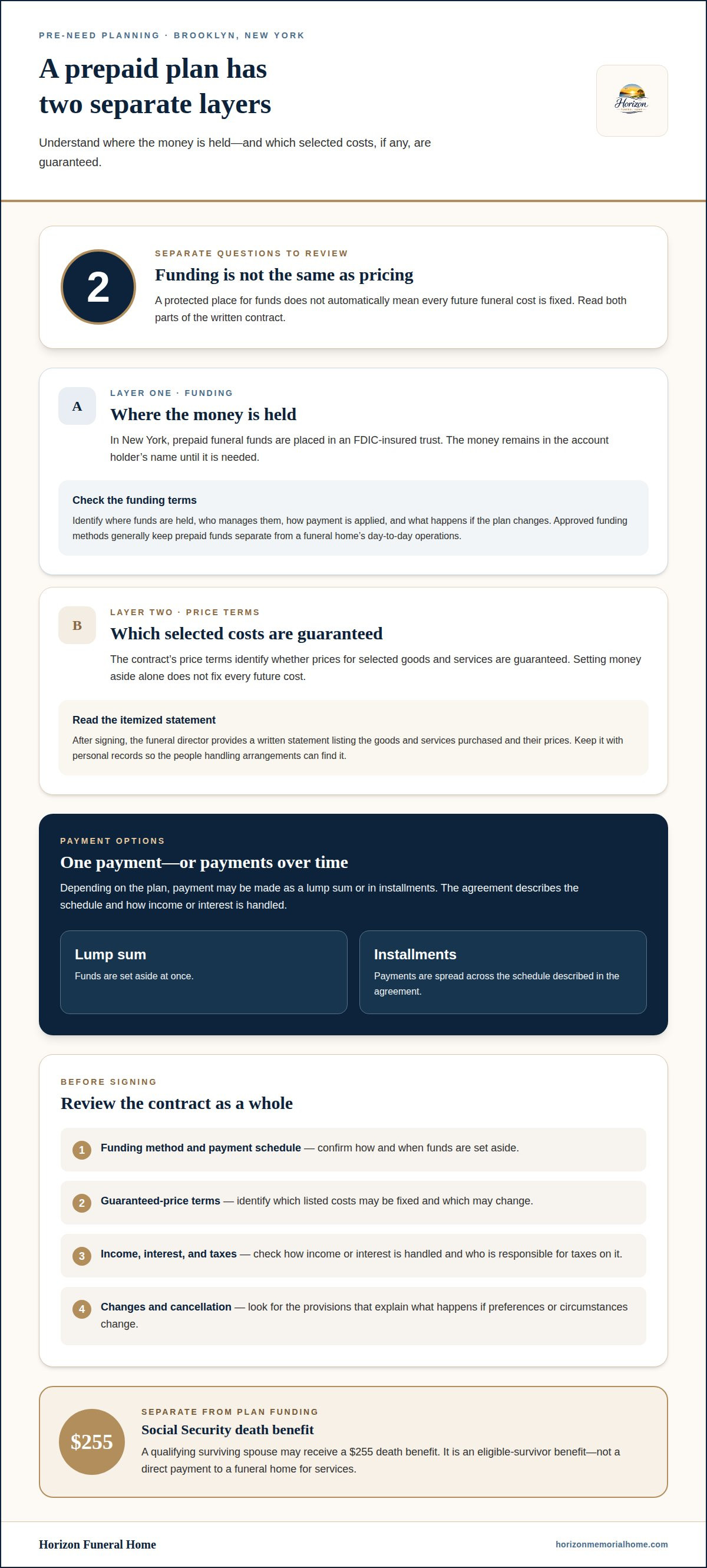

Prepaying can help clarify future funeral arrangements, but it doesn’t automatically lock in every cost. Prepaid funeral plans in Brooklyn are arranged in advance through a written contract explaining how funds are held and whether prices for selected goods and services are guaranteed. In New York, prepaid funds are placed in an FDIC-insured trust, and the money remains in the account holder’s name until it’s needed.
It’s understandable to want both protection for the money set aside and clarity about how inflation could affect future costs. The contract’s funding method and price terms explain how funds are held and which costs may change over time.
This guide explains how prepayment works, what trust protection means, and how to review the terms that matter. You’ll learn why a guaranteed price and money set aside for future expenses are related, but not the same. The goal is to help you understand your options and consider your wishes and your family’s needs at a comfortable pace.
Key Takeaways
- Learn how advance arrangements differ from plans made by family after a death, and what the written contract should clarify.
- See how documenting your wishes and the selected goods and services can help bring clarity to future arrangements.
- Understand how trust or insurance funding can protect prepayment funds, and why contract terms matter.
- Find out how guaranteed-price terms affect exposure to inflation and which costs may still change over time.
Table of Contents
- 1. What Is a Prepaid Funeral Plan?
- 2. How Does Funeral Pre-Payment Work?
- 3. Trust or insurance protection for pre-payment funds
- 4. Inflation and prepaid funeral plans
- Horizon Funeral Home: Traditional Funeral Services
1. What Is a Prepaid Funeral Plan?
A pre-need arrangement is planned before a death; an at-need arrangement is made by surviving family members afterward. Both involve funeral arrangements, but the timing affects who makes decisions and when funds are organized. A pre-need contract records where funds are held until services are provided and whether prices for selected goods and services are guaranteed. Setting money aside alone doesn’t mean every future cost is fixed.
During advance planning, write down your preferences for burial or cremation, the type of service, and any personal or cultural details that matter. Then review the written contract’s funding method and price terms. It should also explain the service-area boundaries, when arrangements can be transferred to another funeral home, and how cancellation works. If a selected good or service becomes unavailable, the contract may provide for a substitute of equal or greater value at no added cost.
Which Brooklyn funeral homes offer prepaid funeral arrangements? Funeral homes that provide pre-need planning can document choices and funding terms in a contract. Focus on the arrangements selected, where funds are held, and whether prices are guaranteed. If a death has already occurred, surviving family members make at-need arrangements, choosing services and goods for the immediate situation.
If funds or insurance aren’t available after a death, the family can still discuss funeral arrangements with a funeral home and make decisions based on available resources. SSI and Medicaid don’t provide funeral homes with direct payment benefits for funeral services. For cremation, New York Public Health Law Section 4201 sets the priority order for authorization: an adult child of the deceased comes first, followed by either parent. For a pre-arrangement, write out the plan in detail and share it with the funeral home and executor. That step gives those responsible a clear record of your wishes.
2. How Does Funeral Pre-Payment Work?
Start with your wishes, not a payment amount. Decide which arrangements matter, such as a traditional service or direct burial, and note meaningful details for the gathering. A funeral director can use those choices to prepare a pre-need contract. Read its itemized terms carefully. After you sign, the funeral director provides a written statement listing the goods and services purchased and their prices. Keep that statement with your personal records so the people handling arrangements can find it.
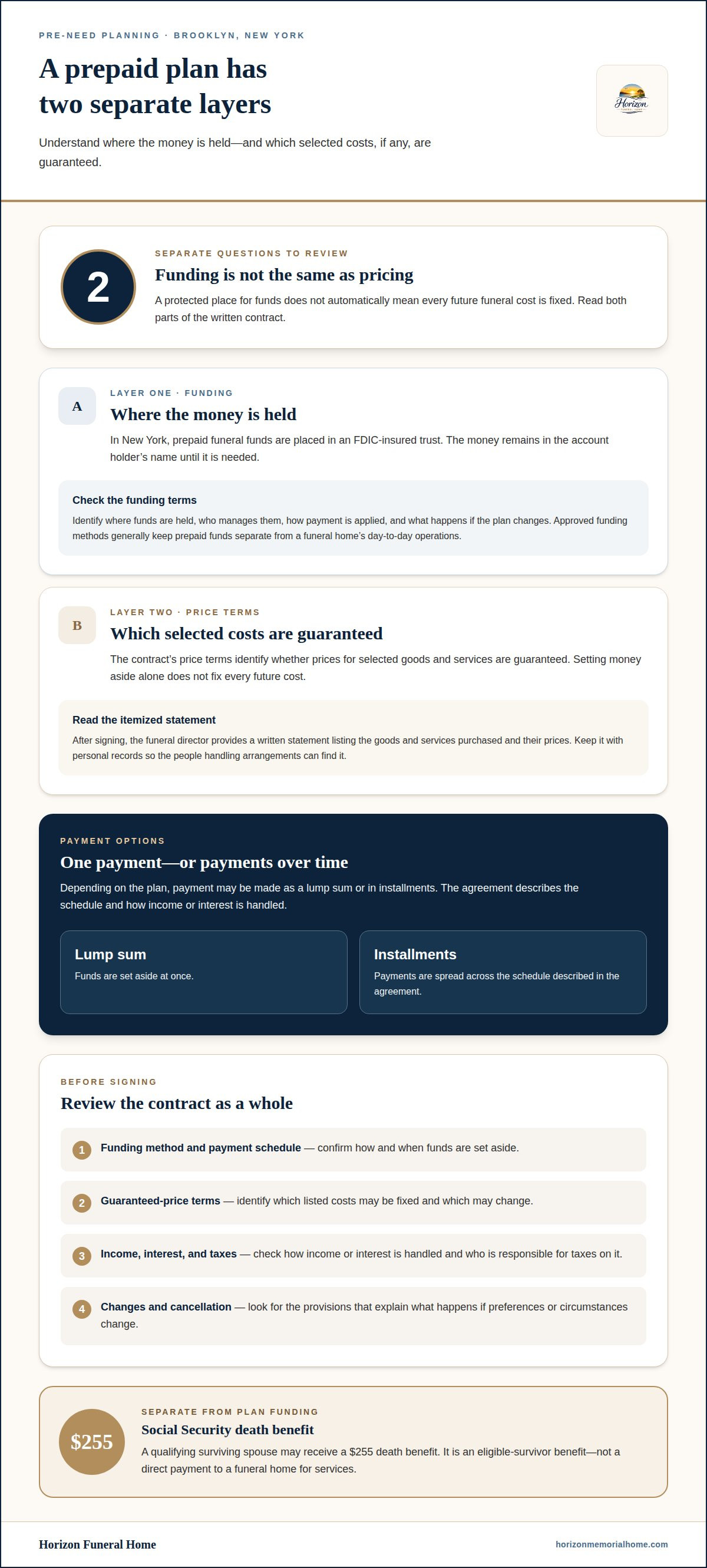
Depending on the plan, payment may be made as a lump sum or in installments. The contract explains how funds are held and whether prices for selected goods and services are guaranteed. These are separate questions: the funding method concerns the money set aside, while the price terms identify which listed costs are fixed. Reviewing both helps you understand how the arrangement fits your budget and what the agreement covers.
Pre-planning also gives you time to make decisions without asking loved ones to guess. For example, you can record whether you prefer burial or cremation, the kind of service you want, and personal or cultural details to include. A funeral director can document those choices in the contract. Your family then has a clearer starting point and a written record of your wishes when arrangements are needed. This can ease decision-making, though the contract’s terms still apply.
Social Security may pay a $255 death benefit to a qualifying surviving spouse. It is a benefit for an eligible survivor, not a direct payment to a funeral home for services. A family may need to contact Social Security about benefit questions after a death. For a calmer planning conversation, you can discuss advance funeral arrangements and consider which choices you want recorded. Take time to read each term before signing, especially the funding and guaranteed-price provisions.
3. Trust or insurance protection for pre-payment funds
In New York, prepaid funeral expenses are placed in an FDIC-insured trust account, and the money remains in the account holder’s name until needed. Approved funding methods generally keep prepaid funds separate from a funeral home’s day-to-day operations. These are account deposit minimums, not funeral service prices.
How do prepaid funeral plans compare with funeral insurance and personal savings? A prepaid plan connects funds to contracted funeral arrangements, while insurance and personal savings are governed by their own policy or account terms. Compare what each arrangement funds, how access works, and whether prices for selected services are guaranteed.
Depending on the plan, payment may be made as a lump sum or in installments. A single payment sets aside funds at once; installments spread payments across the schedule described in the agreement. Review the payment terms, how income or interest is handled, and who is responsible for taxes on it. The contract explains that tax responsibility. This helps your family understand the arrangement without assuming every plan works alike.
Review third-party funding details in the written terms. Before signing, identify where funds are held, who manages them, how payment is applied, and what happens if you change the plan. Some plans can be updated as circumstances or preferences change. If changes reduce the cost, the account holder receives the balance, except for a Medicaid-funded plan.
What should you check before signing a Brooklyn funeral pre-need contract? Confirm the funding method, payment schedule, guaranteed-price terms, responsibility for taxes on income or interest, and cancellation provisions. Read each term alongside the written statement of goods and services to understand exactly what the agreement covers and how it may affect your family’s financial burden.
4. Inflation and prepaid funeral plans
Inflation can raise the future price of goods and services, but prepayment doesn’t automatically protect every expense. The contract’s guaranteed-price terms determine whether selected items keep their agreed prices. Funding and price protection are separate: money can be held for future arrangements while some costs remain subject to the contract’s terms. Before deciding what the plan protects, identify which selections have guaranteed prices in the itemized statement.
Consider a plan listing a service and specific goods. If those selected items have guaranteed prices, the contract explains the applicable price protection. If prices aren’t guaranteed, costs could change before the service takes place. Other expenses outside the contract may also be affected by price changes. The practical takeaway is to distinguish covered, guaranteed items from costs whose future prices aren’t fixed.
Reviewing the contract helps your family understand what happens if preferences change. Check its terms for updating selected goods or services, cancellation, and transfer to another funeral home. If a change reduces the plan’s cost, the account holder receives the balance, except for a Medicaid-funded plan. Keep the current contract and written statement together so the person handling arrangements can see what decisions were made and what remains covered.
Are there New York Medicaid or estate-planning rules that affect prepaid funeral plans? For a Medicaid-funded plan, a lower cost after changes doesn’t result in the account holder receiving the balance. Share the written plan with your executor so your wishes and funding details are available during estate administration.
What prepaid funeral plans are available in Brooklyn, NY? Depending on the plan, funds may be held in a trust account, with payment made as a lump sum or in installments. Compare the funding method, payment terms, and guaranteed-price provisions rather than assuming every plan is alike.
For help considering how future arrangements fit your wishes, discuss your funeral planning options.
Horizon Funeral Home: Traditional Funeral Services
Horizon Funeral Home can help you shape traditional funeral arrangements around the service and details that matter to you. If your plans include cremation, the team can also help you consider that choice. For families coordinating a loved one’s movement across borders, worldwide transportation is available, and veteran honors can be part of arrangements recognizing military service.
After reviewing funding and price terms, a conversation with Horizon can help connect contract details with your preferences for a service. Discuss the kind of gathering you envision and arrangements that reflect your family’s traditions. This can be a useful next step whether you’re planning ahead or making arrangements after a death.
To discuss funeral arrangements, contact Horizon Funeral Home or visit horizonmemorialhome.com.
Take the Next Step at Your Own Pace
Planning doesn’t mean you have to settle every detail today. Start by writing down your questions, such as which choices matter most and how you want loved ones involved. This can make a conversation about prepaid funeral plans in Brooklyn more focused and personal.
Bring your priorities together before making decisions. Note the traditions you want honored, the kind of gathering that feels right, and who should know where your plans are kept. These details can help turn a difficult subject into a thoughtful expression of care for those closest to you.
If you’re ready to talk through your wishes or consider what planning could look like, contact Horizon Funeral Home. You can take the conversation one step at a time, with your preferences guiding what comes next.
Frequently Asked Questions
What Is a Prepaid Funeral Plan?
A prepaid funeral plan records arrangements made during a person’s lifetime and sets out how they’ll be funded. In Brooklyn, someone might document a preference for a traditional service or cremation, along with personal details they want respected. The written agreement helps family members understand the choices already made. This differs from arranging a funeral after a death, when loved ones make decisions for the immediate need.
What happens if I change my mind or I move?
The contract’s cancellation and transfer provisions explain what happens if your preferences or address change. Read those clauses before signing, and keep a copy where your executor or trusted family members can find it. If a change reduces the plan’s cost, the account holder receives the balance, except for a Medicaid-funded plan. A move doesn’t determine how a transfer works; the agreement’s terms govern that process.
Do I have to pre-pay?
No. You can plan your preferences without paying in advance, or your family can make arrangements after a death. Prepayment is one way to set aside funds, not a requirement for having a funeral. If you’re planning in Brooklyn, start by writing down the kind of service you want and sharing those wishes with someone you trust, even before deciding how to fund arrangements.
How Does Funeral Pre-Payment Work?
Select arrangements, review the written contract, and choose the payment method it offers. The agreement describes the selected goods and services, funding method, and price terms. Keep the signed contract and its written statement together, then tell your executor where those records are stored. This practical step can help family members find the details rather than search through separate papers during a difficult time.
How do I start?
Start by writing down the choices that matter most, such as burial or cremation, the kind of gathering you envision, and traditions you want honored. Decide who should know about your plan and where its paperwork will be kept. Then review a written agreement carefully before signing, paying particular attention to its funding, cancellation, and transfer provisions. These steps give your planning conversation a clear starting point.
Is my money protected?
Prepaid funeral funds are generally held separately from a funeral home’s day-to-day operations, though the contract should explain how the funds are held and protected. The contract should also explain who is responsible for taxes on income or interest generated by invested funds. Review those terms alongside the selected price provisions: protection for funds and protection against changing service prices are separate considerations, and the agreement describes each.