
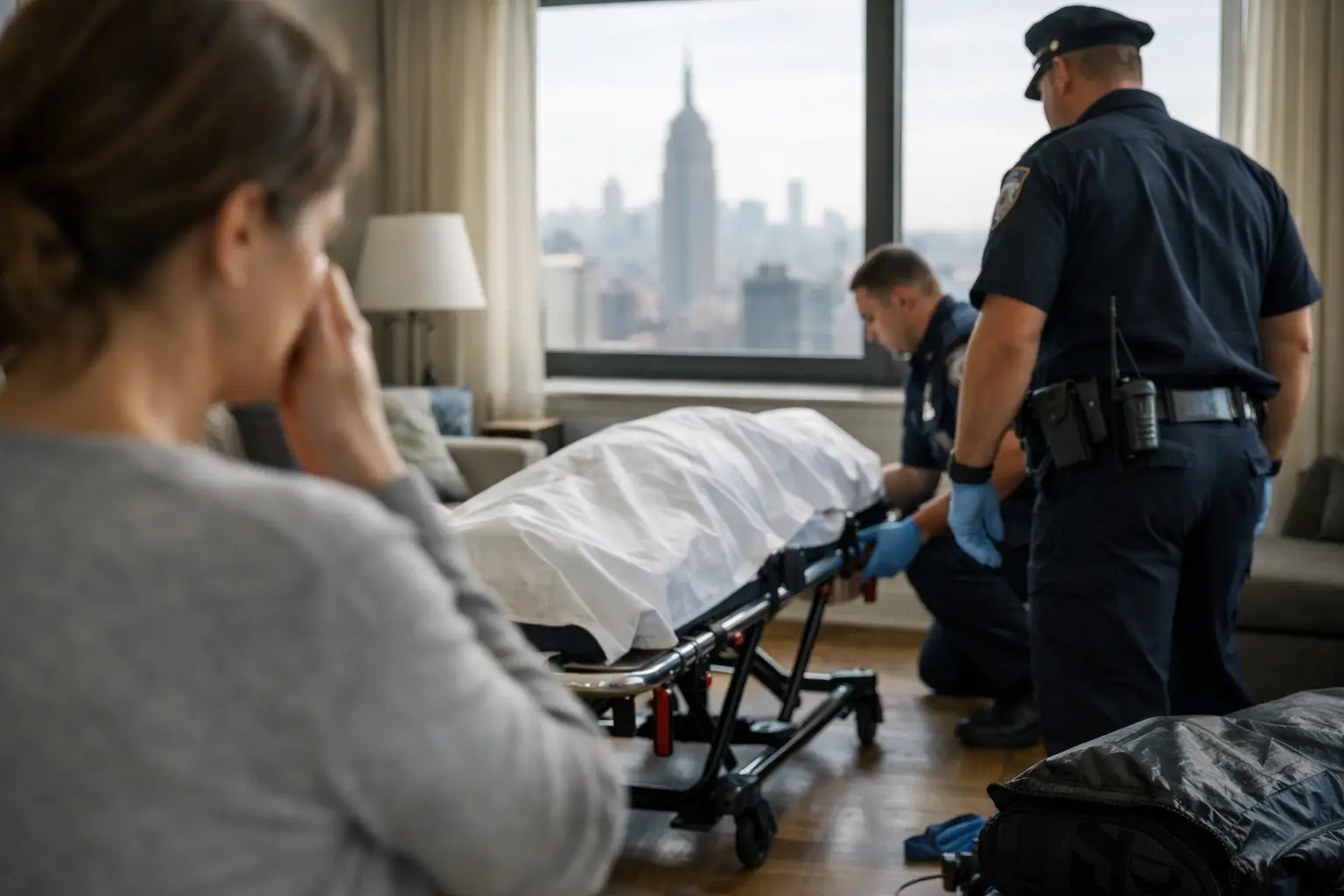
The first minutes after a death at home can feel unreal. You may be caring for other relatives, sitting beside someone you love, or unsure whether you are allowed to make a phone call before doing anything else. Knowing what to do when someone dies at home can give you a small measure of steadiness when very little feels steady.
There is no need to rush through this moment. The right next step depends on whether the death was expected and whether hospice or a doctor was already involved. Once the death has been formally pronounced, a funeral home can guide you through the care of your loved one and the arrangements ahead.
First, determine whether the death was expected
If your loved one was under hospice care and the death was expected, call the hospice agency's 24-hour number. A hospice nurse will explain what happens next, arrange for a nurse or authorized professional to pronounce the death, and help notify the appropriate people. If there is a valid do-not-resuscitate order, follow the instructions your hospice team provided.
If the death was unexpected, sudden, or you are uncertain whether the person has died, call 911 immediately. Emergency responders can assess the situation and provide help. Even if the person had a serious illness, call 911 when there was no hospice plan in place or when the circumstances are unclear.
Do not move your loved one, clean the area, or remove medical equipment before you have been told it is appropriate. In some cases, the police, medical examiner, or coroner may need to review the circumstances. This is a standard part of protecting the integrity of the record and is not a judgment about your family or your loved one.
After a death at home is pronounced
After an expected death has been pronounced, or after emergency personnel have completed their work and released your loved one, call a funeral home. You do not need to have every decision made before that call. A care team can arrange transportation, explain the immediate paperwork, and give your family time to consider funeral, cremation, burial, or memorial options.
If the death is referred to the medical examiner, the funeral home can still begin helping with arrangements. There may be a delay before your loved one can be released, depending on the reason for the review. The funeral director can keep you informed and coordinate directly with the appropriate office when authorized.
At Horizon Funeral Home, families can reach a care team around the clock for calm, pressure-free support after a death at home. The first conversation is simply a place to ask questions and understand what needs to happen next.
What you can do while you wait
Once the necessary call has been made, it is all right to sit with your loved one if you wish. Some families say prayers, play meaningful music, invite close relatives to say goodbye, or simply remain quiet together. Others prefer to step away. There is no single right response.
If possible, locate a few practical items, but do not worry if you cannot find them right away. The funeral home can help you understand which documents are needed and when. Useful information may include your loved one's full legal name, date of birth, Social Security number, place of birth, parents' names, marital status, military service information, and the name of their primary doctor.
You may also want to set aside any written funeral plans, a prepaid funeral agreement, a will, an advance directive, or a list of wishes. These documents can be helpful, but their absence should never prevent you from calling for assistance.
Avoid giving away personal belongings, canceling accounts, or disposing of medications in the first hours unless there is an immediate safety concern. There will be time to handle personal and financial matters. If prescription medications must be secured because children, pets, or others are in the home, place them somewhere safe and ask a pharmacist or local authority about proper disposal later.
Who needs to be notified right away?
The answer depends on the circumstances. Hospice, emergency responders, the attending physician, and the funeral home are the priority contacts. If your loved one registered as an organ or tissue donor, tell hospice or emergency personnel as soon as possible. Donation organizations work under very specific time requirements, and they will determine whether donation is possible.
After that, consider notifying the people who need to know immediately: a spouse or partner, close family members, a caregiver, an executor, or a faith leader. It can help to ask one trusted person to make calls or send messages on the family's behalf. Repeating difficult news can be exhausting, and sharing that responsibility is not a burden to others.
If children are present, give them a calm and truthful explanation suited to their age. Simple language is often best: “Grandpa died today. His body has stopped working, and he will not come back.” Let them ask questions, and do not feel pressured to have perfect answers.
Understanding the role of the funeral home
A funeral home does far more than provide transportation. After a death at home, the funeral director can coordinate transfer into care, begin the death certificate process, work with the physician or medical examiner as needed, and help your family understand available choices.
You may choose a traditional funeral with visitation, a religious service, a burial, direct cremation, a memorial held at a later date, or a celebration of life that reflects your loved one's personality. These choices do not all need to be made on the first call. Some decisions have practical deadlines, but many can be considered carefully after your loved one is safely in the funeral home's care.
For families in New York with relatives elsewhere, transportation may also be part of the immediate plan. Whether a loved one needs to be brought to another state, returned to New York, or transported internationally, careful coordination matters. A funeral home experienced in these arrangements can manage the documentation and timing behind the scenes.
A note about faith, culture, and timing
Many families have religious or cultural customs that affect how quickly arrangements need to begin, who may care for the deceased, or how services should be conducted. Share those needs during your first call. A respectful funeral provider should listen before making assumptions and help honor the practices that matter to your family.
This may be especially meaningful in Brooklyn and across New York City, where families often bring together different languages, traditions, and generations. If you need support in English, Russian, Armenian, Georgian, or Spanish, ask for communication in the language that feels clearest to you. During a loss, being fully understood is part of being cared for.
What not to worry about tonight
You do not need to write an obituary, choose flowers, select clothing, contact every friend, or decide what a service should look like immediately. You do not need to know whether cremation or burial is right before asking for help. And you do not need to manage the practical details alone just because you are the person who made the first call.
The immediate task is smaller: make sure the death is properly attended to, ensure your loved one is in respectful care, and gather the people who can support one another. The rest can be addressed one conversation at a time.
In the hours after a death at home, be gentle with yourself and with one another. A clear next step, a familiar voice, and permission to pause can make room for what matters most: honoring the person you love.