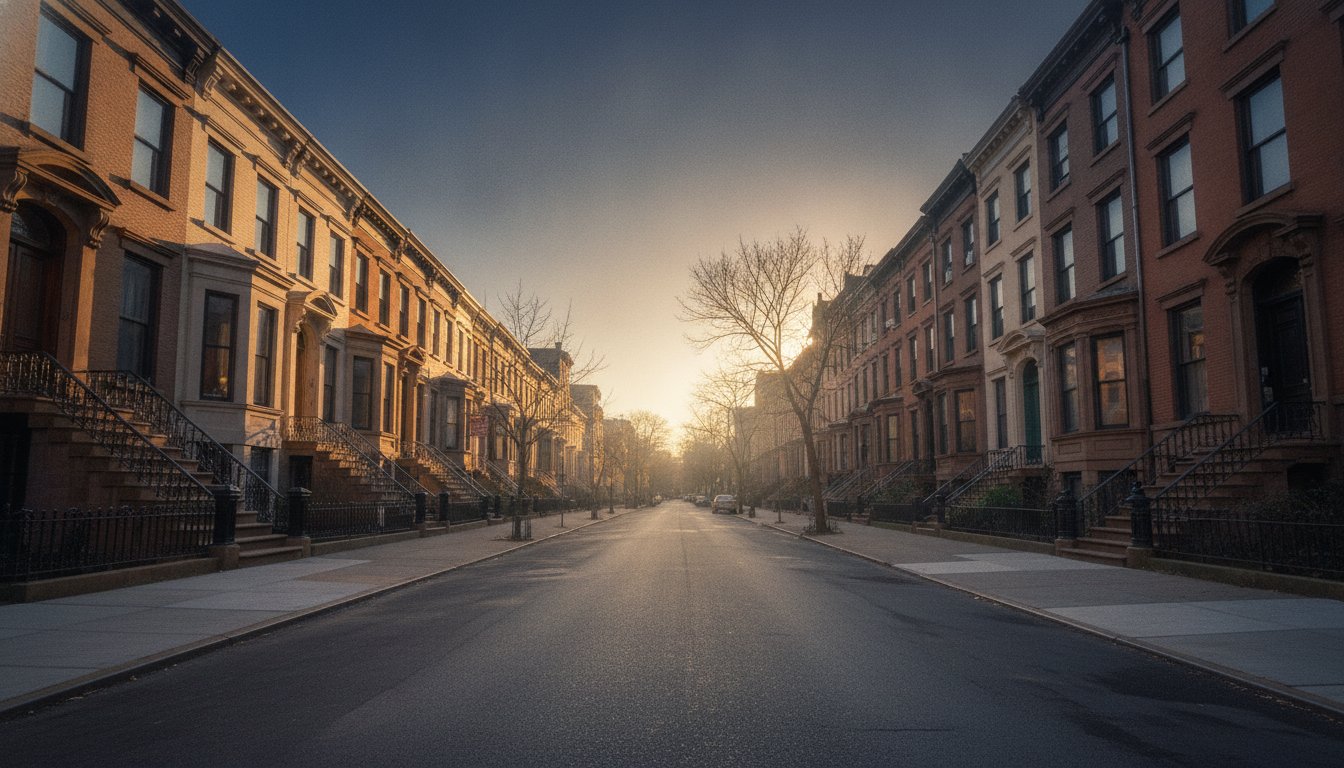
Imagine the sun rising over a quiet street in Park Slope or Bed-Stuy while you sit in a room that suddenly feels too still. In those first heavy moments of loss, the practical questions can feel overwhelming and loud. Knowing exactly what to do when someone dies at home in Brooklyn is likely the last thing you prepared for, yet it's the very thing that requires your immediate attention. It's completely natural to feel a rush of anxiety about which number to dial or how the city's legal requirements will unfold right in your living room.
We understand that you want this process to be as gentle as the life your loved one lived. You might be worried about the arrival of the NYPD or feel confused about whether to call a doctor or a funeral director first. This guide is here to serve as a steady, expert presence beside you. We'll provide a calm, clear checklist to help you secure a legal pronouncement of death and arrange for dignified transport. By breaking down the next few hours into manageable pieces, we can help you move from a place of uncertainty to a state of quiet, focused care for the person you love.
Key Takeaways
- Learn how to distinguish between an expected and unexpected passing to determine your first point of contact, whether that is a hospice nurse or emergency services.
- Understand the legal roles of the NYPD and Medical Examiner to gain clarity on what to do when someone dies at home in Brooklyn during the initial investigation.
- Discover why taking a moment for personal reflection and ensuring the safety of household dependents is a critical step before moving into logistics.
- Identify the specific biographical details and legal documents required by New York City to ensure a smooth, respectful transition to professional care.
- Recognize how a funeral director serves as your dedicated advocate, handling complex city coordination and transportation so you can focus on your family.
Table of Contents
- Immediate Steps: Who to Call First in the First Hour
- Navigating the NYPD and NYC Medical Examiner Protocols
- Caring for Your Loved One and Yourself in the First 24 Hours
- Essential Documents and Information to Gather
- Transitioning to Professional Care with a Funeral Director
Immediate Steps: Who to Call First in the First Hour
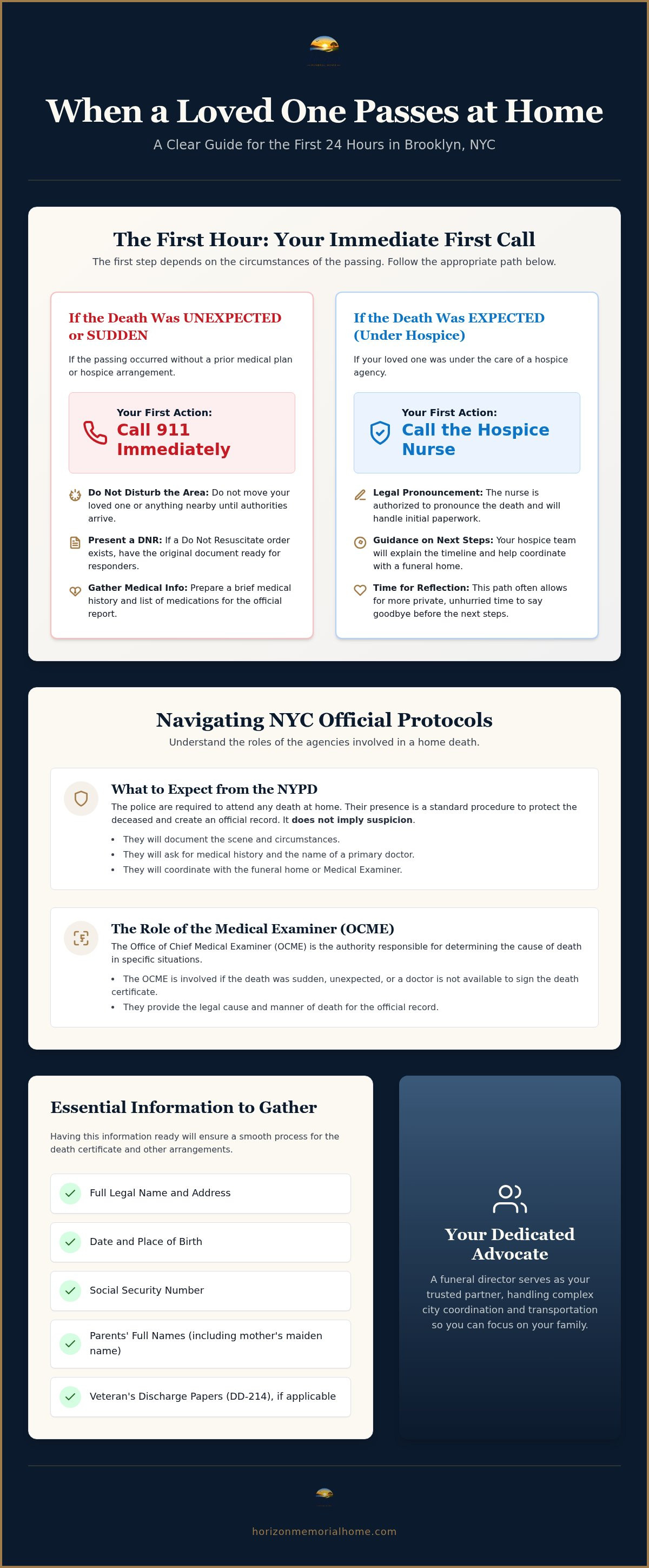
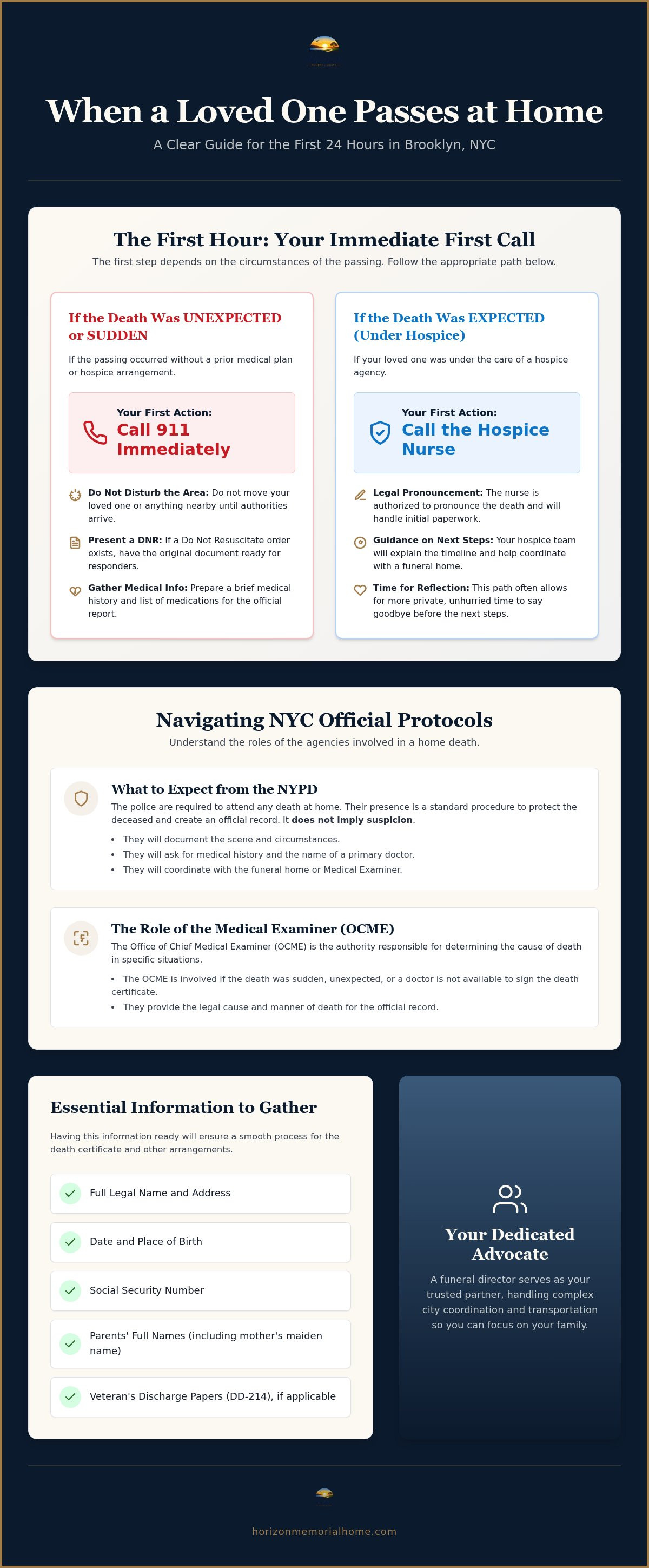
The first sixty minutes following a loss are often the most difficult. Your mind might feel crowded with questions, yet the path you take depends entirely on the specific circumstances of your loved one's passing. Determining the very first person to call is your immediate priority. This decision hinges on whether the death was expected, perhaps during a long illness under medical supervision, or if it was sudden and without warning. Understanding these distinctions is the first step in knowing what to do when someone dies at home in Brooklyn.
In New York City, the legal requirements for a home death are clear but can feel rigid if you aren't prepared. Whether you are coordinating with emergency responders or a dedicated medical team, remember to move at your own pace whenever possible. You aren't alone in this process, and taking a deep breath before making that first call can help you stay grounded.
If the Death Was Unexpected or Sudden
When a death occurs without a prior medical plan or hospice arrangement, you must call 911 immediately. This alerts emergency medical services and the local precinct. It's vital that you don't move the person or disturb anything in the surrounding area until the authorities arrive and provide instructions. This helps ensure that all city protocols are followed correctly from the start.
- The Resuscitation Protocol: Be aware that paramedics are legally required to attempt life-saving measures unless they see a valid, signed Do Not Resuscitate (DNR) order.
- Presenting Documentation: If a DNR exists, have the original document ready to hand to responders the moment they enter your home.
- Gathering Information: Prepare a brief list of the person's medical history and current medications, as the police and paramedics will need this information for their reports.
If the Loved One Was Under Hospice Care
If your family member was receiving hospice care, you don't need to call 911. Instead, your first call should be to the hospice agency or the nurse who has been managing their care. The hospice nurse is authorized to provide the legal pronouncement of death, which is a necessary step before any further arrangements can be made. They act as a steadying presence, helping you understand what to do when someone dies at home in Brooklyn while offering emotional support.
- Legal Pronouncement: The nurse will officially record the time of death and begin the necessary paperwork for the city.
- Guidance on Next Steps: Your hospice team will explain the timeline for contacting a funeral home and can help you manage the initial logistics.
- Personal Time: Because hospice deaths are expected, there is often less immediate pressure from authorities, giving you more time to sit with your loved one and say your goodbyes in peace.
Navigating the NYPD and NYC Medical Examiner Protocols
When a passing occurs outside of a clinical setting, the sudden presence of flashing lights and uniforms can feel jarring. It's a common concern for families figuring out what to do when someone dies at home in Brooklyn. In New York City, the police are required to attend any death that occurs at home to ensure that legal requirements are met. This procedure exists to protect the deceased and maintain an accurate public record. It doesn't imply that the authorities suspect foul play or have any reason to be concerned about the circumstances.
What to Expect When the NYPD Arrives
Officers are tasked with documenting the scene and gathering facts for an official report. They will likely ask about the person's health history or if they were seeing a primary care doctor for an ongoing condition. This step is a standard part of What To Do After Someone Dies in a private residence. If a doctor is willing to sign the death certificate based on a known illness, the police may release the body directly to a funeral home. However, if no physician is available or the death was sudden, the case will be referred to the city's medical experts.
The Role of the Office of Chief Medical Examiner (OCME)
The Office of Chief Medical Examiner, or OCME, is the agency responsible for investigating deaths that are sudden, unexpected, or occur without a physician present to sign the certificate. In Brooklyn home deaths, the OCME acts as the ultimate authority to determine the cause and manner of death through professional medical investigation. If the OCME decides to take jurisdiction, they will transport your loved one to their facility for further examination. While this transition can feel heavy, it provides a legal path forward for families who need answers. Autopsy reports are provided to families at no cost, though the city does charge a $25.00 fee for the reproduction of other specific medical records.
Once the OCME has completed their necessary review, they require a licensed professional to manage the release of remains. We step in at this point to handle the complex NYC logistics, communicating directly with city officials so you don't have to. Having a steady partner to manage professional funeral direction ensures that your loved one is moved with care and that all legal paperwork is filed correctly with the city. This coordination is a vital part of what to do when someone dies at home in Brooklyn, allowing you the space to begin your grieving process without the burden of city bureaucracy.
Caring for Your Loved One and Yourself in the First 24 Hours
The first day following a loss is a period of profound transition. While the logistical steps we've discussed are necessary, your emotional well-being and the atmosphere of your home deserve equal attention. It's okay to pause. There is often an urge to rush through checklists, but understanding what to do when someone dies at home in Brooklyn includes giving yourself permission to breathe. Before the house fills with people or the transport arrives, take a moment of silence to acknowledge the life that was lived.
Practical needs don't disappear during grief. If there are children, elderly dependents, or pets in the home, their care remains a priority. You might ask a trusted neighbor to take the dog for a walk or have a family member prepare a simple meal for the household. Managing the physical environment can also provide a small sense of control. Turning down the thermostat slightly can help preserve the dignity of the setting; dimming harsh overhead lights in favor of lamps can create a more peaceful, sanctuary-like atmosphere.
Creating a Space for Grief and Prayer
Many families find comfort in holding a small vigil or saying private prayers before their loved one is moved. This time is sacred. If your traditions require specific cultural or religious rituals to take place immediately, please know that these are respected and encouraged. A funeral director acts as your advocate during these hours, coordinating with city authorities to ensure you aren't rushed. These final moments in the home are an essential part of the healing process, and they should never feel hurried by professional staff.
Notifying the Wider Circle
Sharing the news with others is an exhausting task. Start with those who need to know immediately, such as the person's employer, their clergy, and very close relatives. To protect your own energy, consider assigning a point person. This could be a sibling or a close friend who handles incoming text messages and phone calls on your behalf. They can provide updates to the wider circle while you focus on the immediate needs of your family. While you might feel pressure to plan everything at once, remember that traditional funeral arrangements in Brooklyn can be customized and refined in the days to come. Knowing what to do when someone dies at home in Brooklyn starts with these small, compassionate steps for yourself and those around you.
Essential Documents and Information to Gather
Once the initial stillness of the first few hours passes, your focus will naturally shift toward the administrative tasks that honor your loved one’s legal identity. Gathering these details is a central part of knowing what to do when someone dies at home in Brooklyn. This process isn't just about paperwork; it's about ensuring that the public record of their life is accurate, dignified, and complete. You don't need to have everything ready in the first few minutes, but starting a small folder for these documents now will help reduce stress as you move forward into the next few days.
The biographical information you collect will be used for several legal filings, including the official death certificate and social security notifications. You'll want to have the person's full legal name, social security number, and date of birth easily accessible. It’s also important to find their parents' names, including their mother's maiden name, and their places of birth. These details are often the hardest to remember during times of grief, so checking old records or family bibles early on can be very helpful.
For the Death Certificate and Legal Filings
In New York City, the death certificate requires specific details that go beyond basic dates. You will need to provide the deceased's highest level of education and their primary occupation throughout their life. You should also confirm their marital status and have the full name of their spouse ready if applicable. As your steady guide through this process, your funeral director will handle the actual filing of the death certificate with the city. In Brooklyn, each certified copy of the death certificate currently costs $15, and having these biographical facts ready ensures the process moves without unnecessary delays.
Veteran and Social Security Information
Locating the social security number is a priority not just for the death certificate, but to stop federal benefits and prevent potential identity fraud. If your loved one was a member of the armed forces, gathering their military discharge papers, specifically the DD-214, is essential. These records are required to coordinate veteran funeral honors in New York. You should also look for any life insurance policies or information regarding existing funeral preplanning services in NYC that may already be in place. If you find yourself overwhelmed by these administrative requirements, you can always contact us for professional funeral direction to help organize these logistics with care and precision.
Transitioning to Professional Care with a Funeral Director
The transition from the immediate shock of a home passing to the organized care of a funeral home is a delicate one. After the initial steps are taken and the city officials have completed their work, your focus naturally turns toward the personal tribute. This is the heart of what to do when someone dies at home in Brooklyn; it's the moment you shift from managing a crisis to honoring a legacy. Having a steady, professional guide beside you ensures that no detail is overlooked and that your family’s wishes are held with the highest level of dignity.
A funeral director serves as more than just a service provider. They act as your advocate, navigating the complex web of NYC regulations and coordinating with the Medical Examiner’s office on your behalf. This partnership allows you to step back from the logistical burden and focus on your own emotional needs. Whether you are planning a simple farewell or a complex international journey, this professional support provides a necessary sanctuary of stability during a period of deep uncertainty.
The First Meeting with Your Funeral Director
The arrangement conference is a collaborative conversation where we begin to shape the farewell. This meeting can take place in person at our home or virtually, depending on what feels most comfortable for your family. During this time, we will discuss the various paths available to you, including traditional services or Brooklyn cremation services. If your loved one’s final wish was to be laid to rest in their place of birth, such as Georgia or Armenia, we specialize in managing the intricate worldwide transportation logistics, ensuring they are returned home with care and respect.
Setting the Pace for the Farewell
Every life tells a unique story, and the farewell should reflect the specific heritage and traditions that defined your loved one. We believe in moving at a deliberate, unhurried pace that honors your family's timing. Horizon Funeral Home is designed to be a steady presence, offering the traditional wisdom and modern care needed to navigate these choices. Before you finalize any arrangements, consider this brief checklist of questions to ensure you feel completely confident in the path forward:
- Does the service plan fully respect our specific cultural or religious requirements?
- Are all the logistical details, including transportation and city filings, being handled by the funeral home?
- Do we have a clear, itemized understanding of all the services and merchandise included in the arrangement?
- Is there a dedicated point of contact who will be available to answer our questions as they arise?
By asking these questions, you ensure that the process remains transparent and supportive. Knowing what to do when someone dies at home in Brooklyn involves finding a partner who values tradition as much as you do, providing the peace of mind that comes from meticulous, compassionate coordination.
Finding Your Path Forward with Confidence
Navigating the first few hours after a home passing in New York City is a journey that requires both legal clarity and emotional patience. By understanding the difference between expected and unexpected loss, and knowing how to coordinate with city officials, you've already taken the most difficult steps toward a dignified farewell. You don't have to carry the weight of these logistics alone. Taking a moment to breathe and gathering essential biographical details will help ensure the process remains as smooth as possible.
Knowing what to do when someone dies at home in Brooklyn is the first step toward peace of mind, but the next steps are where partnership truly matters. Whether you need assistance with complex NYC requirements or specialists in international repatriation, we are here to stand beside you. Our team has provided steady, empathetic support for Brooklyn families since our founding, ensuring that every detail is handled with meticulous care. You are capable of navigating this transition, and we are ready to help you every step of the way.
Contact Horizon Funeral Home for immediate assistance and compassionate guidance.
Frequently Asked Questions
Do I have to call the police if someone dies at home in Brooklyn?
Yes, you must call 911 if the death occurs at home and the person was not under hospice care. In Brooklyn, police officers respond to ensure the scene is secure and to document the circumstances for a routine official report. This procedure is a standard legal requirement in New York City. It doesn't mean there is any suspicion of wrongdoing. It simply ensures that all city protocols are followed correctly.
How long can a body stay at home after death in New York State?
New York State law does not set a specific hourly deadline for how long a person may remain at home. However, practical considerations like temperature and natural changes make it advisable to arrange for professional care within 24 to 48 hours. If you are planning a home vigil, you may take this time to say goodbye. Most families coordinate with a funeral home for transport once they feel ready to begin the next steps.
What is the difference between a coroner and a medical examiner in NYC?
New York City uses a Medical Examiner system rather than a coroner system. While coroners are often elected officials who may not have medical backgrounds, the NYC Office of Chief Medical Examiner (OCME) consists of licensed physicians who are specialists in forensic pathology. This agency handles investigations for sudden or unexplained passings in Brooklyn. They provide a level of medical expertise that ensures every legal and health record is handled with professional accuracy.
Who is responsible for pronounced death at home if there is no hospice?
If a loved one is not under hospice care, the legal pronouncement of death is typically handled by emergency medical personnel or the responding police officers in coordination with the Medical Examiner. When you call 911, the arriving paramedics will assess the situation and determine if resuscitation is possible. If it is not, they will officially record the passing. This allows the funeral director to begin the logistics of transportation and filing the necessary paperwork.
Will the paramedics take the body away if they can't revive them?
No, paramedics and emergency medical technicians do not transport a person after they have passed away. Their primary responsibility is to provide life-saving care and medical intervention. If they are unable to revive the individual, they will remain on the scene until the NYPD or the Medical Examiner arrives to take jurisdiction. Once the authorities release the remains, a licensed funeral director is responsible for the dignified transport of your loved one to a professional care facility.
How many copies of the death certificate should I order in NYC?
Most families find that ordering between 5 and 10 certified copies of the death certificate is sufficient for their needs. You will likely need an original copy for life insurance claims, social security, bank accounts, and property transfers. In New York City, each certificate currently costs $15. It is often easier to order several copies at once through your funeral director rather than requesting additional ones later, as many institutions require a physical document.
Can I choose which funeral home picks up my loved one?
Yes, you have the absolute legal right to choose which funeral home handles your loved one's care. Even if the Medical Examiner takes jurisdiction and moves the remains to their facility, you still decide which professional will eventually pick them up. Selecting a partner who understands what to do when someone dies at home in Brooklyn ensures that your personal traditions and logistical needs, such as veteran honors or religious rites, are respected throughout the process.
What happens if my loved one dies at home and I want them buried in another country?
When a loved one needs to be returned to another country, we manage a process known as international repatriation. This involves coordinating with the local health department, the destination's consulate, and airline cargo departments to secure necessary permits and documentation. Knowing what to do when someone dies at home in Brooklyn with the intent of burial abroad requires a funeral director who is a specialist in worldwide transportation logistics to ensure a seamless journey home.