What if a veteran’s funeral could honor their service while still feeling unmistakably personal? When you’re grieving, questions about eligibility, records, military funeral honors, and burial or cremation can make the next steps feel hard to see. You don’t have to sort through them all at once. Thoughtful funeral arrangements for veterans begin with the person your family loves and bring practical decisions together at a manageable pace.
It’s natural to want clear answers about what honors or benefits may apply, and to worry about missing a document or overlooking a family preference. This guide will help you understand the decisions involved, identify useful records such as a DD Form 214, and find official resources for current eligibility and request procedures. It will also show how military honors can be coordinated with burial, cremation, or a memorial service.
Horizon Funeral Home supports families with veteran honors and helps bring service details together with personal wishes. As you read, you’ll find a steadier path through the paperwork and choices, so the service can reflect both the veteran’s military service and the life they shared with you.
Key Takeaways
- Take veteran funeral arrangements one decision at a time, starting with known wishes and the kind of gathering that feels right for your family.
- Verify current eligibility and request steps for military honors and benefits through official sources; a DD Form 214 may be useful when confirming service details.
- Consider how traditional services, direct burial, cremation, or a memorial can reflect the veteran’s preferences and shape the gathering.
- Use a simple checklist to organize records, service choices, honors, and coordination across New York City and Nassau County.
- Learn how Horizon Funeral Home can coordinate veteran honors with funeral direction and service plans shaped around your family’s wishes.
Table of Contents
- Funeral Arrangements for Veterans: What Families Need to Decide First
- Military Funeral Honors and Veteran Benefits: What to Verify
- Burial, Cremation, or Memorial: Match the Service to the Veteran
- A Practical Checklist for Arranging a Veteran’s Funeral in New York
- How Horizon Funeral Home Supports Veteran Funeral Arrangements
Funeral Arrangements for Veterans: What Families Need to Decide First
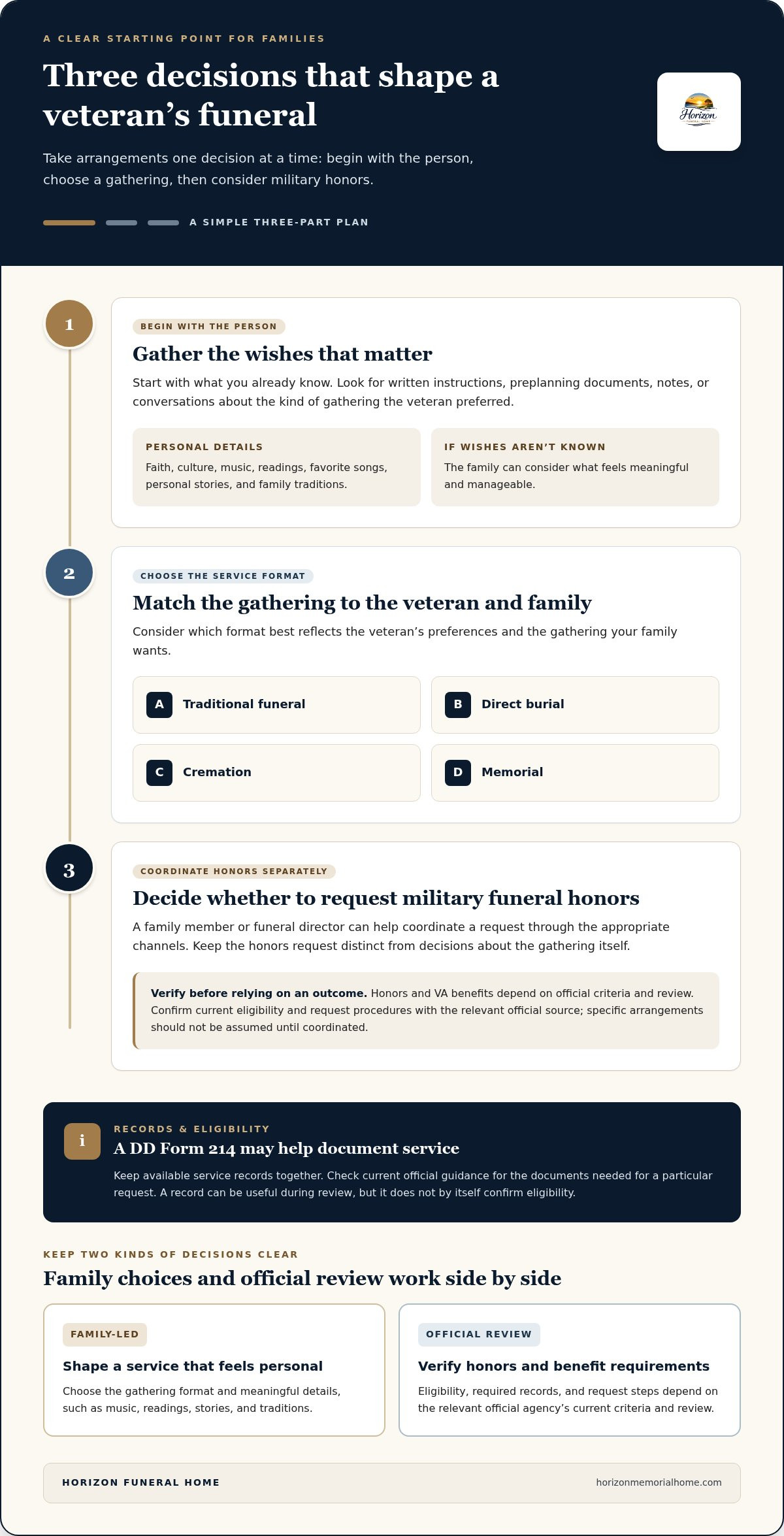
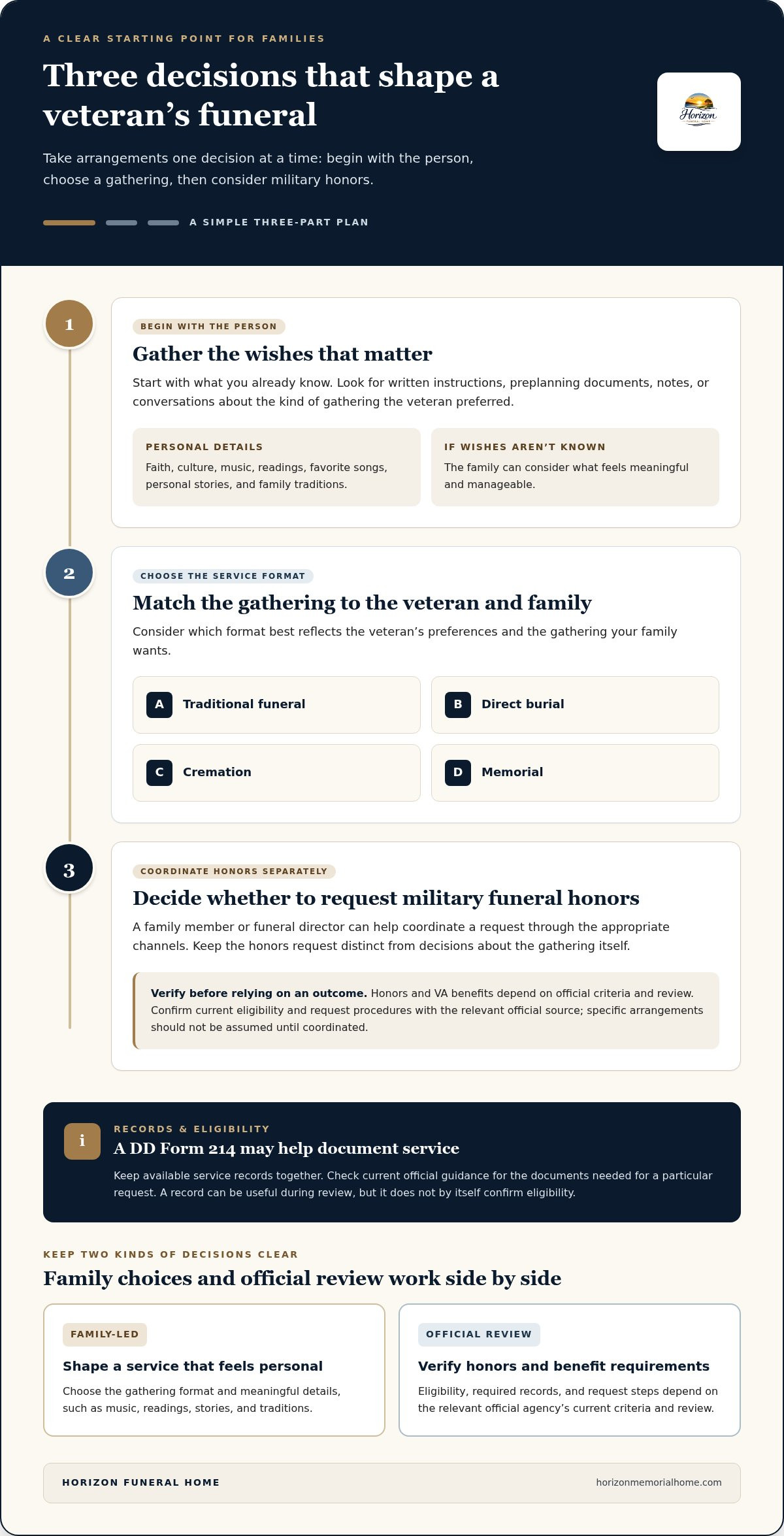
You can take this one decision at a time. Funeral arrangements for veterans are family-led plans for a funeral, burial, cremation, or memorial, coordinated with any military honors that may apply. Some choices belong to your family, such as the kind of gathering you want. Honors and VA benefits, however, depend on official criteria and review, so no arrangement should assume an outcome before it’s verified.
To create a clear starting point, focus on three decisions:
- Wishes: What instructions, conversations, traditions, or family priorities should guide the service?
- Service format: Would a traditional funeral, direct burial, cremation, or memorial best reflect the veteran and the family?
- Honors: Would the family like to request military funeral honors, and what information may be needed to coordinate that request?
Which wishes and family traditions should guide the arrangements?
Begin with what you already know. Look for written instructions, preplanning documents, or notes, and recall conversations about faith, culture, music, readings, or the kind of gathering the veteran preferred. If there are no specific instructions, the family can consider what feels meaningful and manageable.
A service can reflect more than military history. A favorite song, a personal story, a chosen reading, or a familiar family tradition can help guests remember the veteran as a parent, friend, neighbor, or community member. These personal details are family decisions; they don’t depend on official eligibility.
It may help to choose one family point person to keep notes, gather known records, and share decisions with relatives and the funeral director. That doesn’t mean one person must carry everything. It gives the family a central place for updates and helps reduce repeated questions while everyone is grieving.
What does a veteran funeral arrangement include?
Think of the arrangements as three connected but distinct parts: planning the service, requesting any applicable military honors, and coordinating practical details such as timing and the chosen service format. A funeral director can help bring family preferences and arrangements together, while official agencies determine eligibility for honors or VA benefits. A funeral plan itself does not establish eligibility or guarantee a benefit.
Families may be asked about records that document military service, including a DD Form 214. The current documentation requirements should be verified through the relevant official source; don’t assume that one document alone settles every question. Keep available records together, and note any details the family still needs to find or verify.
If you’re considering a gathering with visitation, a ceremony, or other elements, traditional funeral arrangements in Brooklyn offer broader context for thinking through service details. For now, it’s enough to identify the family’s preferences and the questions that require official review. That separation can make the next decisions feel more manageable.
Military Funeral Honors and Veteran Benefits: What to Verify
Military funeral honors, burial in a VA national cemetery, memorial items, and survivor benefits are related to a veteran’s service, but they are separate matters. Each may have its own eligibility rules, records, and request process. Treating them as distinct questions can help your family understand what to arrange and what must be reviewed by an official agency.
Eligibility and arrangements depend on official review. A family’s wishes can guide the service, but they don’t determine whether a veteran qualifies for a particular honor or benefit. Confirm current criteria and procedures with the relevant official source before making plans that rely on an approval.
How should a family approach a military funeral honors request?
A family member or funeral director can help coordinate a request through the appropriate channels. The U.S. Department of Defense provides information about honors eligibility and how to request the ceremony through its Requesting Military Funeral Honors guidance. Review the current instructions, including what information to provide and how the request is handled. Honors are a meaningful way to recognize military service, but the specific arrangements should not be assumed until they have been coordinated.
Keep the honors request separate from decisions about the gathering itself. Your family can plan a service that reflects the veteran’s life while official channels review the request. For a New York-focused overview of the subject, veteran funeral honors in New York can help put the coordination process in context.
Which records and official resources may help?
The DD Form 214 may be useful when documenting military service, and families may be asked about it during an eligibility review. Requirements can vary by request, so use current official guidance to learn which records are needed and how to obtain them if they’re missing. Gather any available service documents in one place, but don’t treat a record as confirmation of eligibility on its own.
For burial in a VA national cemetery and related burial information, consult resources from the U.S. Department of Veterans Affairs. A cemetery inquiry is distinct from a military honors request, and both are separate from questions about headstones or memorial items and survivor benefits. Checking each topic with the appropriate VA resource helps prevent one decision from being mistaken for another.
These details can feel like a lot to carry while grieving. A funeral director can help organize service logistics and coordinate with the family around requests, while official agencies remain the source for eligibility decisions. If support with service planning and veteran honors would be helpful, Horizon’s veteran honors and funeral planning can be part of that conversation.
Burial, Cremation, or Memorial: Match the Service to the Veteran
There isn’t one format that honors every veteran best. The right format reflects the veteran’s wishes and the family’s needs. As you consider funeral arrangements for veterans, think about who should gather, what traditions matter, and how the family wants to remember the person beyond their military service. The service format is a personal decision; eligibility for honors or cemetery arrangements is a separate question.
These options can overlap. Cremation describes what happens to the remains, while a memorial describes a gathering. A family might choose cremation and hold a memorial, or plan a traditional funeral that includes a gathering before burial.
| Format | Gathering preferences | Timing considerations | Where honors may fit |
|---|---|---|---|
| Traditional funeral | Can include a gathering and ceremony with family, friends, and chosen traditions. | Coordinate the gathering and burial details together. | Discuss how a requested honors ceremony may fit with the service plans. |
| Direct burial | May suit families who prefer a simpler burial without a formal funeral gathering at that time. | Focus planning on the burial arrangements and any separate remembrance. | Ask through official channels how a request may be coordinated with the planned arrangements. |
| Cremation | Can be paired with a gathering, religious observance, or private family remembrance. | Families can plan a gathering in relation to the cremation arrangements in a way that suits them. | Discuss where an honors request fits; confirm specific arrangements officially. |
| Memorial | Creates space to share stories, music, photographs, or other personal tributes. | Can be planned as its own gathering, separate from the disposition. | Ask the appropriate official channel about coordinating honors with the memorial plans. |
How do funeral and direct burial arrangements differ?
A traditional funeral generally centers on a gathering and ceremony, while direct burial focuses on burial arrangements without a formal funeral gathering at that time. The choice may reflect a veteran’s stated preference, religious or cultural traditions, the needs of relatives traveling to attend, or the family’s wish for a quieter farewell. Neither choice is more respectful than the other, and neither determines official eligibility for honors or benefits.
Consider whether gathering together is important to the family now, whether a particular tradition should shape the service, and what feels manageable for those closest to the veteran. Those answers can guide the format without requiring the family to settle every detail at once.
How can cremation or a memorial honor military service?
A memorial can recognize service while also making room for the veteran’s relationships, character, and everyday joys. Families might share a story about a longtime friendship, display meaningful photographs, or choose music that mattered to the veteran. These personal touches can sit alongside military remembrance without making the person’s service the only focus.
Families can discuss where an honors request may fit into their plans, then confirm the specific honors and any cemetery arrangements through current official channels. For ideas on creating a tribute that feels personal, personalized memorial services in Brooklyn offers a closer look at ways to honor an individual story.
A Practical Checklist for Arranging a Veteran’s Funeral in New York
A short checklist can make funeral arrangements for veterans feel more manageable. You don’t need every answer before beginning. Separate the details your family can organize from questions that require current guidance from official sources, then work through the steps in a steady order.
What information should the family gather before planning?
Start with what’s available, not with a perfect file. One family member can keep a shared list of known wishes, service details, documents, contacts, and unanswered questions. If a record is missing, note that rather than guessing about its contents or eligibility implications.
- Write down known wishes. Collect any preplanning instructions or notes, and ask close relatives about conversations concerning the service, burial or cremation, religious or cultural traditions, and meaningful ways to remember the veteran.
- Gather service information and available records. Note the veteran’s branch and known dates of service, and set aside records the family already has, such as a DD Form 214. Keep copies organized and follow current official instructions about which documents are needed for a particular request.
- Choose a family point person. Identify who will keep notes, communicate shared decisions, and update relatives. This can help family members in different locations contribute information without creating several competing versions of the plan.
- List questions for official resources. Keep honors eligibility and request procedures, national cemetery planning, and memorial-item questions distinct. Use the relevant official guidance for each topic; don’t assume an answer about one applies to another.
- Set the service preferences and confirm details. Decide which format best suits the veteran and family, identify the preferred location, and discuss service logistics and veteran honors support with the funeral director. Confirm honors and cemetery arrangements through current official channels.
How can families coordinate arrangements across the NYC area?
First, consider where the family hopes to gather and which relatives need to take part in decisions. A preferred location may reflect the veteran’s community, a place of worship, or what is practical for loved ones traveling from different areas. Families coordinating across Brooklyn, Queens, Staten Island, Manhattan, the Bronx, and Nassau County can share the same written preferences and question list, even when relatives can’t meet in person.
A funeral director can help organize service details and provide support coordinating veteran honors alongside the family’s chosen arrangements. Keep official eligibility questions in their own list so the service plan can move forward without treating an unreviewed request as confirmed. Small steps help: share updates through the family point person, record decisions as they’re made, and note what still needs an official answer.
For steady guidance coordinating veteran honors and service details in New York City and Nassau County, speak with Horizon Funeral Home about veteran arrangements.
How Horizon Funeral Home Supports Veteran Funeral Arrangements
Planning can feel more manageable when service choices and practical details are considered together. Horizon Funeral Home provides funeral direction and dedicated support for veteran honors, helping families shape arrangements around the person they remember. The goal is not to steer every family toward the same kind of service. It’s to listen, understand what matters to you, and help organize the next steps with care.
What can families coordinate with Horizon?
Families can discuss traditional funeral services, direct burial, cremation, and personalized memorials. Your preferences help guide how the service comes together, including the kind of gathering you envision and the personal details you want to include. A funeral director can help organize those choices alongside practical arrangements and support coordination of veteran honors. Official benefit eligibility remains a determination for the appropriate government authority.
- Traditional funeral: Plan a gathering and ceremony shaped around family, cultural, or faith traditions.
- Direct burial: Discuss a simpler service plan that reflects the veteran’s wishes and your family’s preferences.
- Cremation: Coordinate cremation arrangements with the kind of remembrance your family wants.
- Personalized memorial: Make space for stories, photographs, music, or other details that reflect the veteran’s life.
These formats can be considered on their own terms. A family may want a formal gathering, a quieter farewell, or a memorial centered on sharing memories. Horizon helps bring the chosen service and its practical details into a clear plan, while any honors request is handled as a distinct coordination matter. Eligibility and approvals are not promised by a funeral arrangement.
How can a family begin planning?
You can begin with what you know, even if some details are still uncertain. Share any instructions or conversations you remember, the service format you’re considering, and questions about coordinating honors. If relatives are weighing different preferences, describing what matters most to each person can help clarify a path forward without requiring every choice to be settled at once.
Horizon serves families across Brooklyn, Queens, Staten Island, Manhattan, the Bronx, and Nassau County. Whether family members are nearby or coordinating from different parts of the area, funeral direction can help keep service preferences, practical arrangements, and communication connected. You can bring available information and questions, then discuss the next steps with steady guidance.
There’s no need to have every answer ready before beginning a conversation. Speak with Horizon Funeral Home when you feel ready to talk through the arrangements. Your family can move at a pace that feels right, one thoughtful step at a time.
Let the Next Step Reflect What Matters Most
A meaningful farewell doesn’t need to answer every question at once. It can begin with a simple conversation about what you hope family and friends will remember, what would bring comfort, and which decisions can wait until you have more clarity. That intention can help keep funeral arrangements for veterans grounded in the person’s life, not only the logistics surrounding a loss.
As you move forward, give yourself room to ask questions, revisit preferences, and involve the people who matter to you. Some details may become clearer through discussion. Others can be handled one step at a time, with official guidance where it’s needed.
Horizon Funeral Home offers a steady place to begin shaping your family’s plans. Talk with Horizon Funeral Home about your next steps when you feel ready. You don’t have to have everything figured out before reaching out; a thoughtful first step is enough.
Frequently Asked Questions
How do I arrange a funeral for a veteran?
Begin by choosing a family point person and sharing any known wishes with the funeral director. Decide what kind of gathering feels appropriate, then note questions about honors, cemetery planning, or possible benefits for official follow-up. A funeral director can help organize service details and support honors coordination. Keep the family’s service choices separate from eligibility decisions, which are made through the relevant government channels.
Are military funeral honors automatic for every veteran?
No. Military funeral honors aren’t automatic; eligibility and request procedures are determined through official criteria. Families can ask a funeral director to help coordinate a request, but the appropriate military authority reviews it. If a family is unsure about a veteran’s discharge or service history, avoid making assumptions based on uniformed service alone. Use current Department of Defense guidance to understand the criteria and request process.
What documents are needed for a veteran’s funeral?
Document requirements depend on the arrangements and the specific request. A DD Form 214 may be requested as evidence of military service, but families should follow current instructions from the agency handling honors or benefits. Gather service records already available and keep copies together with the family’s notes. If a document is missing, identify that early and ask the relevant official source what alternatives or next steps apply.
Can a veteran receive military funeral honors after cremation?
Yes, cremation doesn’t by itself rule out a request for military funeral honors. The family can discuss how an honors request might fit the cremation arrangements or a later memorial gathering. Eligibility and the ceremony details still require official review and coordination, so don’t assume a particular format or outcome. Sharing the planned service format when making the request can help the appropriate channel address coordination questions.
Does the VA pay for a veteran’s funeral?
The VA may provide burial benefits to eligible families, but payment isn’t automatic and may not cover all funeral expenses. The type and amount of assistance depend on circumstances and current VA criteria. Some benefits are reimbursements, so keep records of relevant expenses and follow the VA’s current application instructions. Burial in a VA national cemetery involves separate eligibility and planning considerations from assistance with funeral costs.
Can a funeral home help coordinate military funeral honors in New York?
Yes. A funeral home can help the family organize service details and coordinate a military honors request through the appropriate channels. Horizon Funeral Home provides dedicated support for veteran honors as part of funeral direction for families in Brooklyn, Queens, Staten Island, Manhattan, the Bronx, and Nassau County. The government authority, not the funeral home, determines eligibility and confirms the honors arrangements.
What if my family cannot find the veteran’s DD Form 214?
A missing DD Form 214 doesn’t mean your family should stop seeking guidance. Write down the veteran’s full name used during service, branch, and any service dates or record details you know, then ask the relevant official records source how to request a copy or what other documentation may be accepted. Don’t substitute an incomplete record or assume eligibility; follow the current instructions for the specific honors or benefit request.