
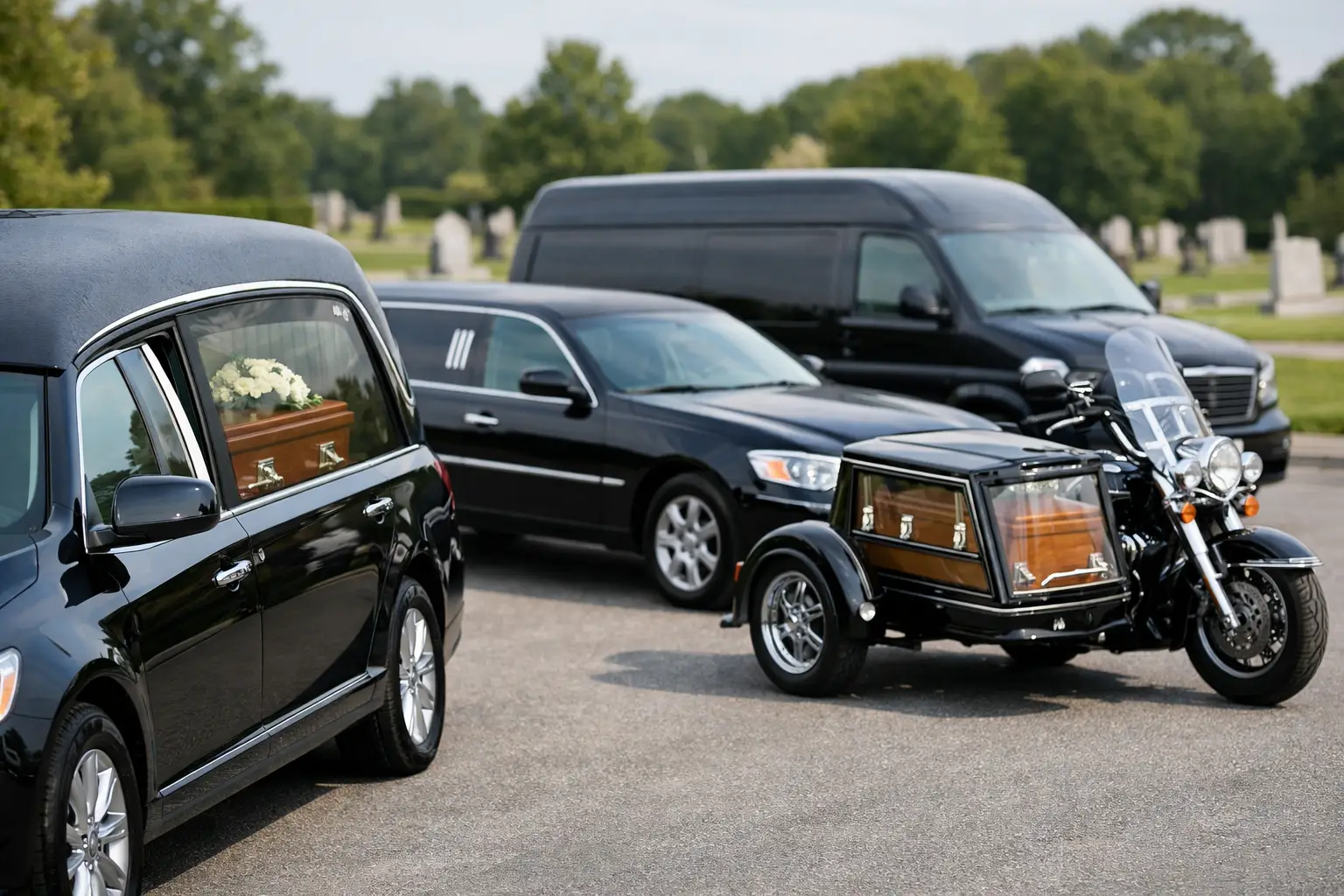
A death at home, in a hospital, or far from family often creates an immediate practical question: how will your loved one be brought into care and, later, to the place of service or final disposition? The types of funeral transportation services are not limited to a hearse. They can include an initial transfer, a formal procession, travel between states, and carefully coordinated international arrangements.
For families, the right choice depends on where the death occurred, the service being planned, religious or cultural traditions, the number of locations involved, and the wishes of the person who died. A funeral director can explain each option clearly and arrange the details behind the scenes, so your family has space to focus on one another.
Types of Funeral Transportation Services for Families
Transportation may take place at several points in the funeral process. Some services are needed immediately, while others are chosen to support the ceremony, burial, cremation, or return home.
Initial transfer into funeral home care
The first transportation service is often called a removal or transfer of the deceased. This is the private, respectful transportation of a loved one from a residence, hospital, nursing home, hospice facility, medical examiner's office, or another location into the funeral home's care.
For an expected death at home, families are often asked to call the funeral home after the attending hospice nurse or medical professional has completed the necessary pronouncement. When a death occurs in a hospital or facility, staff may help coordinate release once the appropriate paperwork is complete. If the medical examiner is involved, the timeline can differ, and the funeral home can remain in contact with the office on the family's behalf.
This initial transfer is usually not a public event. The vehicle used may be discreet rather than a traditional funeral coach, particularly when privacy, building access, or timing calls for it.
Local transportation to a viewing or funeral service
When a family chooses a viewing, visitation, religious service, memorial gathering, or burial, the funeral home may provide transportation between locations. This can include moving the casket from the funeral home to a church, synagogue, mosque, temple, cemetery, or another place of worship.
A traditional hearse, also called a funeral coach, is commonly used for this part of the arrangements. For many families, seeing the hearse arrive and depart is a meaningful sign of respect. Others prefer a simpler approach with fewer vehicles or no public procession. Neither choice is more caring than the other. The service should reflect what feels right for the family and the person being honored.
Funeral processions and family vehicles
A procession allows family members and close friends to travel together from the service to the cemetery or another final gathering place. The hearse leads the route, followed by family cars, limousines, or personal vehicles. Depending on the plan and local conditions, the funeral home may help organize vehicle order, timing, directions, and coordination with the cemetery.
Limousines and other family vehicles can be especially helpful when immediate relatives are grieving, older adults do not wish to drive, or several people need to arrive together. They also reduce the worry of navigating an unfamiliar route or becoming separated in traffic.
A procession is optional. In New York City, traffic, distance, and the number of service locations can make a full procession impractical. Some families choose to meet at the cemetery instead, while others arrange a smaller private escort for close relatives. A funeral director can help weigh the comfort and meaning of a procession against travel time and cost.
Transportation for cremation arrangements
Cremation does not eliminate the need for professional transportation. A loved one still must be transferred into the funeral home's care and, when applicable, transported to the crematory. For direct cremation, these arrangements happen without a public funeral vehicle or procession.
For full-service cremation, transportation may include a hearse to a religious service, chapel, or place of gathering before cremation. Families may also choose a memorial service after cremation, with no transportation of the deceased needed for that later event. This flexibility can be useful when relatives are traveling from different places or when a family needs more time to plan.
Interstate transportation
When a person dies away from home, families may wish to bring them back to New York for services, burial, or cremation. In other cases, a loved one who lived in Brooklyn or elsewhere in the region may need to be returned to another state for burial near relatives. Interstate funeral transportation is designed for these situations.
Depending on distance, timing, and the family's plans, transportation may be arranged by ground vehicle or by air. A long-distance ground transfer can be appropriate when destinations are within a manageable driving range and the family prefers a direct, carefully scheduled journey. Air transportation may be more practical for greater distances or when timing matters.
Interstate arrangements involve more than booking travel. The funeral home coordinates with the receiving funeral home, airline or transportation provider when needed, required documents, and the release of the deceased. Costs can vary based on mileage, airline charges, casket or shipping container requirements, and local handling fees at each end of the trip. Asking for a clear written explanation helps families understand what is included.
International shipping and repatriation
International funeral transportation, sometimes called repatriation, is needed when a loved one must be sent to another country or returned to the United States from abroad. It is a highly detailed service that requires coordination among funeral homes, airlines, consulates, government offices, and, in some cases, religious or community representatives.
Requirements differ by destination. They may include certified death certificates, permits, embalming documentation, a suitable shipping container, consular paperwork, and specific airline arrangements. The process can take longer than a local transfer, especially when documents must be translated, authenticated, or approved by another country.
For families with strong ties to Armenia, Georgia, Russia, Latin America, or other parts of the world, returning a loved one to their country of origin can carry deep personal and cultural meaning. It can also feel overwhelming during grief. A funeral home experienced in worldwide coordination can manage the logistics while keeping the family informed about timing, documents, and next steps.
Transportation of cremated remains
Cremated remains can also be transported across state lines or internationally, but the process is different from transporting a person who has died. Families may carry an urn themselves, ship it through an approved method, or ask the funeral home to coordinate delivery. Airline and international rules vary, so it is wise to confirm requirements before travel rather than making assumptions at the airport.
If cremated remains will be sent abroad, the destination country may require documents such as the death certificate and cremation certificate. A secure urn and proper labeling may also be needed. Families should allow additional time if the remains are part of an international memorial, burial, or scattering plan.
Choosing What Is Needed Without Added Pressure
Not every family needs every transportation service. A simple direct cremation may require only private transfer and crematory transportation. A traditional burial service may involve a hearse, family limousine, procession, and cemetery coordination. A death outside the country may require a full international shipping plan before any local service can take place.
When discussing options, it helps to begin with a few practical questions: Where is your loved one now? Where will the service and final disposition occur? Are relatives traveling together? Does your faith or culture call for particular timing or customs? What budget feels manageable for the family?
You do not need to know the technical terms before making the first call. At Horizon Funeral Home, families can receive calm guidance in English, Russian, Armenian, Georgian, or Spanish, including help with local, nationwide, and international transportation coordination.
The most helpful transportation plan is the one that treats your loved one with dignity and gives your family fewer details to carry alone. Whether the trip is across Brooklyn or across borders, clear planning can bring a measure of steadiness to a difficult day.