
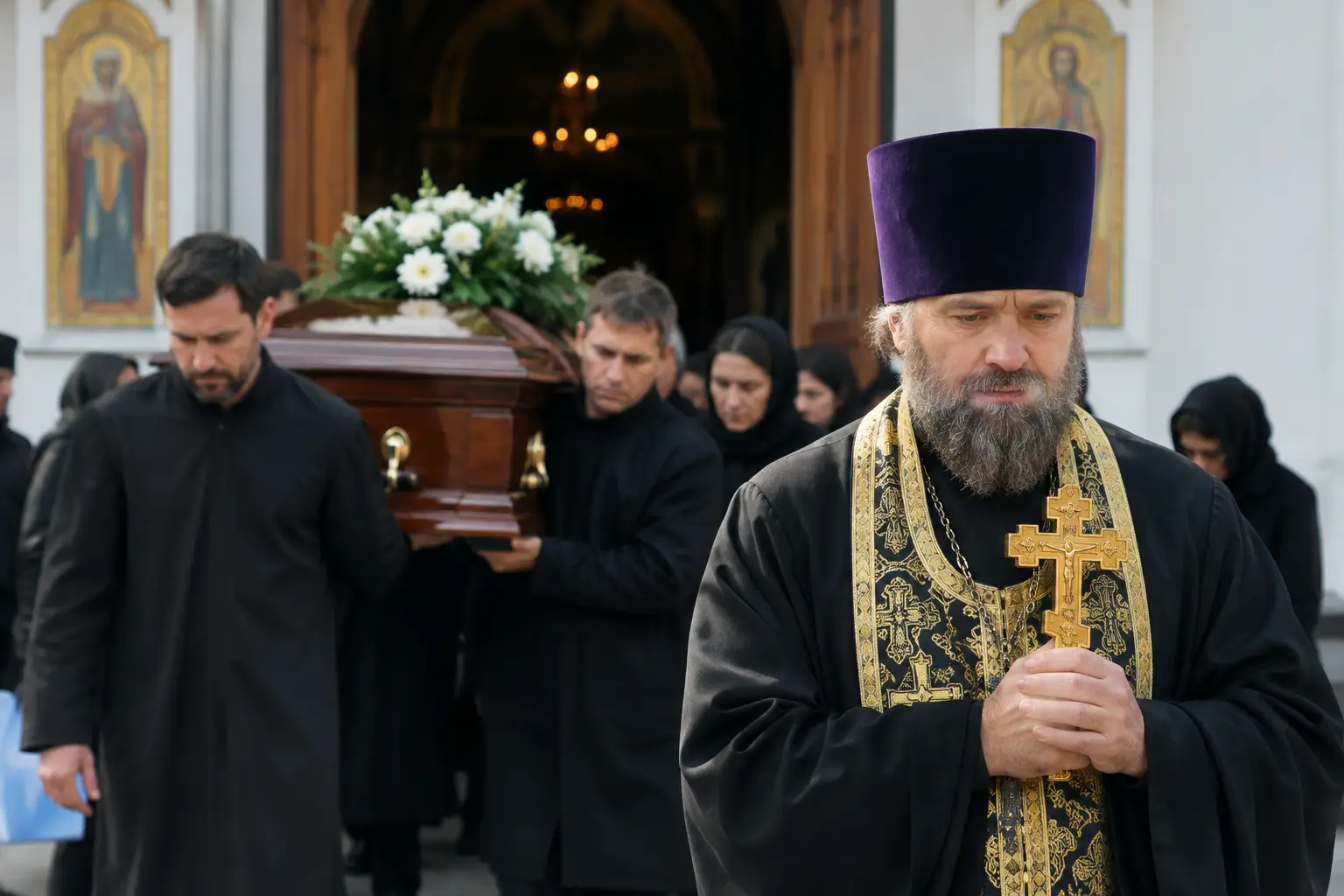
The first moments at a Russian Orthodox funeral can feel unfamiliar even to someone who has attended many services. A priest may chant in Church Slavonic, loved ones may approach the casket for a final farewell, and prayer - rather than conversation - may guide much of the gathering. Knowing a few foundations of Russian Orthodox funeral etiquette can help you show up with quiet respect and keep the focus where it belongs: on the person who died and the family grieving them.
Customs can differ by parish, country of origin, and family tradition. Russian Orthodox families in Brooklyn and throughout New York may combine longstanding religious practices with American funeral customs. When in doubt, follow the family’s lead and ask the funeral director or clergy member for guidance.
Russian Orthodox funeral etiquette at a glance
Russian Orthodox Christianity views death as a passage into eternal life and places great importance on prayer for the departed. The funeral is not simply a ceremony of farewell. It is a service of faith, remembrance, and intercession, asking God to grant rest and mercy to the person who has died.
For guests, the most meaningful form of support is often simple presence. Arrive on time, dress modestly, participate as you are able, and offer condolences without expecting the family to host or comfort others. You do not need to know every prayer or ritual to attend respectfully.
The service may take place in an Orthodox church, a funeral home chapel, or both. A funeral home visitation, sometimes called a wake or viewing, may be held before the church service. Depending on the family and parish, there may also be prayers at the home, cemetery, or graveside.
Expect prayer, chanting, and an open casket
An open casket is common in Russian Orthodox funerals, though it is always the family’s decision. At a church funeral, the casket may be placed near the center of the church with candles and an icon nearby. Mourners may be invited to approach, make the sign of the cross, kiss an icon or cross, or offer a final goodbye.
If you are not Orthodox, you are not required to kiss an icon, cross yourself, or take part in any gesture that does not feel appropriate to your beliefs. You can approach quietly, pause in respect, and offer a silent prayer or moment of reflection. Standing respectfully at the back is also completely acceptable.
Chanting is central to the service. It may be sung in English, Russian, Church Slavonic, or a combination. The priest may use incense, which represents prayers rising to God. These elements can make the service longer than a brief memorial, often lasting an hour or more. Plan to remain through the service unless the family has told you otherwise.
What to wear to a Russian Orthodox funeral
Choose conservative, subdued clothing. Black is traditional and always appropriate, but dark navy, charcoal, deep brown, and other muted colors are also suitable. A suit, dress, blouse and skirt, dress pants, or other formal, modest attire will generally be welcomed.
Women may choose to cover their heads with a scarf when attending a church service. In some parishes this is customary, while in others it is optional. Bringing a simple scarf is a thoughtful choice if you are unsure. Men should typically remove hats indoors, unless a religious or medical reason applies.
Avoid clothing that is very casual, brightly colored, revealing, or prominently branded. The goal is not to meet a fashion rule. It is to avoid drawing attention away from the service and the family.
How to offer condolences
A few sincere words are enough. “I am so sorry for your loss,” “May their memory be eternal,” or “I am keeping your family in my prayers” are all appropriate. “Memory eternal” is a traditional Orthodox expression, sometimes said as “Vechnaia Pamiat” in Church Slavonic or Russian communities.
Try not to ask for details about the death unless the family chooses to share them. Avoid phrases that can unintentionally minimize grief, such as “They are in a better place” or “At least they lived a long life.” Even well-meant remarks can feel difficult in the first days after a loss.
If you knew the person well, a specific memory can bring comfort. Keep it brief during the visitation or service, then consider sending a card or checking in later. The period after the funeral is often when practical and emotional support is needed most.
Flowers, donations, and food
Flowers are often welcome, but family wishes should come first. An obituary, funeral notice, or family representative may indicate whether flowers are preferred or whether donations should be made in the person’s memory instead.
In many Russian cultural traditions, flowers for funerals are given in even numbers. This custom is meaningful to some families, but it is not a universal requirement and may not be followed in the United States. If you are ordering an arrangement and do not know the family’s preferences, a florist or funeral director can help you choose something appropriate.
Food also has an important place in many Orthodox and Russian family traditions. A meal may follow the burial or service, allowing relatives and friends to gather, share memories, and care for one another. If you are invited, attend if you can. If you bring food to the home, ask first about dietary needs and timing. A practical offering, such as a prepared meal, groceries, or help with transportation, can be more useful than an elaborate gesture.
Some families observe a memorial meal or prayers on particular days after death, often the third, ninth, and fortieth days. These observances vary. They are generally family or parish matters, so wait for an invitation rather than assuming you should attend.
Burial, cremation, and the cemetery service
Traditional Russian Orthodox teaching strongly favors burial because of the Church’s understanding of the body and the Resurrection. For that reason, a full Orthodox funeral service is commonly connected with burial. Cremation may be chosen for personal, financial, or logistical reasons, but it can affect what services a priest is able to offer.
This is an area where families should speak directly with their parish priest before finalizing arrangements, especially if they hope for a church funeral. There may be pastoral considerations, parish policies, and personal circumstances that deserve a compassionate conversation rather than assumptions.
At the cemetery, guests may gather around the grave for final prayers. The priest may bless the grave, and family members may place flowers or a small amount of soil on the casket. Stand quietly, silence your phone, and wait for the family to leave or for the funeral director to indicate that the service has ended.
Small actions that show real respect
Arrive a few minutes early and silence your phone before entering the chapel or church. If seating is not assigned, leave the closest rows for immediate family and close friends. Follow cues about when to stand, sit, or approach the casket.
Children can attend when a parent or caregiver feels they are prepared for the experience. A quiet explanation beforehand can help: there may be a casket, people may cry, and there will be prayer and singing. If a child becomes restless, stepping outside briefly is considerate.
Photography and recording should never be assumed. Do not take photos of the casket, family members, clergy, or service unless the family has clearly invited it. The same restraint applies to social media. Wait for the family to share news publicly before posting condolences or memories online.
When you are arranging the funeral
For a family making arrangements, clear communication with both the priest and funeral home can prevent unnecessary stress. Ask early about the parish’s availability, required prayers or services, preferred timing, cemetery plans, music, visitation customs, and whether the casket should remain open or closed at particular points.
If relatives are coming from abroad or another state, transportation and timing may require additional coordination. A funeral home experienced with Russian-speaking families can help organize these details while respecting the clergy’s guidance. Horizon Funeral Home can also provide support in Russian for families who are more comfortable discussing arrangements in their own language.
There is no need to perform every custom perfectly while grieving. A respectful service is built through prayer, care, and honest attention to the family’s wishes. Showing up gently, listening closely, and remembering the person with sincerity will always matter more than knowing every ritual by heart.