
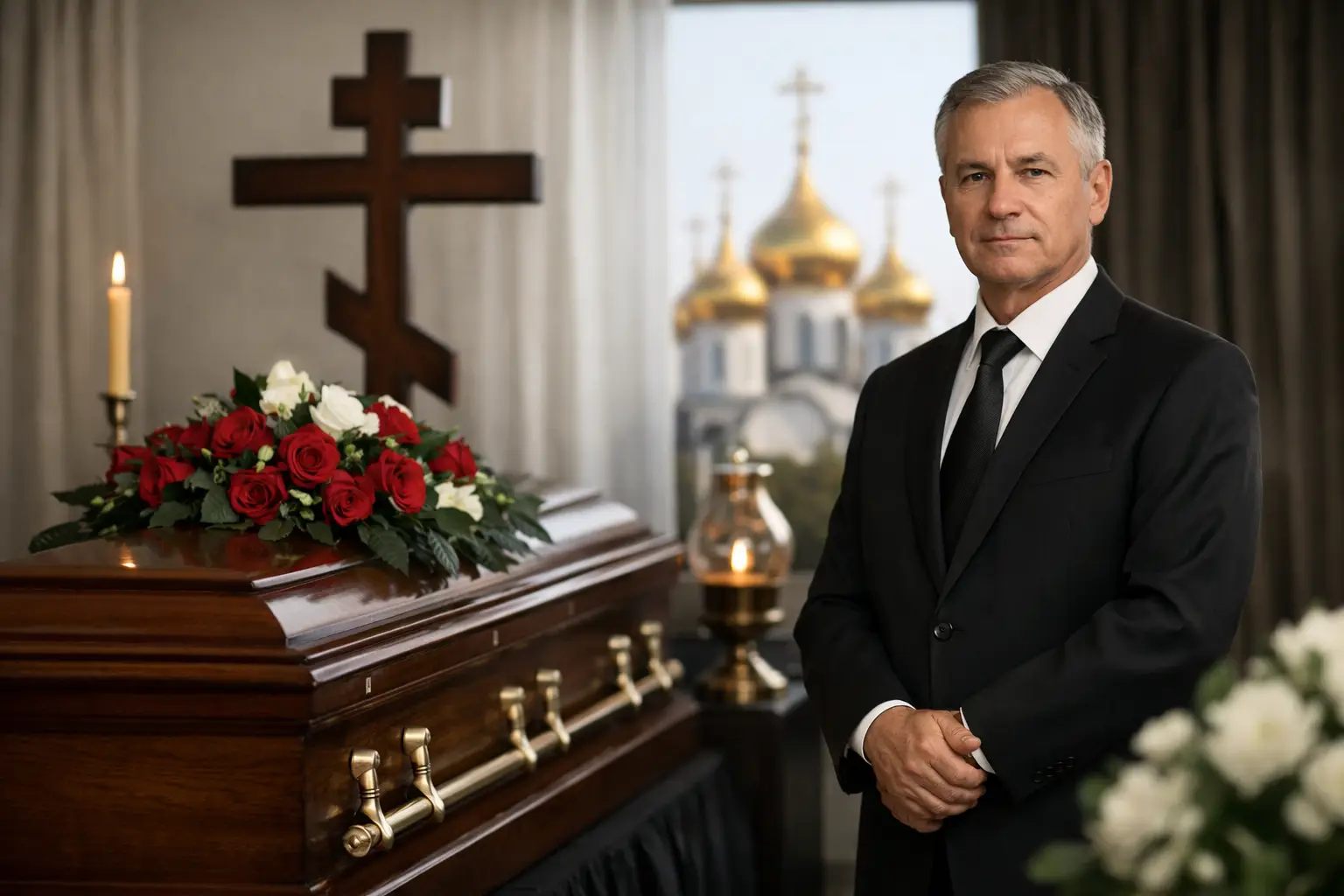
When a death occurs, a Russian funeral director in Brooklyn can offer more than translation. The right funeral professional can help a family communicate clearly, preserve meaningful customs, and make practical decisions without feeling rushed or misunderstood. At a time when relatives may be grieving in different languages, living in different countries, or holding different expectations about the service, that understanding matters.
For many Russian-speaking families, funeral arrangements involve deeply personal questions: Which traditions feel right? Should there be a viewing? Is cremation acceptable for the family? Who needs to be contacted overseas? A patient, culturally aware care team can help create order around those questions while giving the family room to grieve.
What a Russian Funeral Director in Brooklyn Can Help With
Funeral care begins with listening. Some families know exactly what their loved one wanted. Others have never discussed funeral wishes and need someone to explain each choice in plain language. A Russian-speaking funeral director can make those conversations easier, especially when older relatives are most comfortable speaking Russian or when family members need help understanding documents and timelines.
Support may include arranging a traditional funeral, a chapel service, a graveside gathering, a memorial, direct cremation, or a service before cremation. The details should reflect the person who died and the needs of the people left behind, not a preset package or someone else's idea of what a funeral should be.
A caring director can also coordinate the less visible but necessary work: transportation from the place of death, required permits, cemetery communication, obituary assistance, floral arrangements, veteran honors when applicable, and death certificates. Families should not have to chase down every detail while they are trying to notify relatives and care for one another.
Language Support Is About More Than Words
A conversation can be technically translated and still feel impersonal. In funeral planning, the meaning behind a question often matters as much as the question itself. A family may be asking about a viewing because they want relatives to have a final moment of farewell. They may be concerned about clothing, flowers, music, photographs, or a meal after the service because those details carry family history.
Russian-speaking households are not all alike. Some families follow Russian Orthodox practices closely. Others may be Jewish, Catholic, Muslim, secular, or part of another faith tradition. Some immigrated recently, while others have lived in New York for generations. A respectful funeral home does not assume what a family wants based on language or background. It asks, listens, and explains what is possible.
For example, an Orthodox family may wish to coordinate with a priest and follow specific timing or church customs. Another family may prefer a simple secular gathering with favorite music and shared memories. Both deserve the same careful attention. The goal is not to make every service look the same. It is to make sure the service feels honest to the life being honored.
Decisions Families May Need to Make Quickly
Some decisions cannot wait, particularly when a loved one has died at home, in a hospital, nursing facility, or elsewhere. A funeral home should be available around the clock to guide the family through the immediate next steps and arrange transportation with dignity.
After initial care has been arranged, the family can consider the service itself. The most common choices involve burial or cremation, the type of gathering, the location, and whether there will be a viewing or visitation. There is no universally correct answer. Religious beliefs, personal wishes, budget, cemetery availability, and the needs of close relatives can all shape the decision.
A direct cremation may be the best fit for a family seeking simplicity or planning a memorial at a later date. A full-service funeral may offer a needed place for relatives and friends to gather, pray, view photographs, and say goodbye together. In some circumstances, a family chooses a brief chapel service before burial, while others prefer a larger service at a house of worship. Clear explanations make it easier to decide without pressure.
Questions Worth Asking During the First Arrangement Meeting
It can help to ask how choices affect timing, what is included in each option, and which expenses are required versus optional. Families should also feel comfortable asking who will handle permits, transportation, cemetery coordination, and death certificates.
If language is a concern, ask whether a Russian-speaking staff member will be available throughout the arrangement process and on the day of the service. Consistency can bring reassurance, particularly when several generations are involved in decisions.
When Family Members Are Abroad
Brooklyn families often have close relatives in Russia, Ukraine, Georgia, Armenia, Israel, Europe, or elsewhere. A death can become more complicated when someone needs to travel to New York quickly, when relatives cannot attend, or when the deceased must be transported internationally.
International transportation requires careful coordination. Depending on the destination, it may involve documentation, consular requirements, airline arrangements, preparation of the deceased, and communication with a receiving funeral provider abroad. These steps are time-sensitive and can change based on the country involved. A funeral home experienced in worldwide transportation can manage the process and keep the family informed about what is needed.
Not every family needs international shipping. Sometimes the practical need is simpler: arranging a livestream, choosing a service time that allows relatives overseas to participate, or preparing obituary information in more than one language. These choices can help distant family members feel included, even when travel is not possible.
Respecting Traditions Without Creating Pressure
Tradition can be a comfort after a loss, but families sometimes feel pulled in different directions. One relative may want a formal religious service, while another believes their loved one wanted something modest. Adult children may be planning locally while older relatives offer strong opinions from abroad. These are tender conversations, not problems to be solved with pressure.
A good funeral director can help the family identify what matters most. That may be a prayer, a favorite song, a photograph display, an open casket farewell, a military honor, or simply time together after the service. When a family cannot include every possible custom, choosing a few meaningful elements is often more comforting than trying to do everything.
Personalization does not need to be elaborate to be sincere. A framed photograph, a short written tribute, a favorite flower, or a memory shared by a grandchild can give a service warmth and specificity. The strongest details are usually the ones that sound most like the person who died.
Clear Costs and Calm Guidance Matter
Grief makes it difficult to process complicated information. Families deserve direct answers about services, pricing, timing, and required paperwork. They should be able to take time to ask questions and consider options, not feel pushed toward decisions that do not feel right.
It is also reasonable to be upfront about budget. A meaningful farewell is not measured by how much is spent. A compassionate funeral provider can explain available choices and help the family focus resources on what matters most to them. For some, that is a church service and burial. For others, it may be cremation followed by a memorial gathering weeks later.
Horizon Funeral Home supports families with Russian-speaking care, immediate arrangements, advance planning, and transportation coordination, while respecting every faith, culture, and budget. The purpose of that support is simple: to reduce the burden of logistics so the family can focus on honoring their loved one.
Planning Ahead Can Protect Your Family
Preplanning is not about predicting the future. It is an opportunity to document wishes, consider burial or cremation preferences, choose the kind of service that feels appropriate, and reduce uncertainty for the people who may someday need to make decisions.
For Russian-speaking families, planning ahead can also clarify practical matters that are easy to overlook. A person may want an obituary in Russian and English, a specific religious rite, transportation to another state or country, or certain relatives notified first. Recording those wishes gives loved ones a clearer path during a difficult time.
The most helpful funeral care does not take control away from a family. It gives them understandable choices, dependable coordination, and a calm presence when they need it most. Whether arrangements are needed now or being considered for the future, you do not have to sort through every decision alone.