
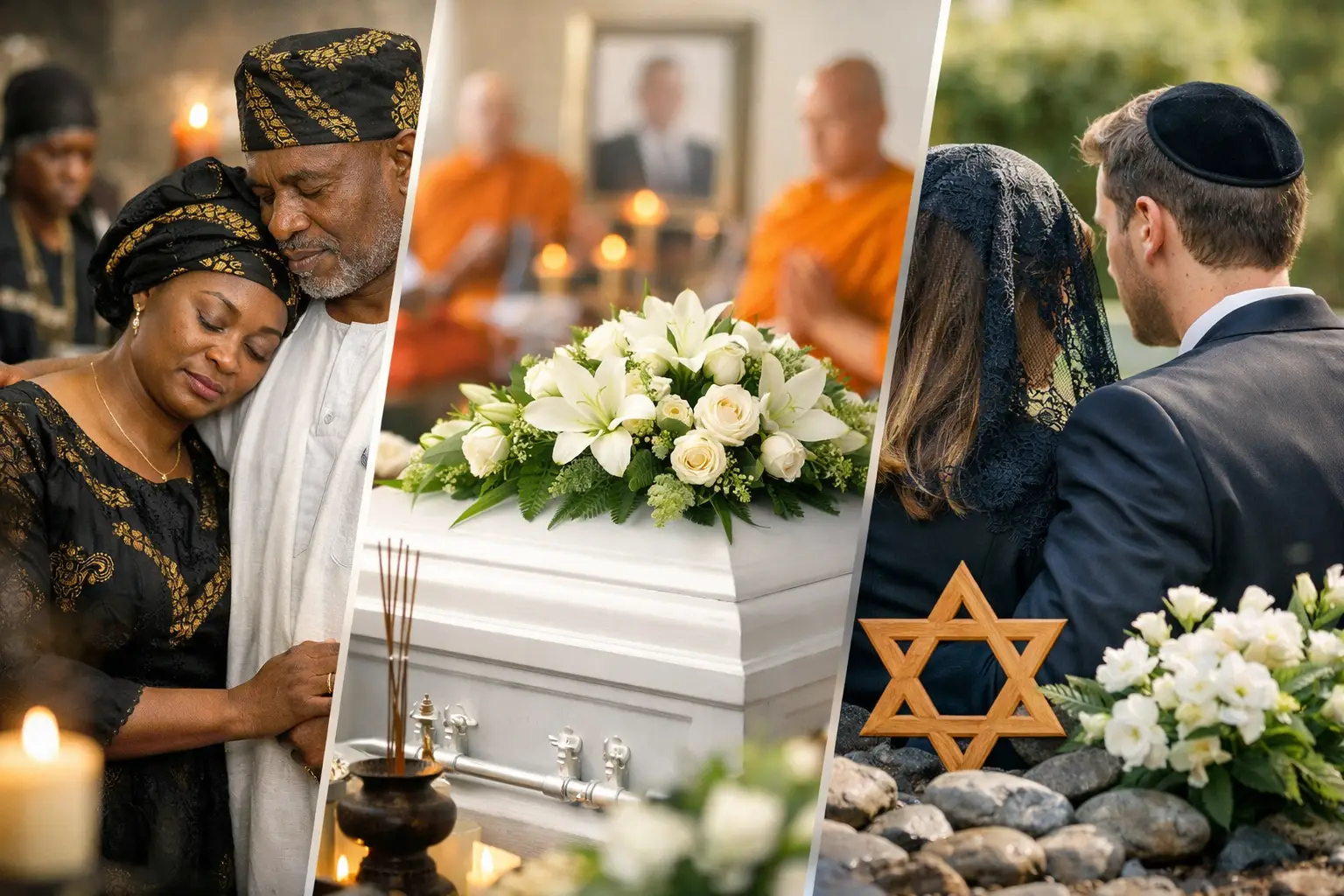
A family may be balancing a beloved parent’s Orthodox Christian traditions, a spouse’s Catholic background, children who want a modern memorial, and relatives arriving from another country. Multicultural funeral examples can be useful in this moment, not as rules to copy, but as a starting point for respectful conversations about what will feel true to the person who died and comforting to those who loved them.
In Brooklyn and across the New York area, many families carry more than one language, faith, nationality, or set of customs into the arrangement room. There is no need to choose a single label for a life that was more layered than that. A thoughtful service can make room for religious observance, family heritage, personal stories, military recognition, music, food, or quiet reflection - provided the arrangements are coordinated with care.
What Multicultural Funeral Planning Looks Like
A multicultural funeral is not necessarily a service that combines many public traditions. Sometimes it means honoring one faith’s required rites while making practical accommodations for relatives from another background. In other cases, it means creating a fully personal ceremony because the family does not follow a formal religion.
The central question is simple: what matters most to the deceased and the people responsible for carrying out their wishes? If wishes were written down, they should lead the conversation. If they were not, families can begin with the person’s faith, values, community ties, and the customs that brought them comfort in life.
It also helps to separate what is required from what is meaningful but flexible. A faith leader may identify rites that need to happen before burial or cremation, while a family may decide separately about photographs, flowers, music, an obituary, a reception, or livestreaming. Clear distinctions reduce stress when opinions differ.
Multicultural Funeral Examples That Respect Tradition
Every community and household has its own practices. The examples below describe common approaches, but they should never replace guidance from a family’s clergy, cultural elders, or trusted community members.
Armenian Christian and family-centered services
An Armenian family may wish to hold a church service with prayers in Armenian and English, followed by burial and a gathering where guests share food and remembrance. Some families choose traditional hymns, religious imagery, or a eulogy that speaks to the person’s journey from Armenia or another part of the diaspora to New York.
When relatives have different levels of connection to the church, the service can remain reverent while including an English-language reading or personal tribute. For families coordinating travel, timing may be especially important. A funeral home can help arrange a viewing schedule that gives arriving relatives an opportunity to say goodbye without interfering with church or cemetery requirements.
Georgian Orthodox customs and a shared farewell
For a Georgian Orthodox family, religious prayers, the presence of a priest, and burial may be central to the farewell. Loved ones may also place strong value on gathering together, offering condolences in person, and making time for extended family to participate.
A service can include prayers in Georgian alongside English explanations for guests who are unfamiliar with the tradition. This is often helpful in mixed families, where some mourners want to understand the meaning of what they are witnessing without changing the rite itself. A warm reception afterward may become an important place for stories, toasts, and mutual support.
Russian-speaking families and Orthodox observances
Russian-speaking families are not all alike: some are Russian Orthodox, some are Jewish, some are secular, and many have blended family histories. For an Orthodox Christian service, the family may request a priest, traditional chanting, icons, candles where permitted, and burial following church customs.
Other families may prefer a visitation with Russian-language remarks, favorite music, photographs, and an opportunity for visitors to offer flowers or private condolences. The meaningful detail is not the language alone. It is whether the family can speak, ask questions, and make decisions in the language in which they feel most understood during a difficult time.
Jewish traditions with room for diverse relatives
Jewish funeral customs often place value on simplicity, prompt burial, and honoring the deceased with prayers and the presence of community. Depending on the family’s observance, there may be specific expectations around preparation of the deceased, the casket, timing, and cemetery arrangements. A rabbi or synagogue can provide essential direction.
A mixed-faith family may choose to maintain the Jewish funeral rites while planning a separate remembrance gathering later for coworkers, friends, or relatives who could not attend. This approach respects religious timing and gives a wider circle of mourners a way to participate. It is not a compromise in care; it can be a practical way to honor several needs thoughtfully.
Catholic, Protestant, and interfaith families
A Catholic funeral may include a wake, Funeral Mass, committal service, and burial or entombment. A Protestant service may be held in a church, funeral home, graveside setting, or another meaningful location. In an interfaith family, one spouse’s church tradition can be honored while another family member offers a reading, a personal reflection, or music that reflects the broader family story.
The order of events matters. If a Mass is planned, confirm the parish’s expectations early. If cremation is being considered, speak with clergy about the family’s faith practices and the timing of services. Families do not need to know every answer before asking for help; they do need enough time to avoid preventable conflicts.
Hispanic and Latin American family traditions
Hispanic and Latin American families represent many countries, faiths, and regional customs. A Catholic vigil, rosary, Spanish-language prayer, favorite songs, religious medals, and a large gathering of relatives may all be part of a service. For some families, a novena or additional prayers in the days following the funeral are just as important as the service itself.
A bilingual arrangement can help ensure that grandparents, adult children, and friends all understand the schedule and can participate. Families may also wish to include a photo display, a recorded message from relatives abroad, or food that reflects the person’s home region. These choices can be deeply personal without taking away from a formal religious service.
A secular service for a family with many backgrounds
Not every multicultural funeral is religious. A person may have been raised in one faith, married into another culture, and lived a largely secular life. In that case, a celebration of life may include readings from several relatives, music in more than one language, a military honor guard, favorite foods, a memory table, and a moment of silence rather than formal prayer.
This format works best when it has a clear structure. Guests should know when the service begins, who will speak, whether there will be a final viewing or committal, and where the family will gather afterward. Personal does not have to mean unplanned.
How to Bring Traditions Together Without Overwhelming the Service
Trying to include every possible custom can leave a family exhausted and a ceremony unfocused. A better approach is to identify two or three priorities: perhaps required religious rites, a language that older relatives understand, and a personal tribute that reflects the deceased’s character.
Consider whether certain elements belong at different times. A traditional funeral may take place first, followed by a memorial gathering weeks later when distant relatives can attend. A private family prayer can happen before a public visitation. A cultural meal can follow the burial instead of being added to the formal ceremony. Giving each moment its own place often makes the day feel calmer.
Be direct about practical needs as well. Ask about the timing of burial, visitation hours, clergy availability, refrigeration or preparation requirements, cemetery rules, religious articles, transportation for relatives, and international travel or repatriation if applicable. These details are not separate from honoring tradition. They are what allow tradition to happen with dignity.
Let the Family’s Voice Lead
Families sometimes worry that they will offend someone by doing too little or by blending traditions imperfectly. Grief can bring old disagreements to the surface. When that happens, return to the person at the center of the service: what did they believe, love, practice, and teach their family?
A calm funeral director can help document decisions, coordinate with clergy and cemeteries, explain choices without pressure, and make sure relatives know what to expect. At Horizon Funeral Home, families can also receive support in English, Russian, Armenian, Georgian, or Spanish, so important questions do not get lost in translation.
The most meaningful farewell is rarely the one with the most elements. It is the one where family members can recognize the person they loved, stand beside one another, and leave knowing that care was taken with every detail that truly mattered.