A memorial service without burial can bring people together to remember someone, share stories, and honor a life without including a burial ceremony. If you’re unsure whether this kind of farewell can still feel respectful, that’s understandable. There’s no single right way to say goodbye.
When you’re grieving, decisions about timing and arrangements can feel like a lot to manage at once. This guide explains the difference between a funeral, a memorial service, and a celebration of life, then walks through formats that may reflect your loved one and your family’s wishes.
You’ll also find practical points to consider when coordinating cremation, choosing when and where to gather, and deciding how to involve guests. Cremation and a later memorial can be planned as distinct parts of a farewell, giving your family room to make choices at a pace that feels manageable. With funeral direction and support, you can focus on remembering the person you love.
Key Takeaways
- A memorial gathering can honor someone without a burial ceremony. Its format can reflect your family’s traditions and wishes.
- Photos, music, readings, stories, or meaningful objects can make a gathering personal.
- Compare a memorial after cremation, a separate celebration of life, and a small private gathering to find a format that feels right.
- Plan in a manageable order: agree on wishes, choose a setting, and share clear details with guests.
- Funeral direction and personalized memorial coordination can support a memorial service without burial across New York City and Nassau County.
Table of Contents
- What Does a Memorial Service Without Burial Mean?
- How Can a Memorial Honor Someone Without a Burial?
- Which Memorial Without Burial Format May Feel Right for Your Family?
- How to Plan a Memorial Service Without Burial in New York
- How Horizon Funeral Home Can Help Create a Meaningful Memorial
What Does a Memorial Service Without Burial Mean?
A memorial service without burial is a gathering to remember someone without holding a burial ceremony as part of the service. It can focus on remembrance, connection, and honoring a person’s life. The gathering can follow your family’s beliefs and traditions, or take a personal form that feels fitting to the person you’re remembering.
A memorial service is a gathering to remember someone, a funeral is a service connected with the person’s final arrangements, and a burial is the placement of remains in a resting place. These terms are related, but they don’t mean the same thing. This overview of what a memorial service is also explains how it differs from a funeral where the body is present.
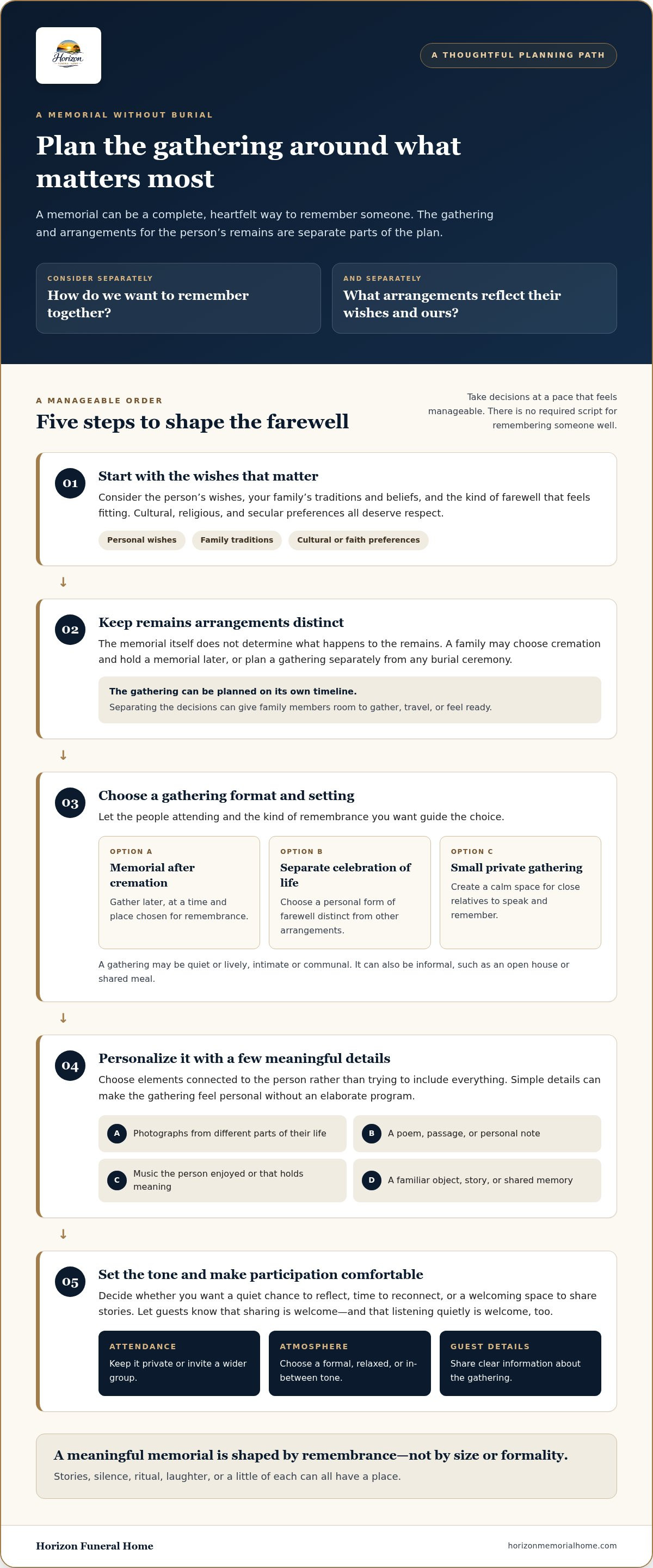
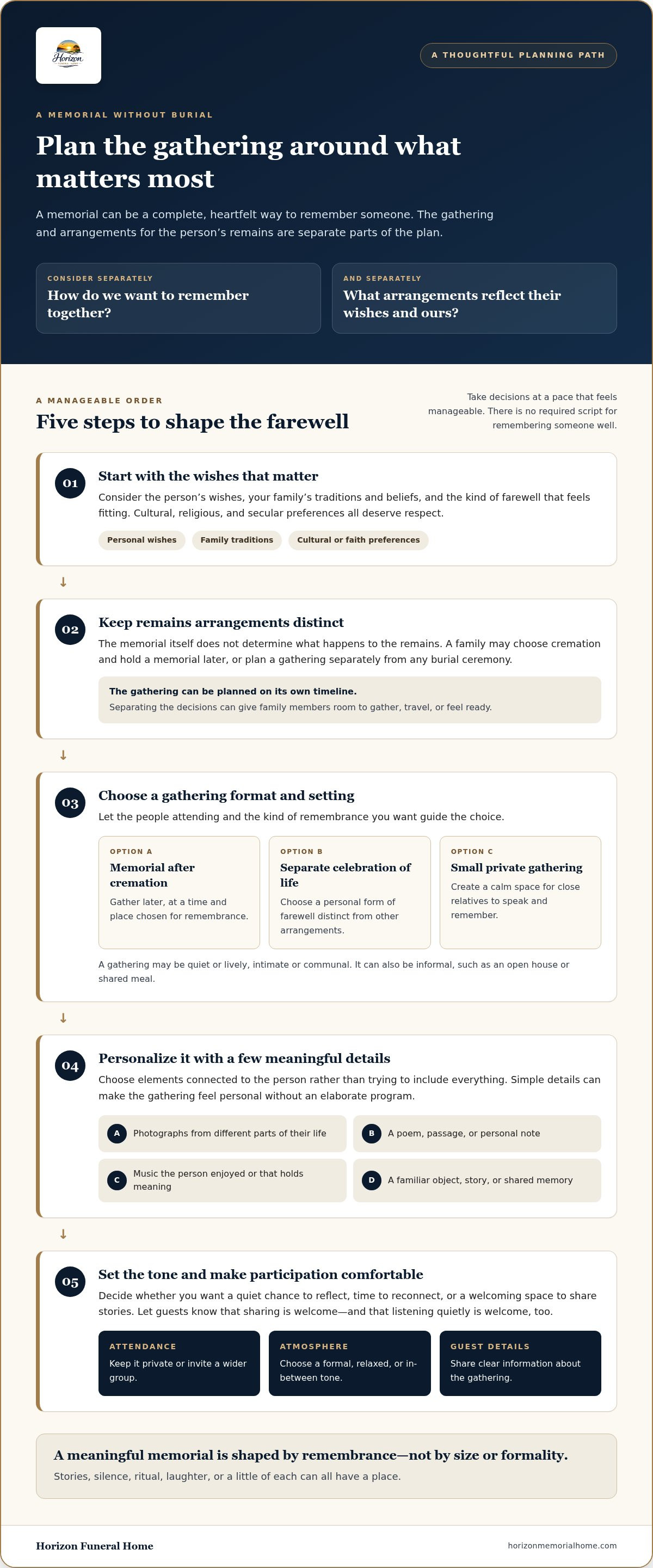
The gathering and arrangements for the person’s remains are separate parts of a family’s plans. A memorial can take place without the person’s body present, while the family makes arrangements for the remains according to their wishes. For example, a family may choose cremation and hold a memorial later, or plan a gathering separately from any burial ceremony. The service itself doesn’t determine what happens to the remains.
How Is a Memorial Service Different from a Funeral?
A funeral often takes place with the person’s body present and may include burial or cremation as part of the arrangements. A memorial service is generally held without the body present and can happen at a time and place chosen for remembrance. Burial is a separate act, not another word for funeral. Families may include a funeral, burial, or memorial in different ways.
There’s no measure of love or respect in choosing one format over another. A traditional funeral may offer familiar rituals and a shared moment of goodbye. A memorial may give people room to gather in a more personal setting. Both can honor a life with care.
Why Do Families Choose a Service Without Burial?
Each family has its own reasons. A person’s wishes, cultural or family traditions, distance between relatives, and preferences for a different kind of farewell can all shape the decision. Some families want a quiet gathering; others want to bring a wider circle together. There’s no single belief or circumstance behind choosing a memorial without burial.
Timing can matter, too. Relatives may need time to travel, gather, or feel ready to come together. Separating the memorial from other arrangements creates room to plan thoughtfully instead of making every decision at once. This flexibility can help when loved ones live in different places or the family wants a setting distinct from a formal ceremony.
As you consider the options, it may help to separate two questions: How do we want to remember this person together? and What arrangements for the remains reflect their wishes and ours? You don’t need to answer both in the same way or at the same time. A memorial service without burial can be a complete, heartfelt way to gather, share memories, and mark a life.
How Can a Memorial Honor Someone Without a Burial?
A remembrance can be quiet or lively, intimate or communal, reflective or celebratory. The right gathering isn’t measured by its size or formality. It’s shaped by what feels comfortable for the people attending and what helps them remember the person they love. A memorial service without burial can make room for stories, silence, ritual, laughter, or a little of each.
Personalization comes from the people and memories included, not from elaborate arrangements. A familiar song, a favorite photograph, or a few words from someone who knew the person well can give a gathering meaning.
Religious, cultural, and secular preferences all deserve respect. Your family might choose prayers or familiar rites, readings and shared memories, or a quiet moment together. You can preserve traditions that matter, adapt them, or create a gathering that reflects the person in another way. There’s no required script for remembering someone well.
What Can Families Include in a Personal Memorial?
Choose a few elements that connect to the person rather than trying to include everything. Invite guests to share a brief memory, reading, song, or reflection, and make it clear that listening quietly is welcome, too. Photographs can offer a focus, while a familiar object, such as a book, craft, or piece of music, can bring a meaningful part of the person’s story into the room.
Simple details can help guests feel included without turning the gathering into a performance. For example, you might:
- Display a small selection of photographs that show different parts of the person’s life.
- Ask a relative or friend to read a poem, passage, or personal note.
- Play music the person enjoyed or that holds meaning for the family.
- Set aside time for guests to write down a memory to share with loved ones.
Use only what suits your family. A personal memorial doesn’t need a long program or elaborate production to feel considered.
Can a Memorial Be Private or Informal?
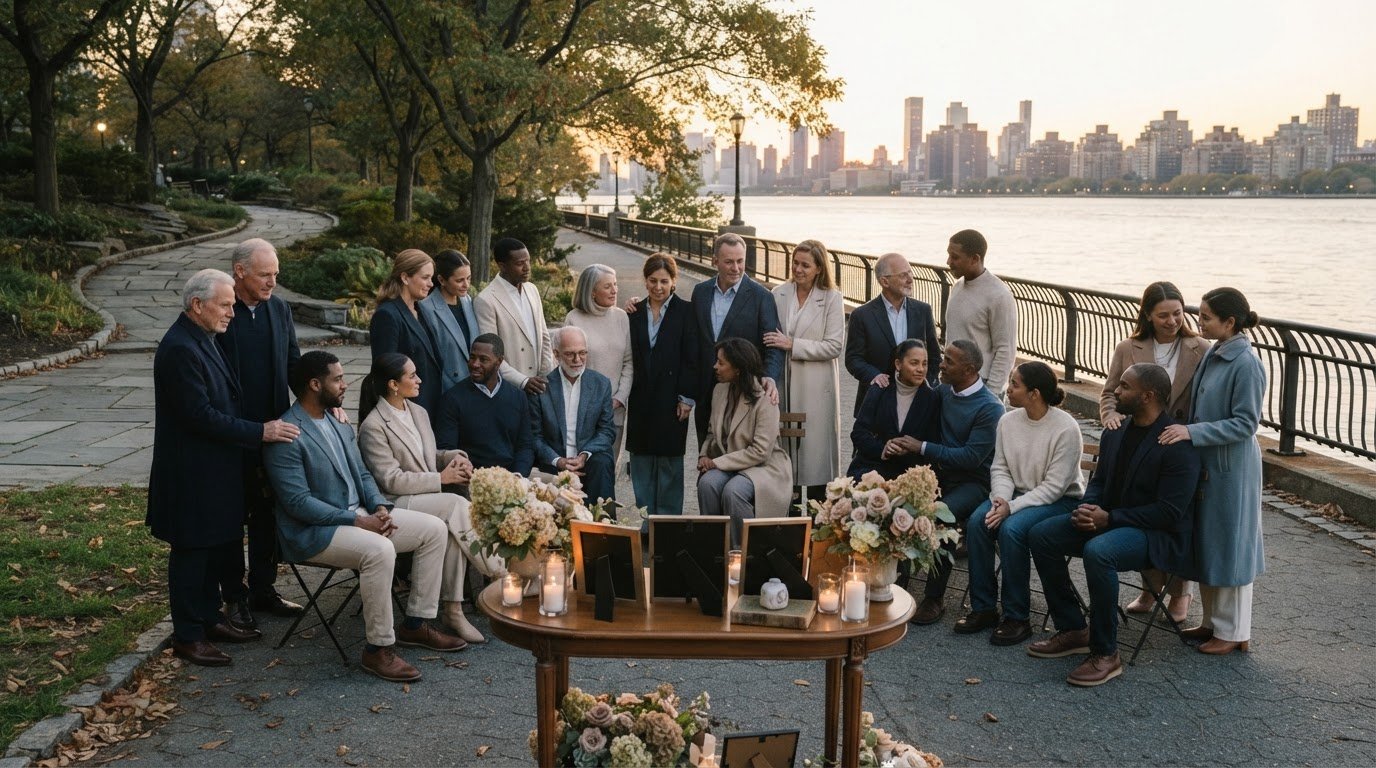
Yes. A small family gathering can provide a calm setting for close relatives to speak and remember together. An open-house format lets guests come and go, while a shared meal can make conversation feel natural. You can limit attendance or invite a wider group, and set a formal, relaxed, or in-between tone. The remembrance doesn’t need to be a large event to matter.
Decide what you want guests to experience: a quiet chance to reflect, time to reconnect, or a welcoming space to share stories. Let that intention guide the setting and plans. Horizon Funeral Home coordinates personalized memorial arrangements around your family’s wishes.
Which Memorial Without Burial Format May Feel Right for Your Family?
There isn’t one format that suits every family. The choice may depend on the person’s wishes, cultural or religious traditions, who can attend, and the atmosphere that feels comfortable. Consider arrangements for the person’s remains separately from the gathering to remember them. The decisions can be coordinated to fit your family’s needs.
| Format | When it may suit | Planning considerations |
|---|---|---|
| Cremation followed by a memorial | Your family wants to hold a remembrance gathering separately from cremation arrangements, or needs time for relatives to come together. | Consider when and where loved ones can gather, and what meaningful elements to include. |
| Celebration of life | A relaxed, personal gathering feels more fitting than a formal service. | Choose a tone and setting that feel comfortable for guests and reflect the person’s story. |
| Small private gathering | Close family or friends prefer a quieter space to remember together. | Decide who to invite and whether a simple conversation, reading, or shared meal would feel right. |
This comparison isn’t a ranking. You can also combine elements of different formats while keeping your family’s traditions and wishes at the center. Choose what feels supportive rather than adding plans simply because they’re customary.
Cremation Followed by a Memorial Gathering
Cremation and a later memorial can be coordinated as distinct parts of a family’s plans. A later gathering may give relatives time to travel or allow loved ones to come together when it works for them. If you’re learning about this arrangement, the guide titled Brooklyn Cremation Services: 2026 Buying Guide is a related resource to explore.
Celebration of Life or a Smaller Family Gathering
A celebration of life may feel relaxed and communal, with guests sharing stories in a warm, informal setting. A smaller gathering can offer more quiet and privacy. Neither needs to be elaborate to be meaningful. Consider how guests may feel, what tone reflects the person, and how much planning your family feels ready to take on. The guide titled Personalized Memorial Services in Brooklyn: A Guide to Unique Tributes may help you consider personal touches.
To narrow the options, ask your family what would feel most comforting: gathering many people, sharing a quieter moment with close relatives, or allowing more time before coming together. Horizon Funeral Home provides funeral direction and coordinates cremation and memorial arrangements, helping families shape a gathering around their wishes. You can discuss memorial arrangements with the team.
How to Plan a Memorial Service Without Burial in New York
Planning can feel more manageable when you separate decisions about the person’s remains from decisions about how to gather. A memorial service without burial still involves practical arrangements, but you can take them one at a time. Start with the family’s wishes, then shape a gathering that works for the people who hope to attend.
This sequence can help keep the process clear:
- Agree on wishes. Discuss any known preferences, family or cultural traditions, and who will help make decisions.
- Choose the gathering. Decide whether you’re planning a formal memorial, a celebration of life, or a smaller private occasion.
- Select a setting. Consider the tone you want, accessibility, and what will be comfortable for guests.
- Share the details. Tell invitees the gathering’s purpose and format, where it will take place, and how they’re welcome to participate.
Choosing the Gathering’s Timing, Place, and Guests
The gathering may happen soon, later, or on a meaningful anniversary. There’s no single schedule that fits every family. A later date may allow relatives to travel or give loved ones time to feel ready; a near-term gathering may feel more supportive for those who want to come together sooner.
Choose a setting with the people attending in mind. Consider whether guests can reach it comfortably, whether it suits the tone you want, and whether the space works for quiet reflection or a more social gathering. A clear invitation or notice can explain what kind of event it is, whether guests are invited to share a memory, and any practical details they’ll need.
Coordinating the Practical Arrangements
Give each practical task a point person. One relative might coordinate messages, another could collect photographs or readings, and someone else can keep track of questions and decisions. Dividing tasks can avoid placing every detail on one grieving family member. A short shared list helps everyone see what’s settled and what still needs attention.
Keep memorial plans distinct from cremation or other arrangements for the remains. They’re connected parts of the family’s plans, but each involves its own decisions and coordination. A funeral director can provide guidance on arrangements and current New York requirements, helping you understand practical steps without relying on assumptions about what applies to your circumstances.
Families across Brooklyn, Queens, Staten Island, Manhattan, the Bronx, and Nassau County may also need to plan around where relatives live and where the gathering will take place. For related context on traditional planning, the guide Traditional Funeral Arrangements in Brooklyn: A Guide to Dignified Farewells offers another perspective on organizing arrangements with care.
Horizon Funeral Home provides funeral direction and coordinates cremation and memorial arrangements. Discuss memorial arrangements with Horizon Funeral Home as you consider a plan that reflects your family’s wishes.
How Horizon Funeral Home Can Help Create a Meaningful Memorial
Planning a memorial while grieving can mean managing emotional and practical decisions at the same time. Horizon Funeral Home provides funeral direction, cremation, and personalized memorial coordination to help families organize arrangements with care. The focus is on supporting your choices, not prescribing a particular kind of farewell.
Your family can shape a gathering around the person’s story, your traditions, and what feels manageable. That might mean a quiet remembrance, a celebration of life, or a service with familiar cultural or religious elements. A memorial service without burial can feel complete when its details reflect the people and memories that matter to you.
Support for Cremation and Memorial Arrangements
Cremation arrangements and a memorial gathering can be planned as connected but distinct parts of your family’s plans. Horizon Funeral Home coordinates cremation and memorial arrangements, including a later gathering or celebration of life. This support can help you consider practical needs alongside the kind of remembrance you hope to create.
Funeral direction can bring clarity to decisions that may otherwise feel tangled. Talk through what you want the gathering to feel like, which traditions matter, and how to include meaningful parts of the person’s life. The focus stays on your preferences. A memorial doesn’t need to be elaborate to feel personal, and there’s no single format expected of every family.
Horizon Funeral Home supports families in Brooklyn, Queens, Staten Island, Manhattan, the Bronx, and Nassau County. If relatives live in different places or neighborhoods, funeral direction alongside memorial planning can help keep arrangements connected while honoring your family’s wishes.
A Gentle Next Step for New York-Area Families
You don’t need to arrive with every detail decided. A first conversation can begin with what you know: any wishes the person shared, the traditions your family wants to preserve, and the kind of gathering you can imagine. From there, you can consider practical arrangements and memorial ideas with a steady, respectful approach.
If you’re weighing cremation alongside a later memorial, or trying to find a fitting way for loved ones to gather, you can begin with the questions you have today. Horizon Funeral Home provides funeral direction, cremation, and personalized memorial arrangements, and can help your family consider the details at a manageable pace. Contact Horizon Funeral Home to discuss memorial arrangements.
Let Your Next Step Reflect What Matters Most
You don’t need a complete plan before you begin. Start with one question: what would help your family feel connected to the person you’re remembering? The answer can guide your next conversation, whether you’re still considering arrangements or ready to shape a gathering.
A memorial service without burial can be a personal way to honor someone, shaped by the memories, traditions, and wishes your family holds close. Horizon Funeral Home provides funeral direction, cremation, and personalized memorial support for families across New York City’s boroughs and Nassau County. You can talk through what you’re hoping for and take practical decisions at a manageable pace.
Speak with Horizon Funeral Home about a memorial that reflects your family’s wishes. A thoughtful farewell doesn’t have to follow one set pattern. It can begin with a conversation and grow from what feels right to you.
Frequently Asked Questions
Is a memorial service without burial allowed?
Yes, a family may hold a memorial gathering without holding a burial service. The gathering and arrangements for the person’s remains are separate matters, though the remains still need to be cared for according to applicable requirements. For New York families, practical requirements can depend on the circumstances. A funeral director can explain what applies to your arrangements, so you can make decisions with guidance rather than relying on general online information.
Can you have a memorial service before cremation?
A gathering may be planned before cremation, but the sequence depends on the arrangements and circumstances. For example, a family might be considering a service with the person present or a separate gathering at another time. A funeral director can explain the practical choices and coordinate arrangements. The gathering and cremation are related decisions, but they don’t automatically have to happen as one event.
What happens to the remains if there is no burial?
There still needs to be an arrangement for the person’s remains, even if the family doesn’t hold a burial. Some families choose cremation; others may make different arrangements based on their wishes and circumstances. A conversation with a funeral director can clarify practical steps and how they relate to the family’s plans. Consider personal wishes and traditions, and avoid assuming the same choice is right for everyone.
How long after cremation can you hold a memorial service?
There’s no single schedule that fits every family. You might choose a date soon after cremation or allow more time for relatives to travel, coordinate work and family responsibilities, or feel ready to gather. When choosing a date, consider who you hope can attend and what preparation the gathering requires. A funeral director can help coordinate practical arrangements around the timing your family prefers.
Can a memorial service be held without the person’s body present?
Yes. A memorial can bring people together to honor someone without their body present. Guests might gather around a photo display, listen to a chosen reading, or share memories in turn. You can also make space for guests who prefer to reflect quietly rather than speak. The format may follow your family’s traditions or be more informal, depending on what feels comfortable to those attending.
What should you tell guests when there is no burial service?
Tell guests the date, time, location, and kind of gathering you’re planning. A clear invitation can say that it’s a memorial and there won’t be a burial service, so people know what to expect. If the gathering is private or informal, explain who is invited and whether guests may share a memory or bring a photograph. For New York families, include directions or access information that will help guests plan their visit.