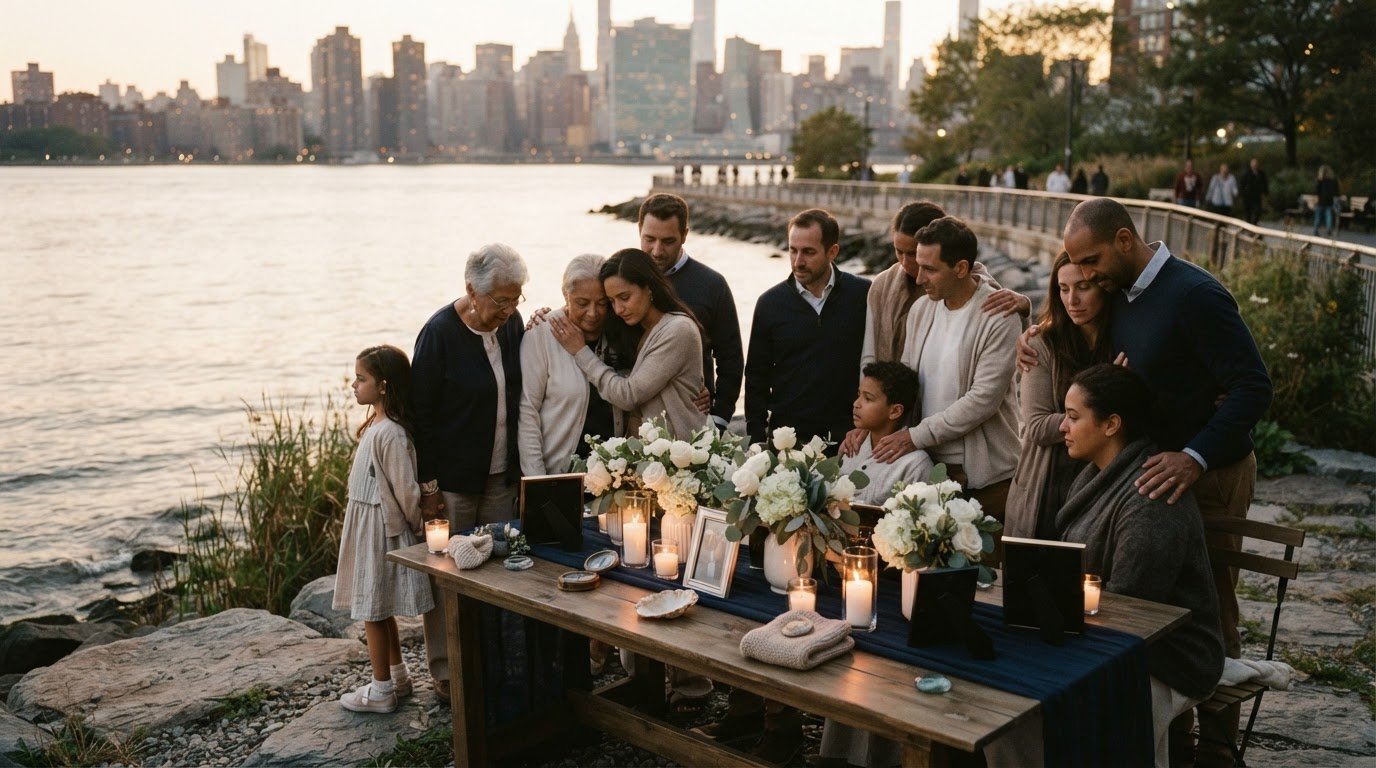
A meaningful memorial doesn’t have to follow a set tradition. It can give family and friends a chance to remember someone in ways that feel true to that person. If you’re planning a memorial service for loved one, it’s understandable to feel unsure where to begin, especially while grieving and weighing decisions about timing, traditions, and who should take part.
A memorial service is often held without the person’s body present, unlike a funeral, which may include a viewing or ceremony before burial or cremation. There’s no single right format. The gathering can reflect your loved one’s wishes, personality, culture, and the ways family and friends find comfort.
This guide covers practical ways to shape a gathering, invite people to participate, and make decisions without trying to settle every detail at once. Horizon Funeral Home provides funeral direction and coordination, including personalized memorials and celebrations of life. For families across Brooklyn, Queens, Staten Island, Manhattan, the Bronx, and Nassau County, our support can help bring the arrangements together one decision at a time.
Key Takeaways
- Understand how a memorial service can differ from a funeral, and how your family’s beliefs and circumstances can shape the gathering.
- Choose a format that suits your family, from a faith-centered service to a more informal celebration of life.
- Plan a memorial service for loved one around personal relationships, values, traditions, and everyday memories.
- Break planning into manageable steps, including choosing participants and considering guests’ accessibility and travel needs.
- Learn how professional funeral direction and coordination can support personalized memorials for New York-area families.
Table of Contents
- What Is a Memorial Service for a Loved One?
- Choose a Memorial Service Format That Fits Your Family
- Create Personal Tributes That Reflect the Loved One
- Plan the Memorial Service in Manageable Steps
- Find Steady Support for a Memorial Service in the New York Area
What Is a Memorial Service for a Loved One?
A memorial service is a gathering to remember and honor someone who has died. It gives family and friends a chance to reflect, share memories, and pay tribute in a way that feels fitting. A memorial service for loved one can reflect the person’s beliefs and wishes, as well as practical considerations such as where relatives live and whether the family has chosen burial or cremation.
There’s no required format. A service may include faith traditions, personal reflections, music, readings, or quiet time together. Some families prefer a structured ceremony led by a religious or community leader; others choose an informal gathering where guests share stories. The choices can reflect the person’s values and relationships without trying to capture every part of a life in one event.
The word “memorial” describes the purpose of the gathering: to remember and honor. Families may use it for a service held without the deceased present or for a remembrance after burial or cremation. For an overview of common customs, see What is a Memorial Service?
A funeral and a memorial service can both offer a meaningful space for remembrance. The difference in format doesn’t measure the depth of a family’s love or the importance of the person being honored. It simply helps you choose a gathering that suits your family’s wishes, traditions, and circumstances.
How is a memorial service different from a funeral?
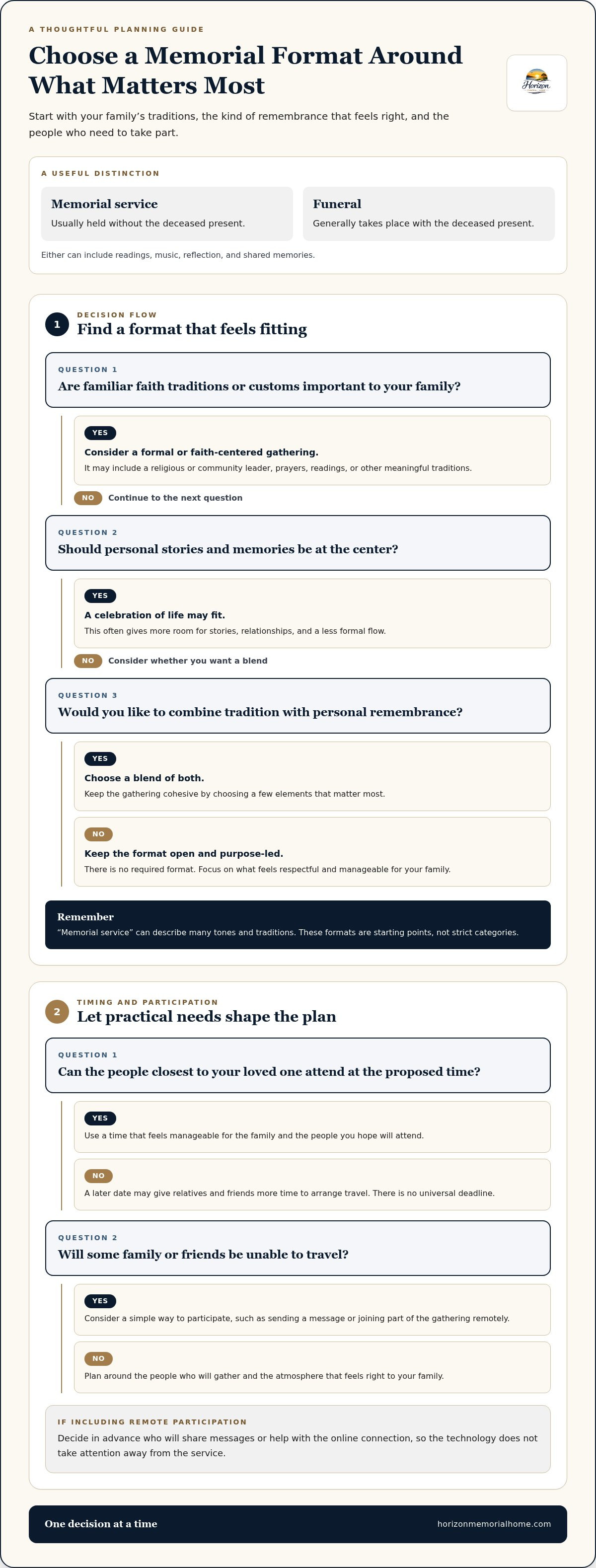
The usual distinction is whether the deceased is present. A funeral generally takes place with the deceased present, while a memorial service is held without them present. Either format may include readings, music, reflection, and shared memories. If you’re considering a traditional service, the traditional funeral arrangements guide offers related planning context.
When can a family hold a memorial service?
Timing can follow the family’s needs and chosen arrangements. A gathering may take place after burial or cremation, allowing time to plan and coordinate, or be scheduled to fit family traditions and practical circumstances. There’s no single schedule that’s right for everyone. Consider when the people closest to your loved one can attend and how much time the family needs to prepare.
It may help to start by deciding what you want the gathering to offer: a moment of prayer, an opportunity to share stories, or time for relatives and friends to be together. That purpose can guide choices about format and timing. Take decisions one at a time, focusing on what feels respectful and manageable.
Choose a Memorial Service Format That Fits Your Family
The right format is one that lets your family remember your loved one in a comfortable and respectful way. Before settling on a venue or ceremony details, consider three practical questions: Which traditions matter to the family? Who needs to be able to participate? What atmosphere would feel fitting?
A formal or faith-centered gathering may offer familiar structure, with a religious leader, prayers, readings, or other traditions. A celebration of life may leave more room for stories and personal memories. The approaches can also be combined: a service can honor religious customs and include personal touches. You don’t have to choose between tradition and warmth.
Memorial service or celebration of life: what feels right?
“Memorial service” is a broad term for a gathering to remember someone, and it can describe many tones and traditions. A celebration of life often gives special emphasis to the person’s stories, relationships, and memories. The terms aren’t strict categories. You can combine a familiar ceremony with informal moments of remembrance.
Use this comparison as a starting point, not a set of rules. It can help your family identify what feels supportive and avoid adding details that create unnecessary pressure.
| Format | Atmosphere | Practical considerations |
|---|---|---|
| Formal or faith-centered | Structured, with familiar traditions or religious elements | Consider who will lead or take part, and which customs are meaningful to the family. |
| Celebration of life | Personal and story-focused, with room for a less formal flow | Think about who may wish to share memories and how to make participation comfortable. |
| A blend of both | Balances tradition with personal remembrance | Choose a few elements that matter most, so the gathering feels cohesive rather than crowded. |
How can timing and attendance shape the format?
Travel distance, relatives’ schedules, and the family’s readiness to gather can all affect timing. A later date may give people more time to arrange travel, while a smaller gathering may suit a family that prefers a more intimate setting. There’s no universal deadline. Choose a time and format that feel manageable.
For family and friends who can’t travel, consider a simple way for them to participate, such as sending a message or joining part of the gathering remotely. Decide in advance who will share messages or help with any online connection, so the technology doesn’t take attention away from the service. A quick conversation about who hopes to attend and what would help them take part can clarify next steps.
Horizon Funeral Home provides guidance for personalized memorials and celebrations of life. Learn about Horizon Funeral Home’s memorial planning support.
Create Personal Tributes That Reflect the Loved One
Personal touches don’t need to be elaborate to feel meaningful. Start with the person, rather than a theme or checklist. Think about the relationships they cherished, the values they lived by, traditions that mattered to them, and small details friends and family still remember. These reflections can help you choose tributes that feel genuine rather than included simply because they’re customary.
If you’re searching for “memorial service for loved one,” try starting with one question: What would those closest to them be glad to remember together? The answer might suggest a reading, a song, a shared story, or photographs. Choose a few meaningful elements and keep the rest simple.
Which tributes can make the gathering feel personal?
Choose details connected to your loved one’s life and wishes. A faith or cultural element may be fitting when it reflects traditions they valued. If it doesn’t, there’s no need to include it just because it’s familiar to others. A personal tribute can be quiet and simple.
- A memory-sharing moment: Invite willing guests to recall a brief story or quality they appreciated.
- A meaningful reading or music: Select something tied to the person’s beliefs, relationships, or life.
- A photo display: Gather images that represent different relationships or chapters of their life.
These are starting points, not requirements. For more ideas on shaping a gathering around an individual’s story, explore this personalized memorial services guide.
How can friends and relatives take part?
Make participation an invitation, not an expectation. Some guests may welcome the chance to speak; others may prefer to remember quietly. Offer different ways to contribute and make clear that listening is also a meaningful way to be present.
- Invite a willing guest to share a short memory, reading, or reflection.
- Give guests the option to write a memory for the family to keep or read aloud.
- Let people know in advance what participation involves, so no one feels put on the spot.
Agreeing on contributions in advance can ease pressure on the day. One family member might gather written memories while another coordinates speakers. Keep spoken contributions brief enough to leave room for several voices, and offer a quiet alternative for anyone who changes their mind. You don’t need to fill every pause; a moment of silence can leave space for reflection.
As you choose tributes, ask whether each one feels true to the person and comfortable for the family. A few well-chosen details can carry more meaning than a crowded program. The goal isn’t to represent an entire life in one gathering, but to create a shared moment of remembrance that feels personal and respectful.
Plan the Memorial Service in Manageable Steps
Planning can feel more manageable when you separate the decisions that shape the gathering from details you can settle later. Start with the purpose, who you hope will attend, and the traditions you want to honor. Once those choices are clearer, you can organize practical arrangements. You don’t have to decide everything at once.
What should the family decide first?
Begin by agreeing on the gathering’s purpose and the atmosphere that feels right. Consider whether faith, cultural, or family traditions should guide the service, and identify the relatives or friends you hope to include. These choices create a framework. Details such as specific readings or keepsakes can wait until the family is ready to consider them.
Use this sequence as a working checklist. Adjust it to your family’s needs and take each step at a comfortable pace.
- Agree on the purpose. Decide what you hope the gathering will offer, such as reflection, shared remembrance, or honoring a tradition.
- Choose a format. Settle on a style that suits the family’s preferred atmosphere and practical circumstances.
- Identify participants. Decide who may lead, speak, read, or help coordinate, while keeping participation voluntary.
- Coordinate the details. Arrange the date, location, guest communication, and any personal elements the family has chosen.
How can you make attendance easier for guests?
Clear information helps guests plan and feel welcome. Share the date, location, and essential details in one message. Include a way to ask about access needs or participation, and choose one person to communicate updates if plans change.
Consider where invited guests will travel from. Relatives may be coming from Brooklyn, Queens, Staten Island, Manhattan, the Bronx, or Nassau County, and their routes and schedules may differ. When choosing a location, think about where guests are coming from and how they’ll get there. If people are traveling from farther away, a later date may give them more time to plan.
Some relatives or friends may not be able to attend in person. If it suits the gathering, offer a simple alternative, such as sending a written reflection for someone to share or asking a family member to pass along a message. Keep these options practical and optional; there’s no single right way to take part.
Horizon Funeral Home provides professional funeral direction and coordination to help organize arrangements around family preferences. For support planning a personalized memorial, connect with Horizon Funeral Home.
Find Steady Support for a Memorial Service in the New York Area
When you’re grieving, even straightforward choices can feel difficult. Professional funeral direction offers support with coordinating arrangements and keeping the family’s preferences at the center of planning. You can bring questions before you have a complete plan. Start with what matters most to your family and what you hope the gathering will offer.
Horizon Funeral Home supports families across Brooklyn, Queens, Staten Island, Manhattan, the Bronx, and Nassau County with funeral direction and coordination, including personalized memorials and celebrations of life. We help bring arrangements together while respecting the traditions and personal choices that make each family’s gathering its own.
What can a funeral home help coordinate?
Funeral direction can help organize practical arrangements around the family’s chosen gathering. Depending on the family’s decisions, this may include traditional funeral arrangements, cremation or direct burial arrangements, and coordination for a memorial service. Needs differ, so planning can focus on what has already been decided and what remains to be arranged.
Clear communication helps keep the process focused on the family’s wishes, whether those include cultural or faith traditions, a quiet remembrance, or a personalized celebration of life. You don’t need to have every detail settled before beginning.
How can families take the next step?
Start with a few guiding details: the kind of gathering you have in mind, traditions you want to honor, and arrangements already chosen. Then consider practical questions one at a time. Optional elements can wait until the essentials feel clearer.
If relatives are coming from different parts of the New York area, discuss general timing and location early. This gives the family a chance to consider travel needs alongside the service arrangements. A funeral director can help coordinate details while keeping the family’s priorities in view.
Horizon Funeral Home supports personalized memorials and celebrations of life shaped around the person being remembered and the family’s preferences. You can begin with a question, a concern, or a few ideas. There’s no need to arrive with a finished plan.
If you’re ready to talk through arrangements for a memorial service for loved one, speak with Horizon Funeral Home for personal guidance at a pace that feels comfortable.
Take the Next Step at Your Own Pace
You don’t need a complete plan before moving forward. A conversation can help you name what matters most, talk through open questions, and decide what can wait. As you plan a memorial service for loved one, your first step might be sharing a tradition you hope to honor or asking how planning begins.
Horizon Funeral Home offers guidance for families considering a personal gathering and related arrangements. When you feel ready, speak with Horizon Funeral Home about planning a memorial. You can begin with questions, not a finished plan.
There’s no single way to remember someone well. With care and support, your family can shape a gathering that feels true to the person and meaningful to those who loved them.
Frequently Asked Questions
Can a memorial service be held without a funeral?
Yes. A memorial service can be planned as a gathering on its own, separate from a funeral. Families may hold it after burial or cremation, or choose another time that suits their circumstances. There’s no single format every family needs to follow. A memorial service for loved one can reflect personal wishes, cultural or faith traditions, and what feels manageable for those closest to them.
How long does a memorial service usually last?
There’s no fixed length for a memorial service. The schedule depends on the format and how much time is set aside for speakers, readings, music, or reflection. A brief gathering might include a welcome and one tribute, while a longer program may make room for several contributions. Consider guests’ comfort and leave breathing room between moments rather than filling the schedule so tightly that it feels rushed.
What should I wear to a memorial service?
Choose clothing that feels respectful and fits the family’s guidance, the setting, and any cultural or faith traditions. Some services call for formal attire, while others are more relaxed or invite a personal touch connected to the person being remembered. If the invitation shares a dress preference, follow it. If it doesn’t, comfortable, modest clothing is a thoughtful choice. You can ask someone close to the family if you’re uncertain.
Can children attend a memorial service?
Children can attend if the family feels it’s appropriate, and their needs can be considered beforehand. Explain in simple, honest terms why people are gathering and what the child might see or hear. For example, let them know that people may share memories or become emotional. A trusted adult can stay close, and children shouldn’t feel obliged to speak or join an activity. Quiet presence is participation, too.
Do I need to bring anything to a memorial service?
Usually, guests don’t need to bring anything unless the family has requested a contribution. The invitation may suggest bringing a photograph or writing down a memory, but these should remain optional. If no request is mentioned, being there is enough. Follow any specific guidance the family shares about flowers, donations, or other tributes. A kind note after the service can also be a considerate gesture.
How do you invite people to a memorial service?
Share the date, time, location, and helpful notes about the gathering in a clear message. A personal call, text, printed notice, or online announcement can work, depending on whom you’re inviting. For guests traveling within the New York area or from farther away, provide details early and send updates if plans change. You can also mention whether guests are invited to contribute or simply attend.
Is a memorial service religious?
A memorial service can be religious, nonreligious, or include a blend of traditions. A family might choose prayers or readings connected to the loved one’s faith, or focus on personal reflections without religious elements. The choice can follow the person’s wishes and the family’s beliefs. If guests come from different backgrounds, explaining the order of the gathering in advance can help everyone feel more at ease.