
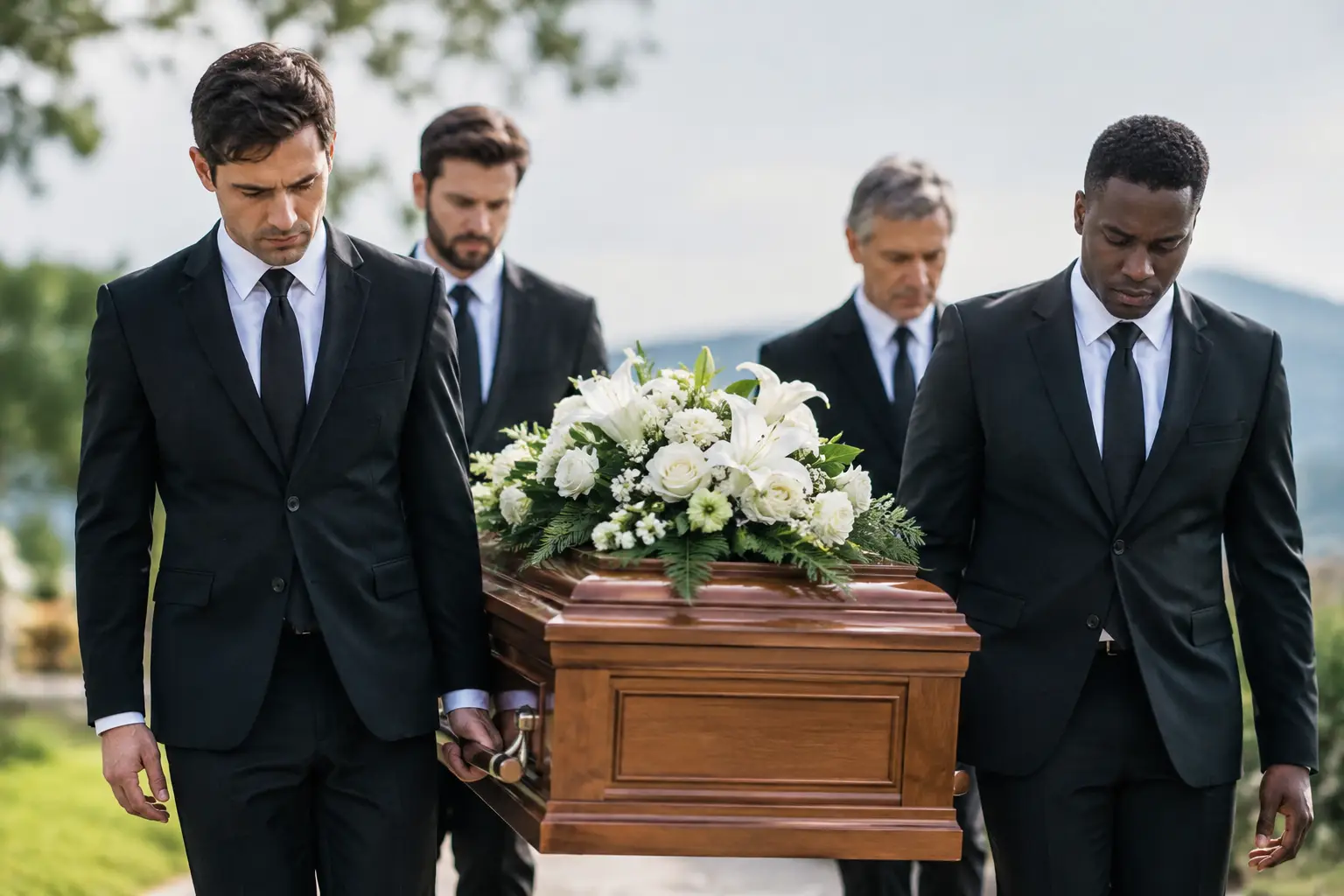
A pallbearer’s role lasts only a few minutes, but the invitation can carry a lifetime of meaning. When you are deciding how to select pallbearers, you are not simply assigning a task. You are asking people to stand close to someone you love at an especially tender moment and help carry them to their place of rest.
There is no single right choice. Some families choose relatives, others choose lifelong friends, faith community members, coworkers, neighbors, or a blend of people from different parts of a life. The most fitting decision is one that feels respectful of your loved one, practical for the service, and manageable for the people you ask.
Understand What Pallbearers Do
Traditionally, pallbearers help carry or escort the casket from the funeral home or place of worship to the hearse, and from the hearse to the gravesite or mausoleum. At some services, they may also assist with moving the casket inside the chapel or church. Their presence is both practical and symbolic: they accompany the deceased with care while representing the people whose lives were touched by them.
Most services use six pallbearers, though the number can vary. A casket may be carried by six or eight people, depending on its design, weight, and the arrangements at the cemetery. In many cases, pallbearers walk alongside a wheeled casket rather than bearing its full weight. Your funeral director can explain exactly what will be needed for the service you are planning.
Pallbearers are generally associated with burial services, but they may also have a place at a funeral followed by cremation. For a memorial service held after cremation, families often create other meaningful roles, such as welcoming guests, carrying photographs, reading a tribute, or presenting an urn.
How to Select Pallbearers Without Feeling Pressured
Begin with the relationship, not a rule. Think about who shared a genuine connection with the person who died and who would feel honored by the request. Adult children, grandchildren, siblings, nieces and nephews, close friends, godchildren, fellow veterans, or trusted members of a congregation may all be appropriate choices.
It can help to picture the people your loved one would have wanted nearby. Were there friends who showed up consistently? A relative who provided care? Someone who shared an important hobby, workplace, military service, or spiritual community? Those connections can guide you when the decision feels difficult.
At the same time, a pallbearer role does not have to be a measure of who mattered most. Families are often large, relationships can be complex, and there may be more people who deserve recognition than there are positions to fill. Choosing six people is a matter of ceremony and logistics, not a ranking of love.
If several relatives may expect to be asked, speak with the closest decision-makers before invitations are extended. A brief, calm conversation can prevent misunderstandings later. You might say, “We want to include people who were especially close to Dad and who can comfortably take part. We are also finding meaningful roles for others.”
Consider Ability, Comfort, and Timing
A pallbearer should be physically and emotionally able to participate. This does not mean a person must be exceptionally strong. Funeral professionals coordinate the movement of the casket and will provide guidance at every step. Still, the role may involve walking on uneven ground, standing for a period of time, navigating stairs, or managing difficult weather at a graveside service.
Ask privately and give people room to decline. Someone may be grieving too intensely, have a health condition, use a mobility aid, be recovering from surgery, or simply feel unable to take on the responsibility. A gentle invitation makes that easier: “We would be honored if you would serve as a pallbearer, but please do not feel you have to say yes.”
Age should be considered with care rather than assumptions. A healthy older adult may be fully comfortable serving, while a younger person may not be. Teenagers and adult grandchildren can often participate if they feel ready. Young children are usually better included in a different way, such as placing a flower, carrying a memory item, or walking with a parent.
It is also wise to consider whether each person can arrive on time and remain through the graveside portion of the service. If someone is traveling from out of town or has an unpredictable work obligation, identify an alternate pallbearer in advance. This is not a sign of doubt. It simply creates peace of mind on a day when your family should not have to solve last-minute problems.
Include Loved Ones Who Are Not Pallbearers
Not every meaningful relationship needs to be represented through carrying the casket. Honorary pallbearers offer a thoughtful option for people who should be recognized but cannot or prefer not to take on the physical role. They may sit in a reserved section, walk in the procession, wear a flower or ribbon, or be named in the program.
Other loved ones can participate by giving a eulogy, reading a prayer or poem, sharing a memory, serving as an usher, displaying photographs, or helping welcome guests. In a faith-based service, there may be specific readings, rituals, or processional roles that make sense within that tradition.
These options are especially valuable when a family wants to include someone with limited mobility, a cherished elder, a close friend who is overwhelmed by grief, or a child who wants to contribute. Inclusion does not have to look identical for everyone to be sincere.
Respect Faith, Culture, and Family Tradition
Funeral customs differ widely. Some religious or cultural traditions have defined expectations for who may carry the casket, how the procession takes place, or whether family members participate in the burial. Others leave the decision entirely to the family. If your loved one’s faith or cultural background is central to the service, discuss those customs early with your clergy member, spiritual leader, or funeral director.
In Brooklyn and across the wider New York area, many families bring together more than one heritage, language, or tradition. It is possible to honor those layers with care. For example, one side of the family may have an established burial custom while another wishes to include close friends or relatives in the procession. Clear planning helps everyone understand what will happen and why.
The most respectful approach is to avoid making assumptions. Ask the people who know the tradition well, and make room for the wishes your loved one expressed during life whenever possible.
Ask Clearly and Give Practical Details
Once you have chosen the people you would like to ask, contact them directly whenever possible. A phone call or in-person conversation is usually more personal than a group message. Let them know why you thought of them, what the role involves, and the date, time, and location of the service.
You do not need to make the invitation formal or complicated. A simple message is enough: “Mom cared deeply about you, and we would be grateful if you would serve as a pallbearer at her funeral. The funeral director will guide everyone through the process.”
Share practical details as arrangements are finalized. Pallbearers may need to arrive earlier than other guests, wear appropriate shoes for a cemetery, and follow guidance about where to stand. If the service includes a long outdoor walk or difficult terrain, let them know beforehand. Clear information is a kindness, especially when everyone is grieving.
Let the Funeral Team Carry the Logistics
Families should not have to worry about the mechanics of the procession while they are mourning. A funeral director will coordinate the casket, staff support, timing, transportation, cemetery requirements, and instructions for pallbearers. Before the service begins, the team can explain where each person should stand, how to move together, and what to do at the graveside.
If you are uncertain whether someone can participate safely, ask. Adjustments can often be made, including using honorary pallbearers, arranging additional support, or selecting people to walk alongside rather than carry the casket. The goal is a dignified service, not asking anyone to do more than they can comfortably manage.
Choosing pallbearers may bring up emotion, family history, and questions you did not expect. Take the decision one conversation at a time. The people who stand beside your loved one do not need to make the day perfect. Their quiet presence, offered with love and respect, is more than enough.