
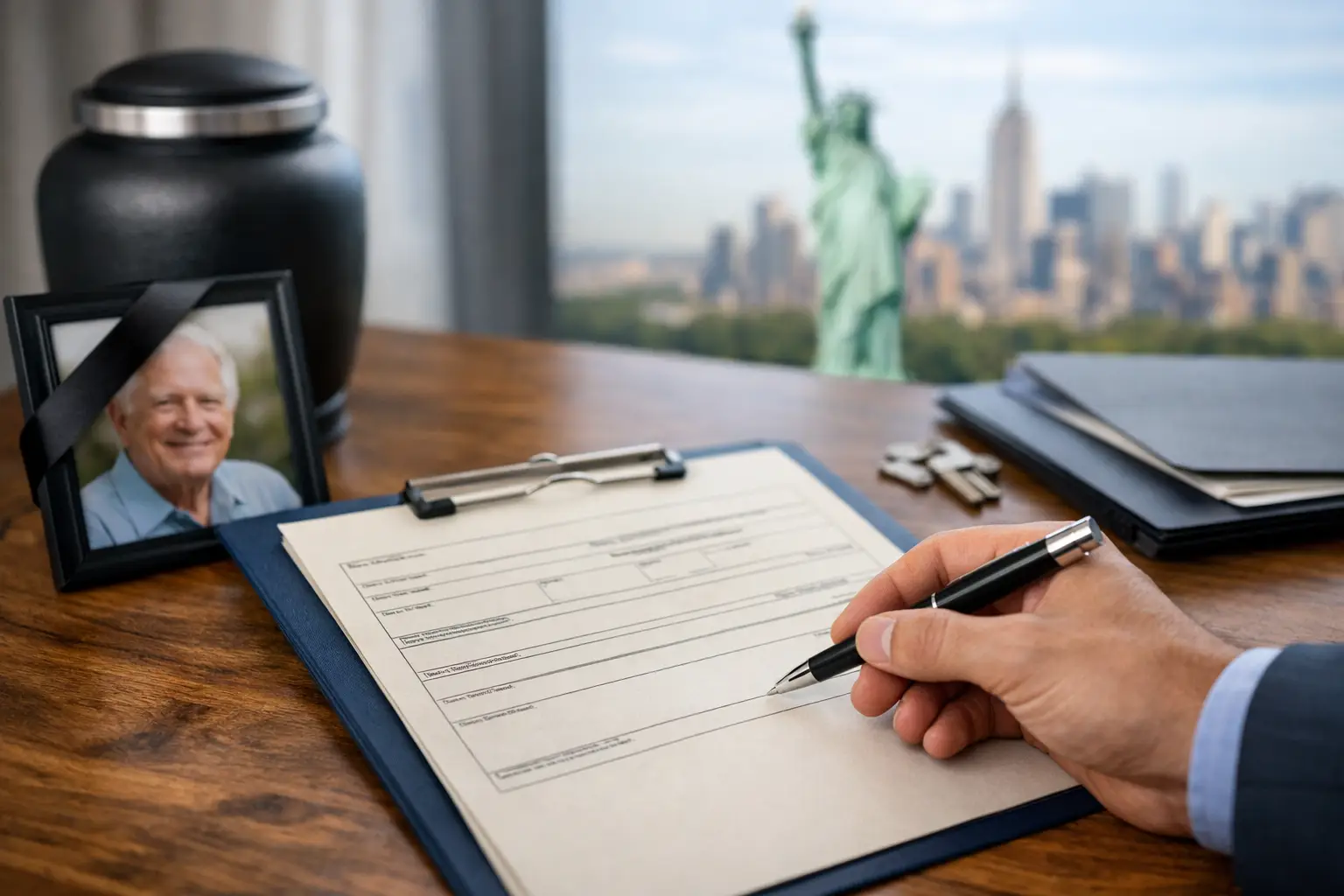
When someone dies, paperwork can feel impossible to face. Families searching for how to file death certificate information often assume they must complete and submit it themselves. In most New York cases, the funeral director coordinates the filing process, while the physician, medical examiner, or coroner completes the medical portion.
You do not need to have every answer at once. Understanding who does what can help you protect your loved one’s records, obtain the copies you will need, and avoid delays during an already difficult time.
How to file a death certificate in New York
A death certificate is an official government record of a person’s death. It confirms basic personal details, the place and date of death, and the medical cause of death. It is different from an obituary, burial permit, cremation authorization, or funeral contract.
In New York, a funeral director generally prepares the demographic information, works with the medical professional responsible for certifying the death, and files the completed certificate with the appropriate local registrar. The process is commonly handled electronically, though the exact procedure can vary by county and by the circumstances of the death.
The family’s role is usually to provide accurate information about their loved one and to review details carefully before the certificate is finalized. If no funeral home is involved, the person handling final arrangements may need to contact the local vital records office for instructions. This is less common and can involve additional steps.
Who completes each part of the certificate?
The funeral director typically gathers personal and demographic information. This may include the full legal name, date and place of birth, Social Security number, marital status, parents’ names, education, occupation, residence, and veteran status. A close family member, executor, or other knowledgeable person usually provides these details.
The attending physician, physician assistant, nurse practitioner, medical examiner, or coroner completes the medical certification. This section identifies the cause and manner of death when required. Funeral home staff cannot determine or alter the medical cause of death.
If the death is under the jurisdiction of a medical examiner or coroner, such as an unexpected, accidental, or unattended death, that office may need to complete its investigation before certification can move forward. This can affect timing, but it does not mean the family has done anything wrong.
What information should you have ready?
Gathering information before meeting with the funeral director can make the arrangement conference easier. Do not worry if you cannot locate every document immediately. Staff can explain what is required, what is helpful, and what may be confirmed later.
It is useful to have the following information available:
- Your loved one’s legal name, current address, date of birth, and place of birth
- Their Social Security number, if available
- The names of their parents, including a parent’s maiden name when known
- Their marital status, surviving spouse’s name, and usual occupation
- Veteran discharge information, if they served in the military
Accuracy matters. A misspelled name, incorrect birth date, or missing parent information can create problems later when closing financial accounts, claiming insurance proceeds, transferring property, or handling probate. Take a moment to check spelling against a driver’s license, passport, birth certificate, marriage certificate, or other reliable record.
If a detail is unknown, say so rather than guessing. A funeral director can advise on the best way to document missing information under local requirements.
When is the death certificate filed?
The certificate cannot be filed until both the personal information and medical certification are complete. In a straightforward hospital or expected home death, this may move quickly. In other situations, the timeline depends on when the physician certifies the cause of death or when a medical examiner releases the case.
After the certificate is filed and registered, certified copies can be requested. A certified copy bears the official certification needed by many banks, insurance companies, courts, government agencies, and title offices. A photocopy or printed scan may be useful for your records, but it often will not be accepted for legal or financial matters.
New York City and other New York localities may have different vital records procedures, fees, and processing times. If your loved one died outside New York, the certificate is generally filed where the death occurred, even if the funeral or burial will take place in Brooklyn, another state, or abroad.
How many certified copies should you order?
There is no single number that is right for every family. The answer depends on the accounts, property, benefits, and legal matters your loved one leaves behind. Ordering several certified copies at the beginning can prevent repeated requests later, but ordering too many can add unnecessary cost.
Consider whether you will need certificates for life insurance, retirement plans, pensions, a mortgage or property transfer, financial accounts, vehicle titles, probate, veterans benefits, and Social Security. Some institutions return the certificate after reviewing it; others retain it. Ask each organization whether it requires an original certified copy, accepts a copy, or can verify the record another way.
A funeral director can help you estimate an appropriate number based on your situation. For families handling an estate with multiple accounts or property, an attorney may also offer useful guidance.
What happens after the certificate is filed?
Filing the death certificate is one necessary part of the process, but it is not the same as notifying every organization. Families may still need to contact employers, insurance carriers, banks, credit card companies, landlords, utility providers, benefit administrators, and government agencies.
The Social Security Administration is often notified through the funeral home, but it is wise to confirm what has been reported and whether any survivor benefits may be available. If your loved one received benefits by direct deposit after death, do not spend those funds until you have received proper guidance. Financial institutions and government agencies have their own procedures for correcting payments.
Keep certified copies in a secure folder and maintain a simple record of where each copy was sent. Include the date, the organization, the account or claim number, and whether the copy was returned. This small step can reduce confusion when several family members are helping.
If you find an error on a death certificate
Errors should be addressed as soon as they are discovered. The correction process depends on the type of error and where the record was filed. A simple demographic correction may require supporting documents and an amendment request. A medical correction generally must come from the physician, medical examiner, or other certifying professional.
Do not try to change, erase, or write on a certified copy. Contact the funeral home that handled the arrangements or the local vital records office. They can explain whether an amended certificate is needed and what proof will be required.
Special situations that may change the process
A death outside the United States, an interstate transfer, or transportation to another country can involve additional records beyond the standard death certificate. These arrangements may require consular documentation, permits, translations, embalming certificates, or airline coordination. The exact requirements depend on the destination and method of transportation.
Religious or cultural traditions may also affect the timing of services and burial. A caring funeral provider can work promptly while still respecting the family’s faith, language, and customs. At Horizon Funeral Home, families can receive guidance in English, Russian, Armenian, Georgian, or Spanish when communication in a preferred language would bring greater clarity.
If the death is being investigated, if there is no available physician, or if family members disagree about arrangements, pause before making assumptions. Ask which authority is responsible for the next decision and request clear instructions in writing when possible.
A calm next step
You are not expected to become an expert in vital records while grieving. Bring the information you have, ask questions when a form is unclear, and let the funeral director coordinate the filing with the appropriate medical and local offices. Careful information now can spare your family additional burdens later, leaving more room to focus on the person you love.