When a death has just occurred, families are often asked to make decisions before they have had time to absorb what happened. Understanding the difference between a funeral versus memorial service can bring some order to that first difficult conversation. Both can honor a person with dignity, reflect faith and culture, and give people a place to gather. The central difference is usually timing and whether the person’s body or cremated remains are present.
Funeral Versus Memorial Service: The Main Difference
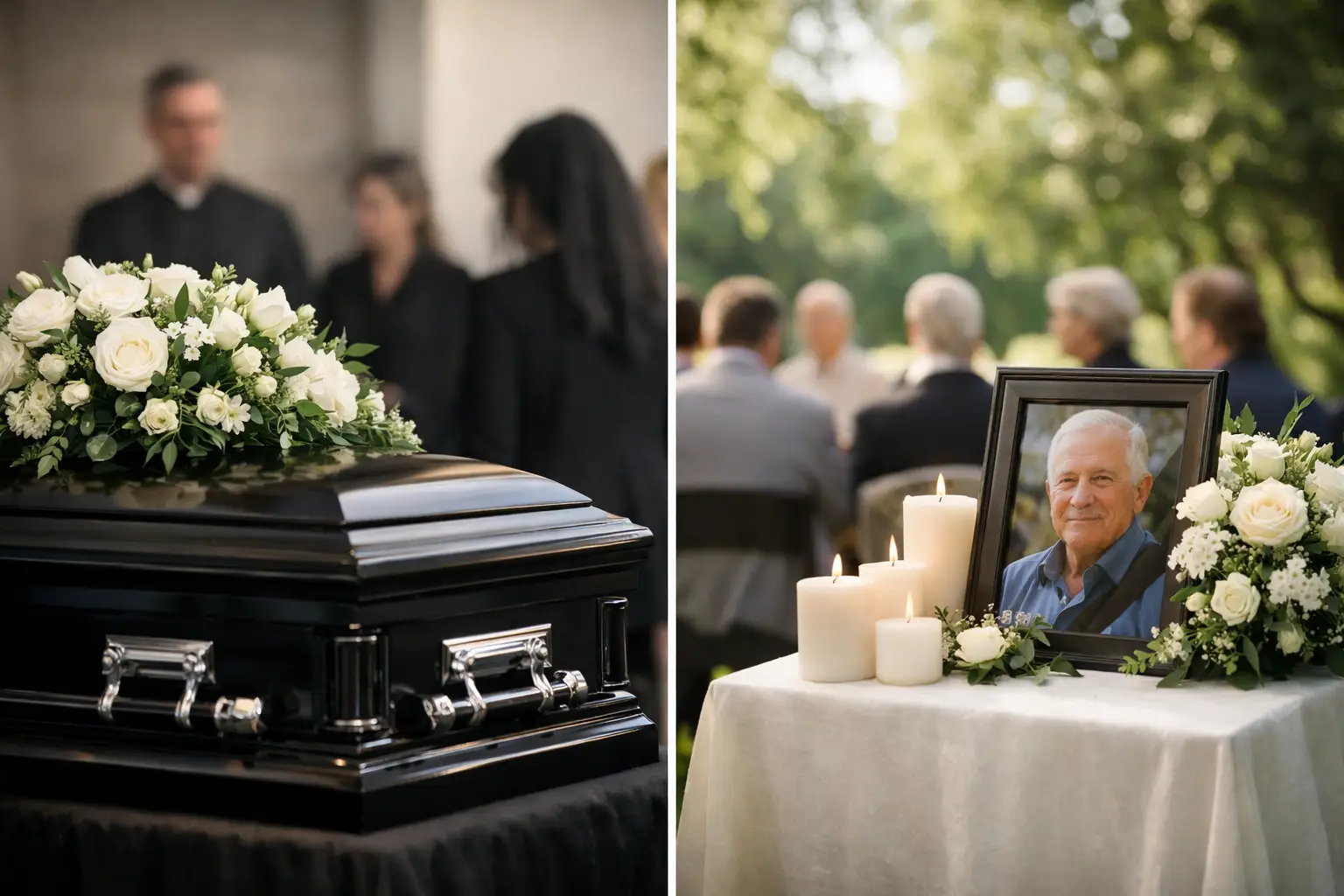
A funeral is generally held with the body present. It may take place before burial or cremation and can include a viewing, visitation, religious rite, eulogy, music, military honors, and a procession to the cemetery. For some families, the opportunity to see their loved one, say goodbye in person, or follow familiar religious customs is a meaningful part of the service.
A memorial service is generally held without the body present. It may happen after burial or cremation, or weeks or months later when relatives and friends can travel. An urn with cremated remains may be displayed, but it does not have to be. Memorial services often take place at a funeral home, house of worship, restaurant, family home, park, or another location that feels right for the person being remembered.
These descriptions are helpful starting points, not rigid rules. A family may hold a visitation and funeral before cremation, then gather again later for a memorial. Another family may choose a private burial followed by a larger celebration of life. The right choice depends on the wishes of the person who died, the needs of those closest to them, practical timing, and the traditions that matter to the family.
What a funeral may include
A funeral often follows a more immediate schedule because it occurs before final disposition. The service can be religious, secular, formal, simple, public, or private. If there is a viewing, the family may spend time with their loved one before others arrive or welcome visitors during designated hours.
For many people, this structure provides something steady to hold onto. There is a sequence of care, gathering, ceremony, and committal. In Jewish, Christian, Muslim, Armenian, Russian, Georgian, and many other community traditions, timing and customary practices may shape the arrangements. A knowledgeable funeral director can explain available choices while respecting the family’s beliefs and pace.
What a memorial service may include
A memorial service offers more flexibility in timing and format. Because final arrangements have already taken place, families can wait until an out-of-town child returns, choose a date that allows a wider circle of friends to attend, or plan a gathering in a setting that feels personal.
The service may include photographs, favorite music, readings, a memory table, a video tribute, prayer, or an open time for guests to speak. Some families call this a celebration of life, especially when they want the gathering to focus on stories, relationships, and the qualities that made their loved one unique. Others prefer the quiet structure of a traditional memorial. Neither approach is more loving than the other.
How Timing Affects the Decision
Timing is often the most practical distinction in funeral versus memorial service planning. If burial or cremation must happen soon because of religious practice, a funeral or private family ceremony may need to occur promptly. A later memorial can still allow friends, coworkers, and extended relatives to come together when travel and schedules are less difficult.
Transportation can also affect the timeline. When a loved one must be moved to another state or country, families may choose a local gathering before departure, arrange services at the destination, or plan a memorial after everyone has returned home. These arrangements require careful coordination, but they do not prevent a meaningful farewell.
There is also no requirement to decide every detail at once. A family can begin with immediate care and final disposition, then take time to plan a memorial gathering. Grief does not follow a calendar, and a later service can be just as significant as one held in the first few days.
Questions That Can Help Your Family Choose
The most useful question is not, “Which service is better?” It is, “What would help our family honor this person and begin to say goodbye?” If the person left written wishes, those should guide the discussion whenever possible. If they did not, consider these practical questions together:
- Would seeing the person or having a viewing bring comfort to close family members?
- Are there faith, cultural, military, or cemetery customs that affect the timing or format?
- Do important relatives need time to travel from outside New York or from abroad?
- Would a private service now and a larger gathering later feel more manageable?
It can also help to separate the decisions. First, decide whether burial or cremation is preferred. Then consider whether there will be a viewing, a funeral ceremony, a graveside service, a memorial, or more than one gathering. Families do not need to fit every act of remembrance into a single day.
Children and teenagers may need special consideration. Some want to attend every part of the service; others may prefer a short visit, a private goodbye, or a role such as placing a flower, choosing a photo, or reading a note. Giving them age-appropriate choices can help them feel included without pressure.
Cost Considerations Without Assumptions
A memorial service is sometimes described as less expensive than a funeral, but that is not always true. Costs depend on the specific arrangements: the type of disposition, professional services, transportation, facility use, flowers, clergy or celebrant fees, printed materials, cemetery charges, and the size and location of any reception.
A traditional funeral with a viewing and burial may involve more services and therefore a higher overall cost. Yet a memorial held at a large venue with extensive catering, audiovisual production, or travel can also be substantial. A simple cremation followed by a small memorial at home may be a more modest option, while still being deeply personal.
Clear information matters. Families deserve an explanation of what each service includes, what is optional, and what can be adjusted to meet their budget. Meaning does not come from spending more. Often, the details people remember most are a favorite song, a familiar prayer, a story told by a grandchild, or the chance to sit quietly with others who cared.
A Service Can Be Traditional, Personal, or Both
Choosing a funeral does not mean the service must feel impersonal. Choosing a memorial does not mean it must be informal. A formal church funeral can include personal photographs and a beloved piece of music. A celebration of life can include prayer, ritual, and a moment of solemn remembrance.
For veterans, either type of service may include honors when eligible. For families with multilingual guests, readings, remarks, and printed materials can be arranged in more than one language so that everyone feels included. These choices can be especially meaningful in Brooklyn and across the New York area, where families often bring together relatives, traditions, and languages from many places.
At Horizon Funeral Home, families can receive calm guidance through both immediate arrangements and advance planning, with care shaped around their faith, culture, budget, and personal wishes. The goal is not to direct a family toward one type of service. It is to make each option understandable and to handle the details with respect.
When Advance Planning Makes the Choice Easier
Preplanning gives a person the opportunity to state whether they prefer a funeral, memorial service, celebration of life, or a combination of gatherings. They can record preferences for burial or cremation, music, religious customs, military recognition, obituary details, and who should be contacted.
This does not remove grief, but it can reduce uncertainty for the people left to make decisions. It also creates space for a calm conversation rather than a rushed one. Plans can be reviewed and updated as circumstances, beliefs, or family needs change.
Whether your family gathers immediately around a casket, meets weeks later beside an urn, or chooses two separate moments of remembrance, the service should make room for love, memory, and the people who need one another most.