
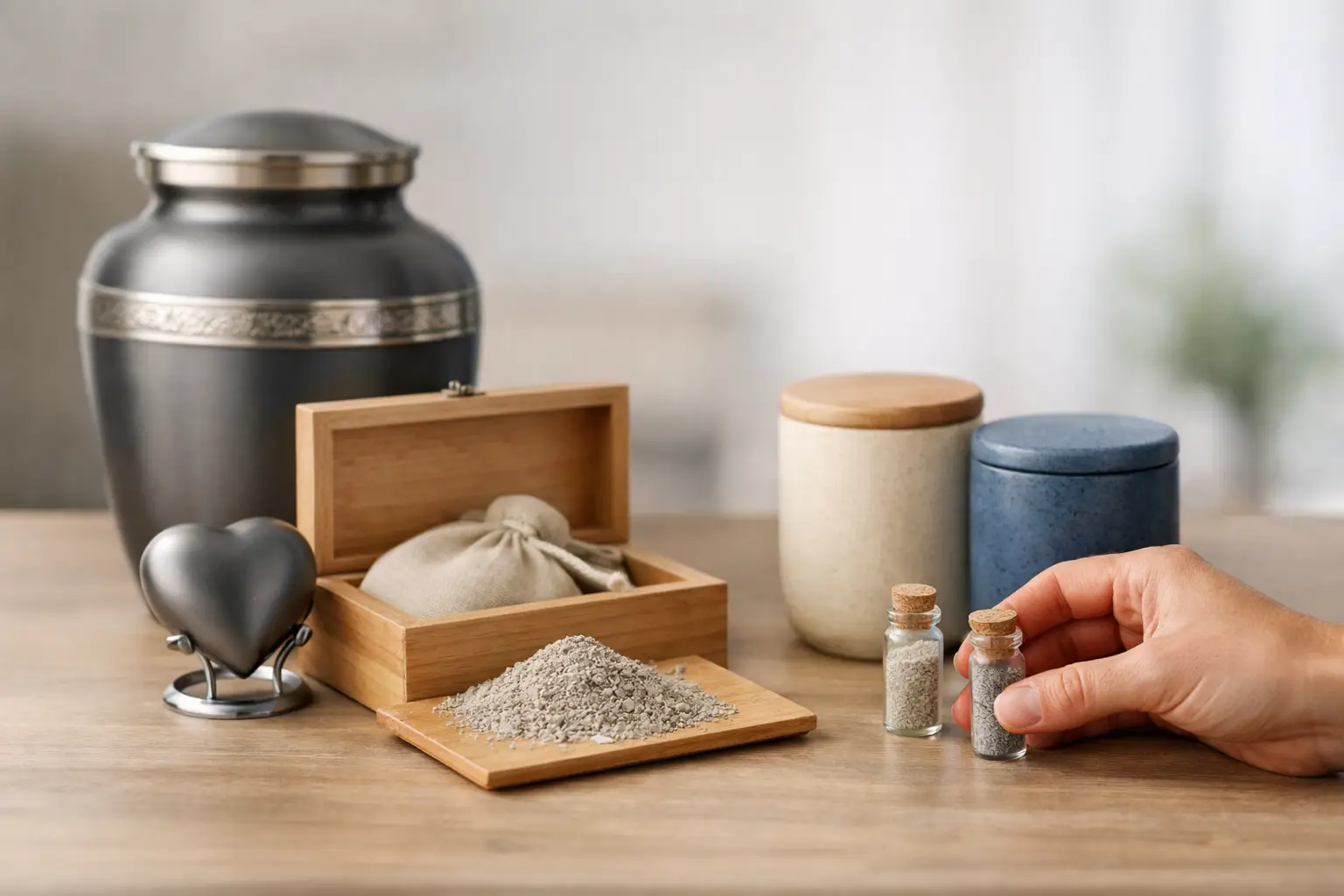
When one person was loved by many, the question of whether can ashes be divided often comes from a simple, heartfelt need: more than one family member wants a way to feel close. A spouse may wish to keep an urn at home while adult children live in different states. Siblings may have different traditions. One relative may want a small keepsake while another hopes to scatter ashes in a meaningful place.
In most situations, cremated remains can be divided. The decision deserves care, clear communication, and attention to the wishes of the person who died whenever those wishes are known. There is no single right choice for every family. What matters is making a plan that feels respectful, practical, and shared rather than rushed.
Can Ashes Be Divided After Cremation?
Yes. Cremated remains are often divided into smaller portions for family members, placed in multiple urns, made into keepsake items, or reserved for more than one final tribute. Families may choose to keep the largest portion together and share small amounts, or they may divide the remains more evenly among several people.
Before any division takes place, the person legally authorized to make funeral and cremation decisions should be involved. In New York, this is generally the person who signed the cremation authorization or otherwise has legal authority to direct final arrangements. If there are disagreements within the family, it is wise to pause before distributing anything. Once ashes have been given away, scattered, or placed in keepsakes, the decision may be difficult or impossible to reverse.
A funeral home or crematory can explain its process for releasing cremated remains and may be able to help with transfers into smaller containers. Some families prefer to handle the division privately at home. Others find it more comfortable to ask a professional to prepare the portions with care and discretion.
Reasons Families Choose to Share Cremated Remains
Dividing ashes is not a sign that a family is less united. Often, it recognizes that love continues in more than one home, community, or tradition.
A surviving spouse may want a primary urn nearby, while children or grandchildren receive a small keepsake. Families separated by distance may each want a place to visit, reflect, or include their loved one in a future memorial. In other cases, a portion is saved for burial beside a spouse or parent later on.
Cultural and religious beliefs can also shape the decision. Some traditions encourage burial or another specific form of disposition, while others leave more room for personal family choices. If faith practices are important to your family, speak with a clergy member or spiritual advisor as well as your funeral director before finalizing plans.
There can also be practical reasons. A family may be planning a memorial service now but need time before choosing a permanent resting place. Keeping the ashes together temporarily, then deciding later whether to divide them, can relieve pressure during the first days after a loss.
Choosing a Respectful Way to Divide Ashes
The right method depends on how much of the remains each person will receive and what they hope to do with them. A small portion may be placed in a keepsake urn, pendant, glass memorial piece, or other remembrance item. Larger portions may go into individual urns or be held for burial, scattering, or placement in a columbarium.
It helps to decide these details before opening the main container. Talk through how many portions are needed, whether they should be equal, and whether anyone wants to wait before receiving theirs. Equal amounts can feel fair in some families, but they are not always necessary. One person may want a keepsake teaspoon-sized portion, while another may be responsible for the primary urn or future burial.
Use clean, secure containers that are clearly labeled. Keep the name of the deceased, the date of cremation, and any relevant instructions with the containers. This is especially helpful when remains are being shipped, carried to another state, or held until a later ceremony.
If the family intends to travel with ashes, check airline requirements in advance. Airlines commonly require a container that can be screened, and rules can vary. International travel and shipping require additional planning and documentation. For families coordinating arrangements across states or countries, professional guidance can prevent painful delays.
Keepsakes and jewelry
Keepsake jewelry can be meaningful, but it is worth approaching the choice thoughtfully. These items usually hold only a very small amount of ashes. They can be comforting for some people and may not feel right for others. No one should feel obligated to wear or accept a keepsake simply because it is offered.
Choose a reputable provider, understand how the item is sealed, and ask what happens if it needs repair. If a piece will be mailed or shipped, confirm how it will be tracked and insured. A small amount of ashes can carry enormous emotional weight.
Scattering and burial plans
Families sometimes divide ashes because they hope to hold separate ceremonies in places that mattered to their loved one. This can be a beautiful option, but each location may have rules. Public parks, beaches, waterways, cemeteries, houses of worship, and private property may require permission or have restrictions on scattering.
Burial of cremated remains can offer a permanent place for visitation and remembrance. A cemetery may allow one urn to be buried now and another portion to be placed later, but policies differ. Ask about the cemetery's requirements, marker options, and whether multiple containers can be placed in the same plot or niche.
When Families Do Not Agree
Disagreement about ashes can bring old family tensions to the surface. Grief can make even a practical question feel deeply personal. One person may see dividing ashes as a loving gesture, while another feels strongly that the remains should stay together.
Begin with the wishes of the person who died, if they were expressed in writing or discussed with family. Then identify the immediate concern beneath each position. A relative who objects to dividing ashes may be afraid of losing a shared place to mourn. Someone asking for a portion may be worried that they will have no personal connection once they return home.
A compromise is often possible. The family might keep the ashes together for a period of time, hold a memorial before making any decisions, create non-ash keepsakes such as photographs or handwritten recipe cards, or share only a small portion while preserving a primary urn. If conflict remains serious, do not proceed in private or under pressure. The authorized decision-maker may wish to seek legal guidance before distributing remains.
Questions to Ask Before You Decide
Before dividing cremated remains, give your family room to answer a few practical questions. Who has legal authority to make the decision? Did your loved one leave written wishes? Does any faith, cemetery, or scattering location have requirements? How many people are involved, and what would each person find meaningful?
Also consider what needs to happen later. Will a portion be buried with another family member? Is anyone moving abroad? Will a keepsake be passed to a child or grandchild? These questions are not meant to make the choice harder. They help prevent misunderstandings and make sure each decision can be carried out with dignity.
At Horizon Funeral Home, families can receive clear, pressure-free guidance on cremation arrangements, keepsake options, burial plans, and transportation needs. You do not have to decide everything at once, and you do not have to sort through sensitive details alone.
The most meaningful plan is often the one that gives each person a way to remember while still honoring the whole life that was shared. Taking time, listening carefully, and putting the plan in writing can bring a measure of peace to a decision made with love.