
You're standing in a quiet room thousands of miles from New York, holding a phone and wondering how you'll ever bridge the distance to say goodbye. It's a heavy realization that the process of arranging a funeral from overseas involves more than just a flight; it requires navigating a complex web of international permits, consulate requirements, and time zone barriers. You likely feel the weight of these logistics pressing down on you during an already fragile time.
We believe that distance should never diminish the dignity of a final farewell. This guide serves as a compassionate roadmap to help you navigate the intricate details of repatriation and remote planning with steady, expert guidance. We'll provide a clear checklist of necessary tasks, explain the typical timeline for international transfers, and help you understand how a local NYC partner can manage the paperwork on your behalf. Our goal is to replace your anxiety with a sense of sanctuary and stability, ensuring every detail is handled with the respect your family deserves.
Key Takeaways
- Understand the vital first steps to take with a local U.S. Embassy so you're certain the paperwork is handled correctly.
- Gain clarity on the complex logistics involved in arranging a funeral from overseas, including the interplay between foreign regulations and New York standards.
- Weigh the emotional and practical differences between choosing local services abroad and returning home to New York.
- Learn how to establish the legal Right of Election and find a steady partner who'll manage the arrival details at NYC airports.
Table of Contents
- The First Steps: What to Do Immediately When a Death Occurs Abroad
- Understanding International Repatriation: The Logistics of Bringing a Loved One Home
- Evaluating Your Options: Local Services vs. Returning to New York
- A Step-by-Step Manual for Arranging Services Remotely
- Horizon Funeral Home: Your Steady Bridge to New York
The First Steps: What to Do Immediately When a Death Occurs Abroad
Receiving news of a loss is always difficult. When that news crosses an ocean, the shock often feels amplified by the thousands of miles between you and your loved one. It's a moment of profound vulnerability where the physical distance can feel like an insurmountable wall. You're likely wondering how you can possibly manage the logistics of arranging a funeral from overseas while your heart is elsewhere. It's a heavy burden to carry, but you don't have to carry it alone. Taking the first few steps with a steady, methodical approach will help transform this overwhelming situation into a manageable path forward.
Notifying Authorities and the U.S. Embassy
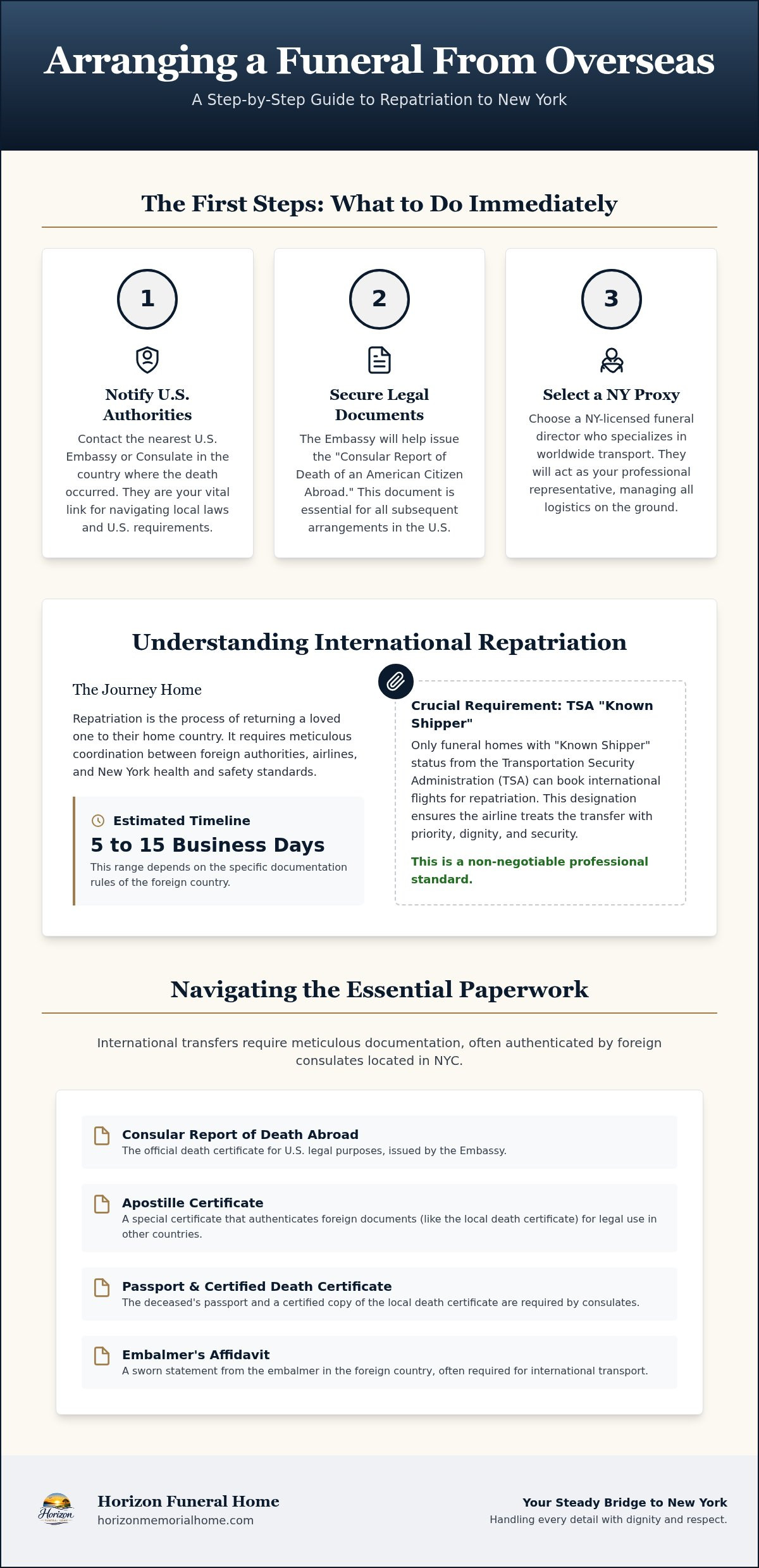
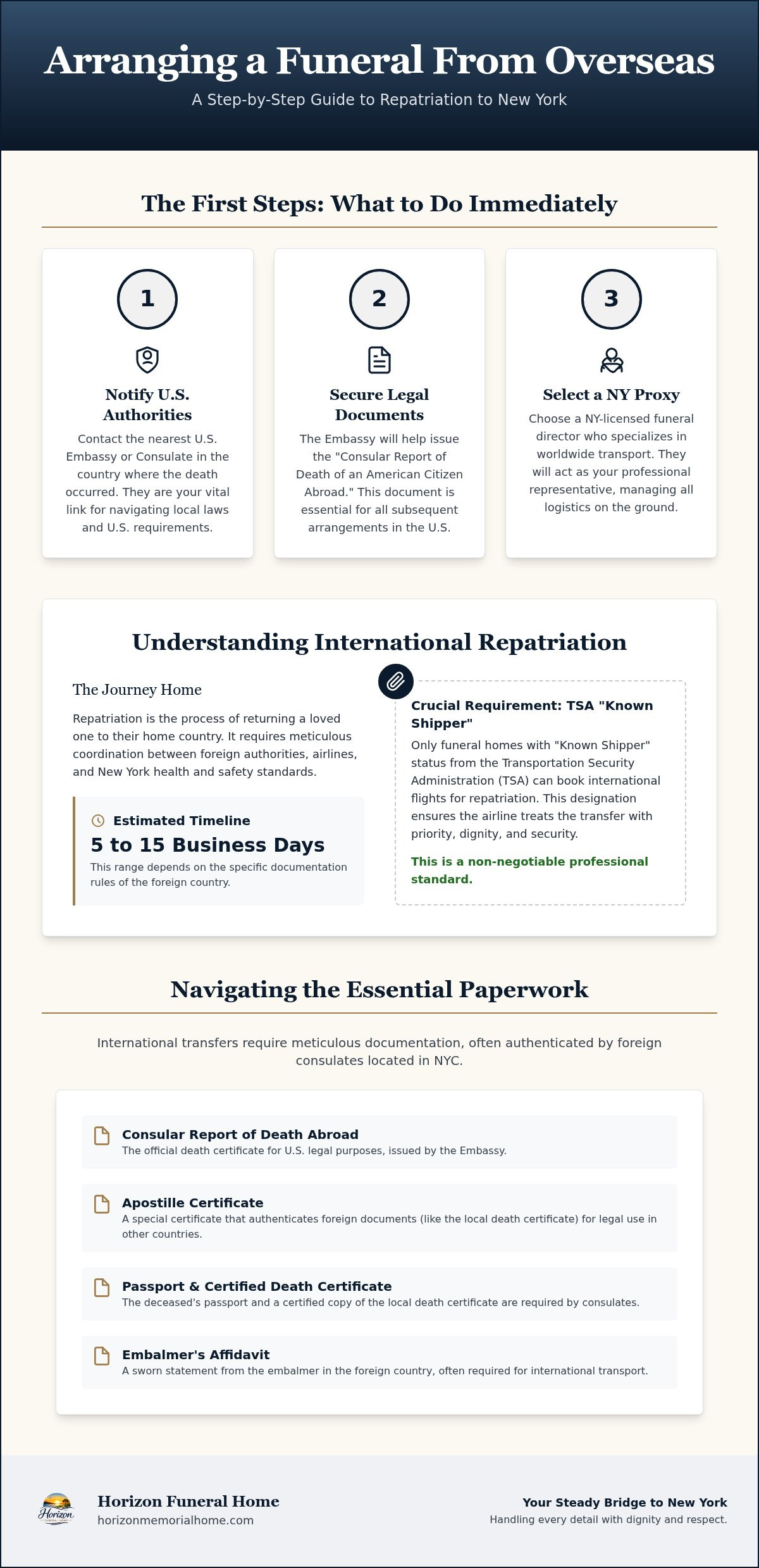
Your first step involves reaching out to the nearest U.S. Embassy or Consulate in the country where the death occurred. These officials act as a vital bridge between local foreign laws and American requirements. They'll help issue the "Consular Report of Death of an American Citizen Abroad," which serves as the essential legal document for all future steps in the United States. While they provide guidance on local burial or the process of repatriation, it's vital to understand that the U.S. government does not provide financial assistance for these costs. They're there to guide the legal process, but the logistical and financial responsibility remains with the family. Having this document in hand is the first milestone in bringing your loved one home.
Selecting a Professional Proxy in New York
While the embassy handles the legal reports, you need a steady hand on the ground in New York to manage the physical journey home. Selecting a New York-licensed funeral director early on is perhaps the most important decision you'll make. You need a partner who understands the specific requirements of JFK and Newark airports, as these are the primary gateways for international arrivals in the NYC metro area.
A funeral home specializing in worldwide transportation acts as your professional proxy. They coordinate directly with the foreign funeral home, managing the intricate dance of flight schedules and customs clearances. Because time zones can create frustrating barriers, it's helpful to work with a partner who understands the urgency of international communication. They become your single point of contact, distilling complex international regulations into clear, manageable steps. This allows you to focus on your family's emotional needs instead of the minutiae of airline cargo requirements. By establishing this partnership early, you ensure that every detail is handled with the meticulous care and dignity that the situation demands.
Understanding International Repatriation: The Logistics of Bringing a Loved One Home
Repatriation is a term that carries significant technical weight, but at its heart, it's simply the professional process of returning a deceased person to their home country. When you're arranging a funeral from overseas, this process becomes a bridge between two worlds. It involves a complex interplay between the health departments of a foreign nation and the strict sanitary standards required by New York City. This coordination ensures that your loved one is moved with the highest level of care, meeting every legal and safety requirement before they touch down on American soil.
Patience is often required during this phase. Most families find that the timeline for these international transfers ranges from five to 15 business days, depending on the destination country's specific documentation rules. A crucial detail to confirm with any provider is their "Known Shipper" status with the Transportation Security Administration (TSA). Only funeral homes with this designation can book the necessary international flights. This status is a mark of professional reliability, ensuring the airline treats the transfer with the priority and dignity it requires. If you feel overwhelmed by these requirements, you can reach out for a quiet conversation to help clarify the next steps for your specific situation.
The Legal Paperwork: Consulates and Apostilles
The paperwork involved in international transfers is meticulous. One of the most common requirements is an Apostille, which is a specialized certificate that authenticates a document for legal use in another country. In the context of New York, much of this work happens within the various consulates located in Manhattan. Each nation has its own set of rules regarding which documents must be presented. Typically, you'll need the deceased's passport, a certified death certificate, and an embalmer’s affidavit. Navigating these Manhattan offices requires a steady hand and an understanding of specific consular hours and appointment protocols, which can vary significantly from one week to the next.
Transportation Methods and Specialized Containers
Remains are transported using specialized equipment designed for both safety and respect. If a casket has already been selected, it's placed inside an "air tray," which is a reinforced base with a sturdy cardboard cover to protect the casket during flight. Alternatively, a "combination unit" is used when a casket isn't present. Major airlines operating out of JFK and Newark airports have dedicated programs for human remains, ensuring they're handled as "priority cargo" in climate-controlled environments. Throughout the flight and the subsequent customs clearing process in New York, the focus remains on maintaining a seamless, dignified journey until your loved one is safely in the care of your local funeral director.
Evaluating Your Options: Local Services vs. Returning to New York
You might feel pulled in two directions. On one hand, there's the immediate reality of where the death occurred. On the other, there's the pull of home. Deciding between a local service abroad and returning to New York is rarely just a matter of logistics. It's about where your family can best find peace. While local burial in a foreign land may seem simpler at first, it can leave a sense of distance that never quite closes. When you're arranging a funeral from overseas, the choice often hinges on where the heart of the family truly resides.
Several factors will likely influence your final decision. Religious rites often dictate the timeline and method of burial, making repatriation necessary for those who follow specific traditions. Accessibility is another factor. If most of your relatives live in New York, a local service ensures that everyone can attend without the burden of international travel. Long-term memorialization is also a key consideration. Having a permanent resting place in a local cemetery allows for future visits, helping to keep the memory of your loved one alive within the community.
Cremation Abroad and Transporting Ashes
For families on a restricted budget, cremation in the country of death is a practical alternative. It significantly reduces the costs of airfare and specialized shipping containers. If you choose this path, you'll need to know the specific legalities of bringing cremated remains back to New York. Most airlines allow you to carry an urn as carry-on luggage, but it must be made of a material that can be easily X-rayed at security checkpoints. Wood, plastic, or non-lead-lined ceramics are usually best. If you prefer not to carry the remains yourself, remember that the United States Postal Service is the only legal domestic carrier for cremated remains within the U.S. This ensures the journey is tracked and handled with specific care.
Full Body Repatriation to NYC
Sometimes, the need for a traditional viewing or burial in Brooklyn or Queens is the absolute priority. This choice often honors deep cultural traditions that require the physical presence of the deceased. Choosing traditional funeral arrangements Brooklyn families have long relied on for closure allows the home community to pay their respects together. When arranging a funeral from overseas with full body repatriation, it's helpful to understand the various components of the cost. These typically include the foreign funeral home’s preparation fees, international airfare, and terminal handling fees at JFK or Newark airports. While the logistics are more involved, the sense of peace that comes from bringing a loved one home is often immeasurable.
A Step-by-Step Manual for Arranging Services Remotely
When you're thousands of miles away, the sheer number of tasks can feel paralyzing. Breaking the process of arranging a funeral from overseas into clear, sequential steps helps you regain a sense of control. This methodical approach ensures that no legal or emotional detail is overlooked while you're managing things from a distance. By following a structured path, you can move through the logistics with a steady heart, knowing each action brings your loved one closer to home.
- Step 1: Secure the legal Right of Election. You must establish who has the legal authority to act as the primary decision-maker. This is vital for signing foreign permits and New York release forms.
- Step 2: Engage a NYC partner. Find a firm with a specific focus on international funeral transportation. They'll act as your local hands, managing the arrival at JFK or Newark.
- Step 3: Gather vital information. You'll need the deceased’s Social Security Number, Passport, and full birth details. These are required for both the foreign death certificate and the NYC disposition permit.
- Step 4: Decide on final disposition. Whether you choose burial or cremation will dictate the specific shipping requirements and the type of container needed for the flight.
- Step 5: Coordinate the logistics. Your NYC funeral home will handle the consulate paperwork in Manhattan and book the airline cargo, ensuring a seamless transition between countries.
Digital Coordination: Planning without Being Present
Modern technology has transformed how families connect during times of loss. You don't have to be physically present in New York to design a meaningful tribute. Video conferencing allows for quiet, face-to-face consultations where we can discuss every detail of the service. Digital signatures and secure document portals have removed the need for overnight mail, speeding up the process significantly. This remote collaboration makes it possible to organize personalized memorial services Brooklyn families can attend virtually or in person, ensuring the tribute is as unique as the life it honors.
Managing Cultural and Religious Specifics
Every culture has its own set of sacred requirements that must be respected, even across borders. We understand the specialized logistics required for the repatriation of remains to Georgia, as well as the specific steps for shipping remains to Armenia from NYC. Whether your tradition requires the presence of a Shomer or specific shrouding protocols before the journey, these rites can be coordinated remotely. We work closely with foreign providers to ensure that religious standards are met with the same level of devotion they would receive here in New York. If you have questions about specific cultural requirements, please contact our team for expert guidance.
Horizon Funeral Home: Your Steady Bridge to New York
Distance creates a unique kind of uncertainty, especially during a time of grief. When you're arranging a funeral from overseas, you don't just need a service provider; you need a steady bridge back to the city your loved one called home. We serve as that connection, offering a blend of professional reliability and gentle emotional support for families across Brooklyn, Queens, Manhattan, the Bronx, and Nassau County. Our focus is on lowering your anxiety by providing a sanctuary of stability. We handle the weight of the logistics so you can focus on the memories that matter most.
We understand the intricate rhythms of New York infrastructure. From managing the specific cargo protocols at JFK and Newark airports to coordinating the final journey to a local cemetery, we ensure every detail is met with meticulous care. You'll find that our approach is unhurried and patient. We take as much time as necessary to ensure you feel heard and supported throughout this complex process. This partnership is built on trust and a shared responsibility to honor your loved one's story with dignity and peace.
Expert Logistics and Consulate Coordination
Our experience with the various Manhattan-based consulates allows us to navigate the translation and legalization of foreign documents with quiet confidence. We understand the specific requirements of different international carriers and the nuances of foreign apostilles. Our role is to act as your expert guide, directing the technical details from a distance so you never feel lost. We prioritize professional funeral direction over high-pressure sales tactics, ensuring that every suggestion we make is rooted in your family's needs rather than a marketing goal. This commitment to sincerity allows us to coordinate international pickups and deliveries with a level of precision that honors both local traditions and New York standards.
Honoring Veterans from Abroad
Bringing home a hero who has passed away in a foreign land is a sacred duty. We specialize in securing veteran funeral honors New York families rely on to pay proper tribute to those who served. Our team coordinates directly with the VA to ensure that all available benefits are applied to the international transfer process. We manage the specific honors protocols, ensuring a dignified welcome home that reflects a deep respect for their service. Whether it's coordinating with a military escort at the airport or arranging for a flag folding ceremony in Brooklyn, we stand beside you to ensure the process of arranging a funeral from overseas includes the full measure of honor your veteran deserves.
Taking the Next Step Toward Home
The journey of bringing a loved one back to New York is paved with complex legalities and logistical hurdles. You've learned that navigating embassy requirements and understanding the specific timelines of international repatriation are essential first steps. While the process of arranging a funeral from overseas involves many moving parts, it doesn't have to be a source of overwhelming stress. By breaking these tasks into manageable pieces, you can ensure that your loved one is returned with the dignity and respect they deserve.
As specialists in worldwide transportation logistics, we understand the unique needs of NYC diaspora communities. We offer empathetic support and are available to navigate global time zones whenever you need a steady hand. You don't have to manage the Manhattan consulates or the arrivals at JFK alone. Please contact Horizon Funeral Home for steady guidance on international arrangements. We're here to serve as your reliable bridge home, providing the sanctuary and stability your family needs during this difficult time. You've done the hard work of starting this process; let us help you finish it with peace and clarity.
Frequently Asked Questions
Can I arrange a funeral in New York if I am currently in another country?
Yes, you can absolutely coordinate a full service from abroad. Modern technology like video conferencing and digital signature portals makes it possible to manage every detail remotely. We act as your local hands in NYC, managing the logistics at JFK or Newark airports so you don't have to be physically present to ensure a dignified and respectful service for your loved one.
How much does it cost to ship human remains internationally to NYC?
While costs vary significantly by country and airline, industry averages for international funeral shipping generally range from $3,000 to $10,000. These figures typically include airfare, specialized shipping containers, and professional coordination fees. It is best to request a specific estimate based on the departure city and the destination airport to understand the exact requirements for your situation.
What documents are required to bring a body back to the United States?
You'll typically need a certified death certificate, a burial or transit permit, and a Consular Report of Death of an American Citizen Abroad from the local embassy. Additionally, an embalming certificate and a non-communicable disease affidavit are often required for international air travel. We help manage the translation and legalization of these foreign documents through the various Manhattan consulates.
How long does the international repatriation process typically take?
The process of arranging a funeral from overseas and completing the physical transfer usually takes between five and 15 business days. This timeline depends heavily on the destination country's specific documentation requirements and the availability of flights with Known Shipper status. We work to provide a clear, unhurried timeline so you know exactly what to expect during each stage of the journey.
Can I fly with my loved one’s cremated remains on an airplane?
Yes, most airlines allow you to carry cremated remains as carry-on luggage. You must use a container made of wood, plastic, or non-lead-lined ceramic so it can be easily X-rayed at security checkpoints. It is helpful to carry the official cremation certificate and a certified death certificate with you. This ensures a smooth transition through customs and security without unnecessary delays.
What happens if a U.S. citizen dies in a country where I don’t speak the language?
The local U.S. Embassy or Consulate acts as your primary resource for navigating foreign legal requirements. They provide guidance in English and help coordinate with local authorities for identification and documentation. We also assist by managing the translation of foreign apostilles and communicating with international carriers on your behalf to ensure no detail is lost in translation.
Will the U.S. Embassy pay for the return of my loved one’s remains?
No, the U.S. Department of State and its consulates do not provide financial assistance for the repatriation of deceased citizens. While they offer vital help with paperwork and local laws, the logistical and shipping costs are the responsibility of the family. We help you understand these costs early on to avoid any unexpected financial burdens during an already difficult time.
Can Horizon Funeral Home help if the death occurred in New York but the family is overseas?
Yes, we frequently support families who are abroad while their loved one is in New York. We can arrange for traditional funeral services, cremation, or worldwide transportation to a different country entirely. Our team manages all the local details across the five boroughs and Nassau County, serving as your steady and professional proxy here in the city.