
What belongs in an obituary, and how can you tell your loved one’s story without feeling pressure to include everything? Writing an obituary in Queens can feel difficult while you’re grieving, especially when family members have different memories, traditions, or preferences. You don’t need to capture a whole life in a few paragraphs. Start with the details that matter most to the people who knew and loved them.
This guide explains how to gather accurate information, choose what to include, and shape it into a clear, personal story. You’ll also learn how to review the obituary and decide where to share it, whether in print, online, or both. Work through the steps at a manageable pace, from basic facts and life milestones to service information and the details that make the tribute feel true to your loved one. If you’re also arranging a memorial or celebration of life, funeral direction can help coordinate the farewell while you focus on remembering them.
Key Takeaways
- Begin with the obituary’s purpose, not the pressure to capture every detail of a life.
- For writing an obituary in Queens, gather records and family recollections, then separate confirmed facts from details that need checking.
- Use a flexible structure to bring together the announcement, life story, relationships, personal details, and optional service information.
- Before sharing, review names, dates, wording, privacy, and service details, ideally with a second reader.
- An obituary can complement a private tribute or a gathering, but your family can choose the form of farewell that feels right.
Table of Contents
- Writing an Obituary in Queens: Start with the Purpose, Not a Perfect First Draft
- How to Gather the Details for a Queens Obituary
- How to Structure an Obituary So the Story Feels Personal
- How to Review and Share an Obituary with Care
- How Queens Families Can Connect an Obituary with a Meaningful Farewell
Writing an Obituary in Queens: Start with the Purpose, Not a Perfect First Draft
You don’t have to fit every memory, achievement, or relationship into an obituary. A sincere tribute can honor a person without attempting to tell their whole life. Begin with its purpose: to remember someone in words and, if your family chooses, share practical information about a service or gathering.
An obituary is a written tribute that describes a person’s life and may include details about a farewell. A death notice is often shorter, focusing on announcing a death and sharing service information, while an obituary usually offers more personal context. Publications may use these terms differently, so the distinction isn’t universal. For a general overview of common elements and purpose, see What is an Obituary?
There’s no single format or tone for families writing an obituary in Queens. Choose details that reflect your loved one’s character, relationships, and traditions. Some families prefer a simple, factual tribute; others include a favorite saying, a cherished role, or a detail that brings a smile. What matters is that the words feel respectful and true to the person being remembered.
What an obituary can do for family and community
A tribute can preserve memories for relatives and help friends, neighbors, and former colleagues understand more about the life behind the announcement. It might mention work someone took pride in, the people they cared for, or the routines that made them unmistakably themselves. Grand accomplishments aren’t required to make a life story meaningful. Everyday details can give readers a vivid sense of who someone was.
An obituary can also help readers recognize their connection to the person, even if they knew them during different chapters of life. Let the tone reflect your family’s wishes and your loved one’s character. Warmth, formality, faith, humor, or a straightforward approach can all be fitting when used with care.
How to begin when the words feel difficult
Start small. Rather than trying to write an opening paragraph, jot down a few confirmed facts and memories. A page of notes is enough for now. Write down what they loved, a phrase they often used, or a moment that captures how they made others feel. These fragments can help you decide what belongs in the tribute.
- Write memories or details as short notes, without worrying about order.
- Mark facts you want to verify separately from personal recollections.
- Invite a trusted relative to contribute a memory or help you find the right words.
Take a break when you need one, then return when it feels manageable. You can ask someone you trust to read your notes or draft. Keep the goal simple: a clear, caring tribute, not a perfect piece of writing. A few honest sentences can mean a great deal to the people who read them.
How to Gather the Details for a Queens Obituary
You don’t need to remember everything at once. A simple gathering process can give you a reliable foundation before you shape the story. Keep confirmed facts separate from memories and details that still need another family member’s input. This makes it easier to write accurately and avoids asking everyone the same questions repeatedly.
Start with records and information already available to your family, such as personal documents or details gathered while coordinating arrangements. For official information about New York City death records, see Obtaining Death Records in Queens. Use records as a reference, then check the spellings and details you plan to publish with someone familiar with the family.
Which biographical details should you collect first?
Begin with the essentials, then add details that help readers recognize the person behind the facts. A shared note or document keeps information in one place. Include only what feels relevant and comfortable for your family to share.
- The name your loved one used or preferred, along with important dates.
- Close family relationships, checking names and how each person should be described.
- Meaningful places, such as where they grew up, made a home, or felt connected.
- Work, service, interests, community involvement, traditions, and personal qualities.
A connection to Queens or a particular neighborhood may help tell the story, but it isn’t required. Let your loved one’s life guide which places belong in the tribute.
How to collect memories from family and friends
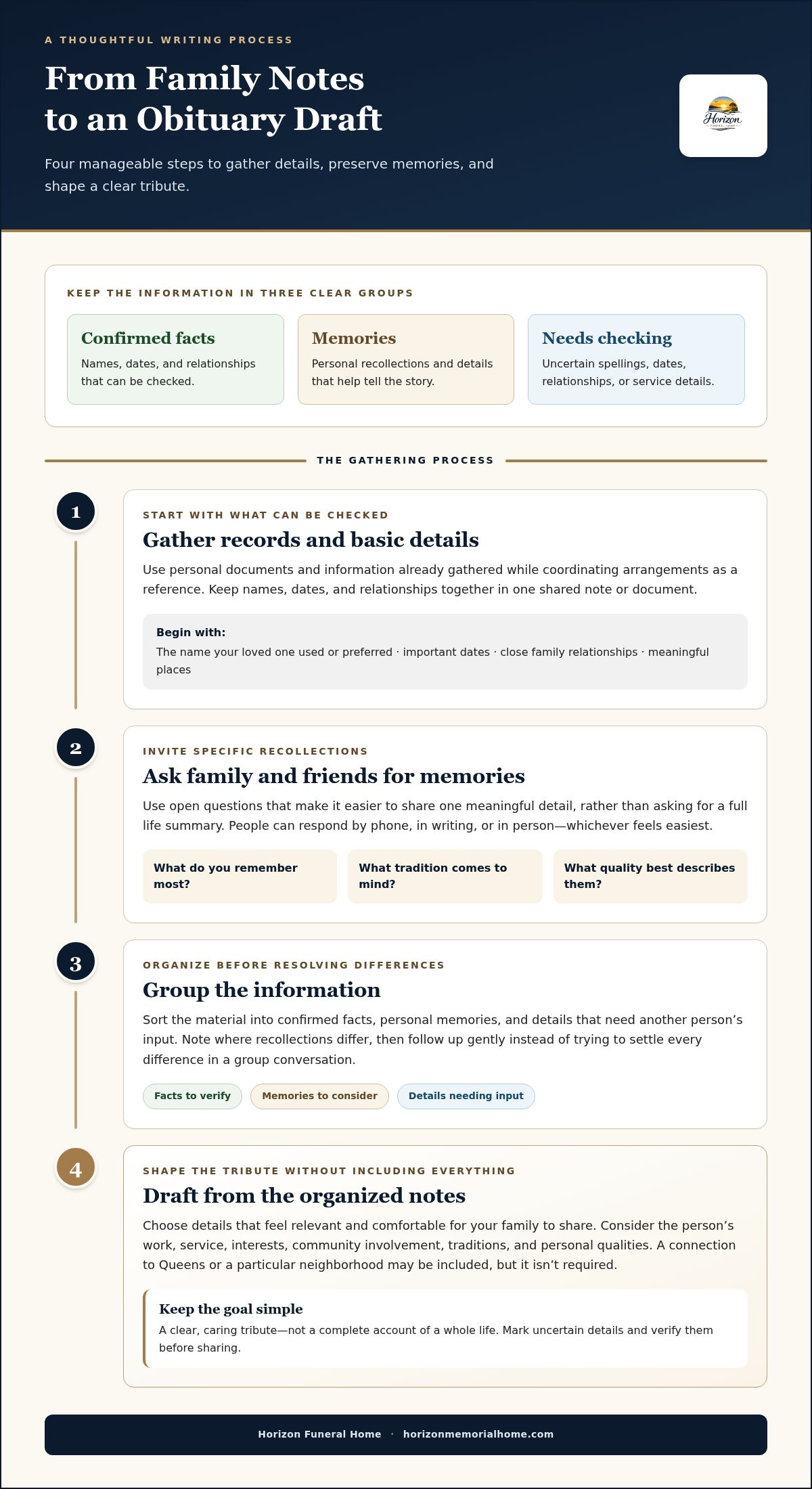
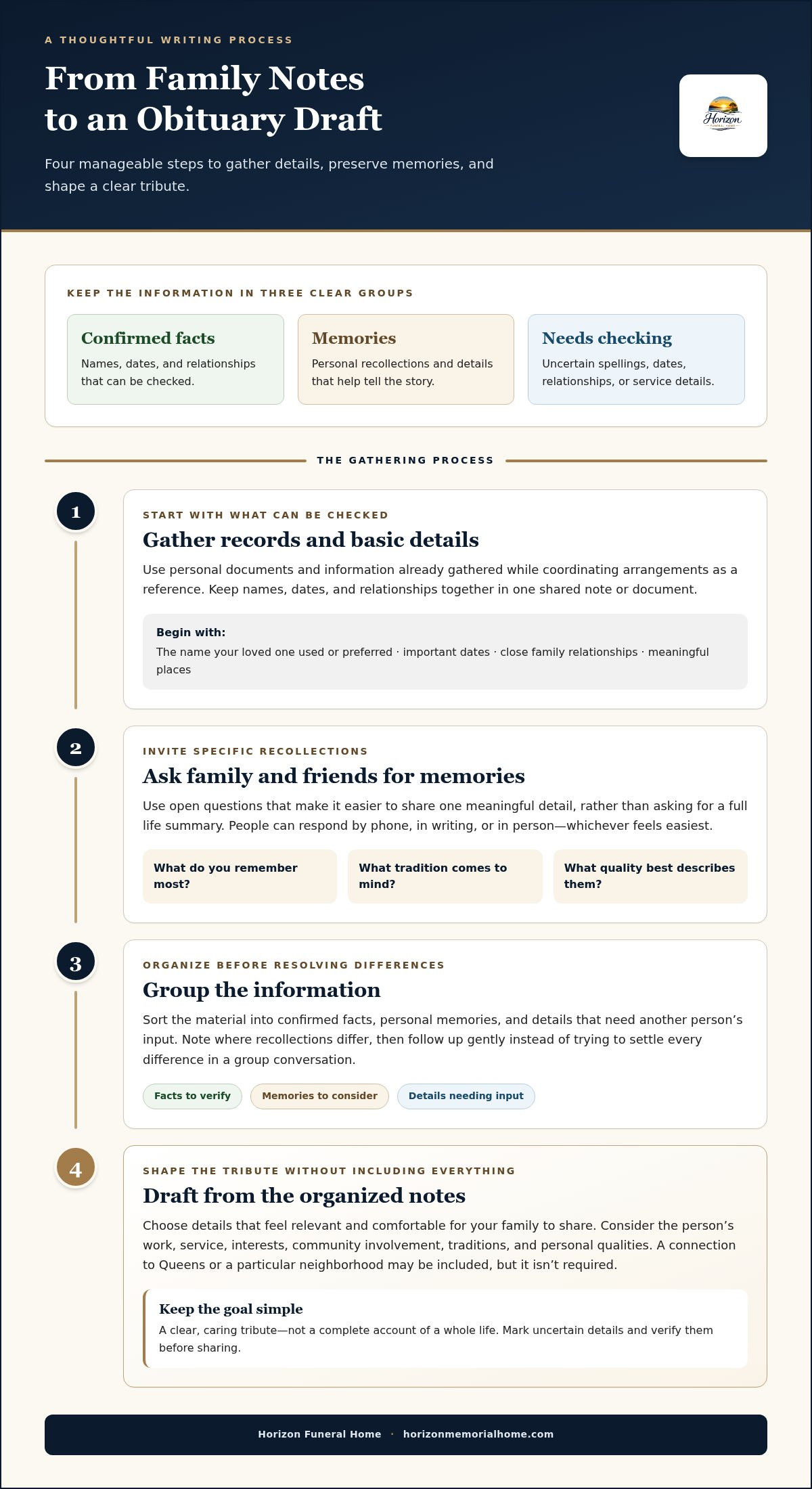
Ask open questions that invite a specific memory rather than a full life summary. Relatives and friends can respond by phone, in writing, or in person, whichever feels easiest. Choose one person to gather contributions, note where recollections differ, and follow up gently instead of trying to resolve every difference in a group conversation.
To keep the process manageable, move through these steps:
- Gather: Collect records and write down names, dates, and relationships that can be checked.
- Invite: Ask a few people what they remember most, what tradition they associate with your loved one, or what quality best describes them.
- Group: Sort the material into confirmed facts, memories, and details that need another person’s input.
- Draft: Use the organized notes to decide what belongs in the tribute and what can be left out.
Keep a single shared note or have one family member collect responses. This can spare others repeated requests during a difficult time. Clearly mark uncertain spellings, dates, relationships, and service information, then verify them before sharing the obituary. Careful checks of names and dates protect the accuracy of the tribute and help prevent avoidable confusion for readers.
If coordinating the farewell alongside these details feels like a lot to hold, funeral direction can help with arrangements while your family focuses on remembering your loved one. Learn about funeral direction and memorial support.
How to Structure an Obituary So the Story Feels Personal
A simple structure can help you move from facts to a tribute that feels like a person, not a list of dates and accomplishments. Treat it as a guide, not a required formula. You might arrange the obituary in this order:
- Announcement: Share the person’s name and a brief statement of their passing.
- Life story: Choose a few details that show what shaped their life or mattered most to them.
- Close relationships: Include family or other loved ones, if the family wishes.
- Personal details: Add a meaningful interest, habit, saying, or quality.
- Practical information: Share established service or memorial details if you want them included.
You can change the order, leave out a part, or combine elements. Some families put practical details near the beginning so readers can find them easily; others close with them after the life story. In writing an obituary in Queens, the best arrangement is one that feels clear to your family and true to the person you’re remembering.
What to include in the opening and life story
Begin with your loved one’s name and a straightforward announcement. Then choose a few details that help readers understand what mattered to them, rather than trying to summarize every chapter. A specific, verified detail often says more than broad praise. For example, describing someone as a devoted neighbor who brought meals to others gives readers a clearer picture than calling them “the best person ever.”
Keep the language respectful and grounded in what you know. The story doesn’t need to sound grand. A loved occupation, a role in the community, or a small personal ritual can bring the account to life. Choose a tone that reflects the person and fits your family’s preferences, whether formal, warm, spiritual, or gently humorous.
How to close with relationships and practical information
Names and relationships can be tender, especially in a large or blended family. Include relatives only if the family wants them named, and review spellings and descriptions together. You may choose wording that acknowledges loved ones broadly rather than listing everyone. The obituary doesn’t need to be a complete family record.
If arrangements are established and the family is comfortable sharing them, add the relevant funeral or memorial information clearly. Keep it distinct from the life story so readers can find it without losing the personal thread. If plans aren’t settled, leave these details out or share them separately later. An obituary can stand on its own as a tribute.
A gathering may express parts of a person’s story that are difficult to capture in writing. For ideas about honoring someone, see this guide to personalized memorial services in Brooklyn. The obituary and farewell can reflect the same care while serving different purposes.
How to Review and Share an Obituary with Care
Once the draft feels close, give yourself a little space before sharing it. A calm review can catch errors and help ensure the tribute reflects your family’s wishes. You don’t need to make every decision at once. Work through the checks in order, and pause if a detail feels difficult or uncertain.
A respectful proofreading checklist
First, check names, dates, family relationships, place names, and any service details. Then read the obituary aloud. Hearing the words can reveal a phrase that feels unclear, too formal, or unlike your loved one. Finally, invite a trusted second reader to check the details and ask family members to weigh in on sensitive or especially meaningful passages.
- Confirm spellings and dates against reliable family records or with someone who knows them.
- Make sure relationships are described accurately and in language the family is comfortable sharing.
- Check that service details are correct and that the family wants them included.
- Notice whether the tone feels consistent from the opening through the closing.
A second reader doesn’t need to rewrite the tribute. They can notice a missing word, flag a date that needs another look, or tell you whether a sentence is easy to understand. If family members have different preferences, discuss the wording rather than making a sensitive change without their knowledge.
Choosing where and how to share the tribute
Decide who you hope will read the obituary, then choose a sharing method that suits that audience and your family’s comfort. You might send it directly through family networks, create an online memorial page with Remembering You, or submit it to a publication. Sharing privately with relatives first gives close family a chance to read it before it reaches a wider audience.
Before sharing publicly, consider what personal information belongs in the tribute. A service location may be helpful to invited guests, while a private home address, personal contact details, or other identifying information may not be something the family wants widely available. You can send practical details separately to people who need them. There’s no obligation to include every detail in a public obituary.
Publication requirements and editing processes vary by outlet. If you plan to submit the obituary, review the outlet’s current instructions for formatting, required information, and submission. A draft prepared for one outlet may not meet another’s requirements. Keep a copy of the final version your family approves so you can refer to it when preparing different submissions or messages.
Writing an obituary in Queens may involve coordinating both the tribute and a farewell. Horizon Funeral Home provides funeral direction and support for personalized memorials. Find more information about funeral direction and memorial support.
How Queens Families Can Connect an Obituary with a Meaningful Farewell
An obituary can give context to a farewell, but it doesn’t have to describe or define every part of it. The tribute might mention a value your loved one lived by, a tradition important to the family, or a community they cared about. It can also remain private, be shared with selected relatives and friends, or accompany a gathering. Choose what feels right for your family.
As you finish writing an obituary in Queens, consider how the words and the farewell relate without requiring them to be identical. Some meaningful parts of a person’s life may belong in the obituary; others may be expressed through stories, music, or a family custom at a gathering. Each can honor the same person in its own way.
Let the obituary reflect the kind of farewell the family wants
A tribute may acknowledge faith, cultural traditions, service, or ties to a neighborhood if those details matter to your loved one and family. You don’t need to list every part of the funeral or memorial plan. Include only the practical information you want readers to have, and leave details that feel better shared in person for the gathering.
If you’re considering a traditional service, the guide to traditional funeral arrangements in Brooklyn offers related planning context. Although it focuses on Brooklyn, its overview may help you consider how a farewell can reflect a family’s wishes. Your obituary can remain a personal tribute, whether or not it includes service information.
Where to find steady guidance in Queens
Grief can make it hard to hold writing, family conversations, and arrangements in mind at the same time. It’s all right to let different parts of the process happen separately. A trusted relative might help organize the words while another person helps coordinate the gathering. The obituary doesn’t have to be finished before you begin thinking about the kind of farewell that feels fitting.
Horizon Funeral Home provides funeral direction and coordinates personalized memorials and celebrations of life for Queens families. That support can help with practical arrangements around a tribute while the family decides what to say and how to share it. The obituary remains yours to shape, with room for your loved one’s story and your family’s preferences.
Planning support is available through Horizon Funeral Home.
Let the Tribute Take Its Own Shape
The words you choose today don’t have to hold every memory forever. An obituary can be one expression of love, while conversations, photographs, and family traditions keep other parts of your loved one’s story close. Let the tribute feel genuine rather than complete. Even a quiet, simple account can mean a great deal to those who read it.
If writing an obituary in Queens has brought questions about how to honor your loved one beyond the page, take that next step at your own pace. Horizon Funeral Home serves families in Queens and the wider New York metropolitan area with professional funeral direction and personalized memorial support. Help coordinating the farewell can leave more room for your family to remember and be together.
For funeral direction and memorial planning, connect with Horizon Funeral Home. Your tribute can begin with a few honest words, and the farewell can unfold in a way that feels right for the people who loved them.
Frequently Asked Questions
How long should an obituary be?
There’s no single required length; the right size depends on what you want to share and where you plan to publish it. A brief tribute can identify your loved one and convey what mattered most, while a longer version may include more context or memories. If submitting to a newspaper or online platform, check its current word or formatting limits before finalizing your draft so you can adapt it without rushing.
What is the difference between an obituary and a death notice?
An obituary typically gives readers a fuller sense of someone’s life, while a death notice is generally a shorter announcement that may focus on basic information and service details. The terms aren’t used identically by every publisher. A family might prepare a concise notice for a publication and a fuller tribute to share privately or online with relatives and friends in Queens, Brooklyn, Staten Island, Manhattan, the Bronx, or Nassau County.
Should an obituary include the cause of death?
No, you aren’t required to include the cause of death in a tribute. Consider your loved one’s wishes, the family’s comfort, and what feels appropriate to share with the intended audience. If relatives disagree or the information is uncertain, leaving it out can preserve privacy and avoid sharing details before the family is ready. The obituary can still honor a person meaningfully by focusing on their life and relationships.
Can I write an obituary if family members remember details differently?
Yes. You can include details that relatives agree are accurate and leave disputed memories out of the public version. If family members differ in perspective, such as which hobby mattered most, use a broader phrase that respects both accounts. Keep personal recollections distinct from verifiable facts, and avoid presenting uncertain details as settled history. A family conversation can help identify wording everyone feels comfortable sharing.
How do I write an obituary for someone who was private?
Keep the tribute brief and share only information the family considers appropriate. You might state the person’s name, a few broad details about their life, and a simple acknowledgment of the people close to them, without naming private locations or personal circumstances. A quiet, reserved person doesn’t need an expansive public story. You can also notify friends directly and keep the written tribute within a smaller family network.
Can an obituary be updated after it is published?
Sometimes, but whether changes are possible depends on where the obituary appeared and that outlet’s current process. Online notices may have different correction options from print publications, and a printed edition may not be changeable after publication. If you spot an error, note the exact wording that needs correction and contact the publisher or platform through its stated process. For important service changes, consider sharing a separate update with invitees as well.
Should an obituary mention donations or flowers?
Include a request only if it reflects the family’s wishes and you can provide clear, accurate information. If suggesting donations, confirm the organization’s full name and any preferred way to direct contributions. If the family welcomes flowers, say so plainly; if it prefers another gesture, you may state that instead. There’s no obligation to make a request. Leaving this detail out is also a respectful choice.